



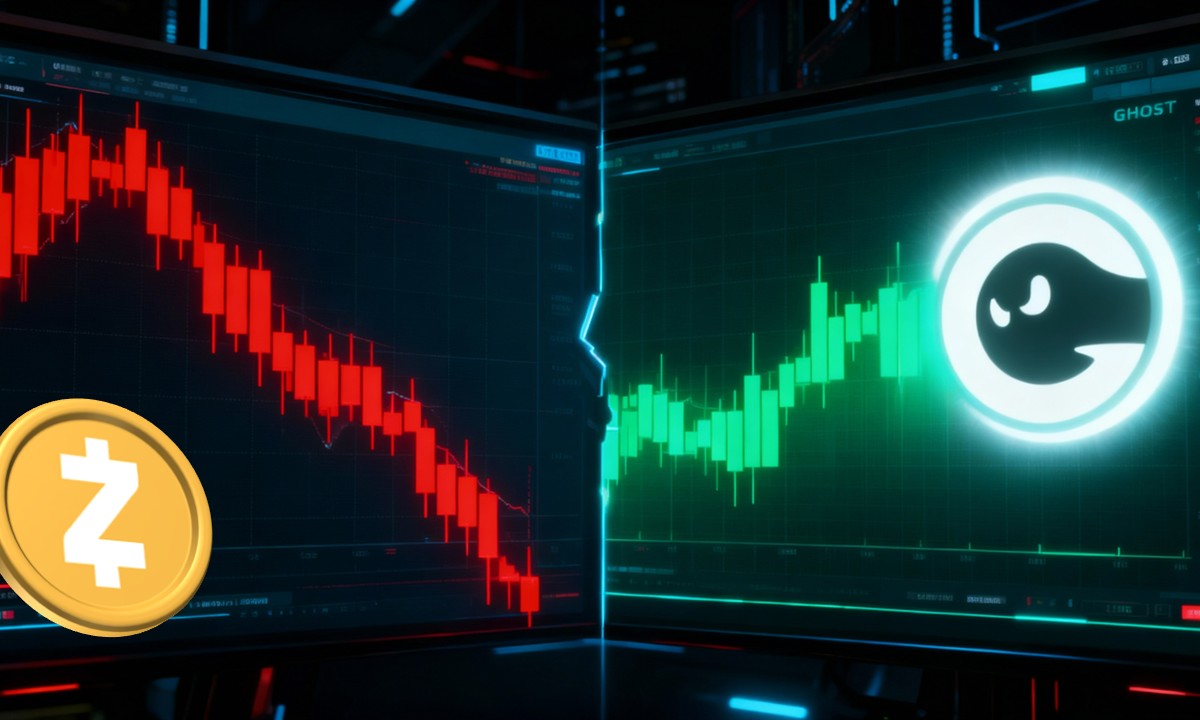


After weeks of sharp volatility in the privacy-focused crypto segment, the market is seeing two opposite moves. While the Zcash price dropped by roughly 20% in a short window, reflecting profit-taking and a temporary loss of buying momentum, $GHOST, the native token of GhostWareOS, has remained relatively stable.
This contrast brings back the debate over which is the best crypto to buy now. Is it the older privacy narrative that has been in the market for years, or the one that is building privacy directly into one of the best-performing ecosystems, in this case, Solana?
With the launch of GhostPay on November 26, the project’s token is back in the spotlight. The goal is not to be an isolated alternative, but a privacy layer that operates inside Solana itself, without relying on parallel blockchains.
GHOST: A Privacy Layer Operating Inside Solana
GhostWareOS is a privacy layer built natively on top of Solana. In practice, that means the solution adds protection for identity, metadata, and wallet-to-wallet relationships directly where activity already happens: in dApps, payments, DeFi, and day-to-day interactions on the network.
GhostPay is the centerpiece. It is the first payments layer with operational anonymity that plugs directly into the Solana ecosystem while keeping fast liquidity and low fees. The main objective is to reduce the public visibility of transactions without sacrificing network performance, something that usually requires meaningful trade-offs in external privacy solutions.
Structurally, Ghost uses mechanisms such as pseudonym management, relays that help obfuscate traffic origin, and a clear separation between identity, communication, and wallet layers. For many users and traders who already depend on Solana’s speed, this setup avoids having to use bridges or migrate to blockchains that are exclusively focused on privacy, while preserving operational security.
On the tokenomics side, GHOST is still in microcap territory. The total supply is set at 1 billion tokens, while the market cap remains relatively small compared to larger privacy projects, which is what tends to draw traders looking for asymmetric upside as liquidity around GhostPay grows. A key product feature is its fee distribution model, where transaction fees are routed back to token holders via smart contracts.

There is a direct link between real usage of the infrastructure and the flow of fees being distributed, a structure that appeals to those looking for exposure to protocols where practical utility can directly influence token performance.
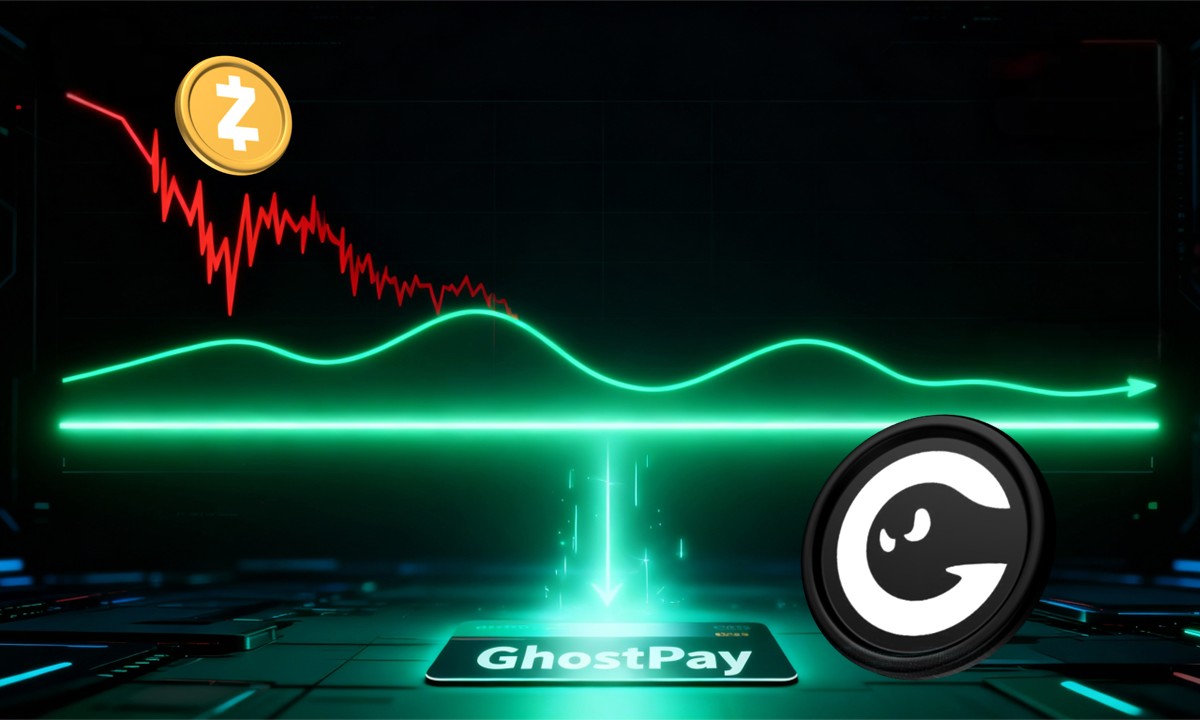
GHOST’s resilience stands out as ZEC drops: strength that traders increasingly credit to GhostPay’s utility.
ZEC: Why Did The ZEC Price Drop 20%?
While GHOST benefits from the anticipation around the GhostPay launch, the recent move in the Zcash price tells a different story. ZEC, historically one of the pillars of privacy coins, had been staging a strong recovery in 2025, fueled by renewed interest in privacy technologies and by the prominent role of shielded addresses, which make sender, receiver, and transaction amount invisible to the public.
However, that accumulated rally created room for a sharper correction, leading the ZEC price to drop around 20% over a short period. Part of this move reflects typical dynamics of assets that already operate at a multibillion-dollar scale: deep liquidity, listings on major platforms, and an established user base tend to generate less linear price action, especially after accelerated upside moves.
So while Zcash remains one of the most mature privacy solutions in the space, it now trades at a multi-billion-dollar valuation and plays a more institutional role within this niche. By contrast, GHOST is still a true microcap, with its market cap sitting in the low-million-dollar range. That size gap matters. ZEC tends to offer more measured price swings, whereas smaller, early-stage projects like GHOST can still see outsized percentage moves if adoption, liquidity, and usage of the underlying products keep expanding.
Conclusion
The comparison between GhostWareOS and Zcash captures two very different approaches within privacy coins. The ZEC price reflects a well-established project with battle-tested technology and long-term presence in the sector. Its recent pullback looks more like a natural correction after a strong rally than a sign that the protocol’s fundamentals are broken.
GHOST, on the other hand, operates in a different bracket: microcap, native Solana integration, and a live product in GhostPay. The market’s expectations around how this anonymous payments layer will be adopted have kept interest in the token high, especially because of the direct link between transacted volume and fee distribution to holders.
For traders and users who want exposure to the privacy narrative without relying solely on legacy solutions, following the GhostPay rollout has become one of the most straightforward ways to assess why Ghost may be the best crypto to buy now within both the Solana ecosystem and the broader privacy-coin segment.


