






TLDR
- Tether plans to increase gold holdings to 10-15% of its investment portfolio, up from around 7%, representing several billion dollars in purchases
- The company currently holds 130-140 metric tons of physical gold valued at $23-24 billion, already placing it at 12-13% of broader holdings
- Tether is buying one to two tons of gold per week and will continue for at least the next few months
- At an annualized pace of 50-100 tons, Tether’s demand represents 1-2% of global yearly supply, enough to matter at the margin but not dominate
- Tokenized gold assets like Tether Gold (XAUT) and Pax Gold (PAXG) hit record highs above $5,500 as spot gold prices surged
Tether is buying up to two tons of physical gold each week as part of a plan to expand its gold holdings. CEO Paolo Ardoino told Reuters the company aims to hold 10-15% of its investment portfolio in gold, up from earlier levels near 7%.
JUST IN: Tether now holds over 140 tons of gold worth $23 billion, the largest known non-sovereign gold stash in the world, stored inside a nuclear bunker. pic.twitter.com/QMZGVK3Tue
— Watcher.Guru (@WatcherGuru) January 28, 2026
With USDT circulation at around $186 billion, this shift could mean several billion dollars in new gold purchases. The buying will continue for at least the next few months, according to Ardoino.
The stablecoin issuer already holds between 130 and 140 metric tons of physical gold. At current prices above $5,000 per ounce, this stockpile is worth about $23-24 billion.
Gold Market Impact
This puts Tether’s gold allocation at roughly 12-13% of its broader holdings. The company is sourcing metal through over-the-counter markets and Swiss refiners rather than futures exchanges.
At an annualized pace of 50-100 tons, Tether’s purchases represent 1-2% of global yearly supply. Global mine production runs at roughly 3,500-3,600 tons per year, with recycled gold adding another 1,200-1,500 tons.
The buying draws from existing above-ground stocks since gold supply cannot scale quickly to meet demand spikes. This creates tighter physical liquidity in the short term.

Weekly purchases of one to two tons amount to a small fraction of daily global trading volumes. But the buying is predictable and balance-sheet-driven, which helps support price floors.
Analysts say flows of this scale could contribute 1-3% upside over short periods. The effect is strongest when the dollar weakens, real yields fall, or geopolitical risks rise.
Ardoino has framed gold as a central bank-style reserve asset. This language resonates as official institutions add more than 1,000 tons annually in recent years.
Tokenized Gold Surges
Tokenized gold assets tracked the rally in physical gold prices this week. Tether Gold (XAUT) climbed 5.8% to above $5,543 after hitting a record high of $5,554.
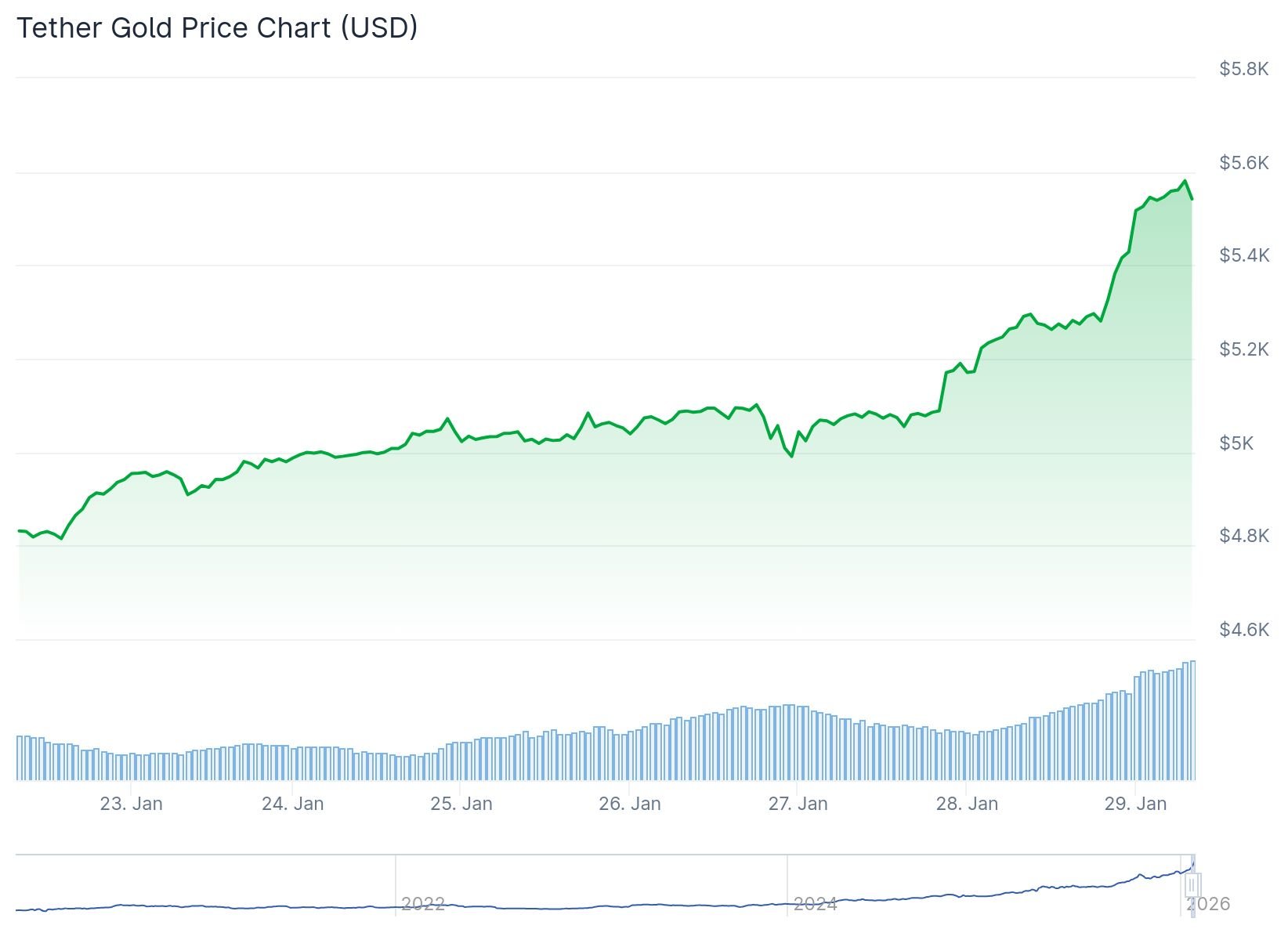
Pax Gold (PAXG) rose 5.9% to $5,561, according to CoinGecko data. Both tokens represent ownership of physical gold held in vaults.
Pax Gold recorded inflows of $248 million in January, according to DefiLlama data. Spot gold broke above $5,500 per ounce for the first time on Wednesday.
Tether Gold accounts for more than half of the gold-backed stablecoin market by capitalization. The tokens allow investors to gain exposure to gold prices without holding physical metal.
The Federal Reserve’s decision not to cut interest rates preceded the gold price surge. The SPDR Gold Shares ETF (GLD) rose 3.88% during regular trading and added another 2.62% in after-hours trade.
Gold was trading at $5,549 as of this writing, up almost 30% year-to-date. Tether’s purchases add a structural demand floor but remain too small to dominate the overall market.
Stop guessing and start investing with confidence. KnockoutStocks gives you the AI insights, market intelligence, and stock research you need to spot opportunities, cut through the noise, and make smarter investment decisions — all in one powerful platform.
Sign up today and get 50% OFF full access to our premium stock picks.
Simply use coupon code SPECIAL50 at checkout to claim your exclusive discount.
Get 3 Free Stock Ebooks
Discover top-performing stocks in AI, Crypto, and Technology with expert analysis.
- Top 10 AI Stocks - Leading AI companies
- Top 10 Crypto Stocks - Blockchain leaders
- Top 10 Tech Stocks - Tech giants



