






TLDR
- Ed Yardeni raised the probability of a U.S. stock market crash to 35%, up from 20%
- Oil prices have topped $100 a barrel, fueling inflation fears and slowing growth expectations
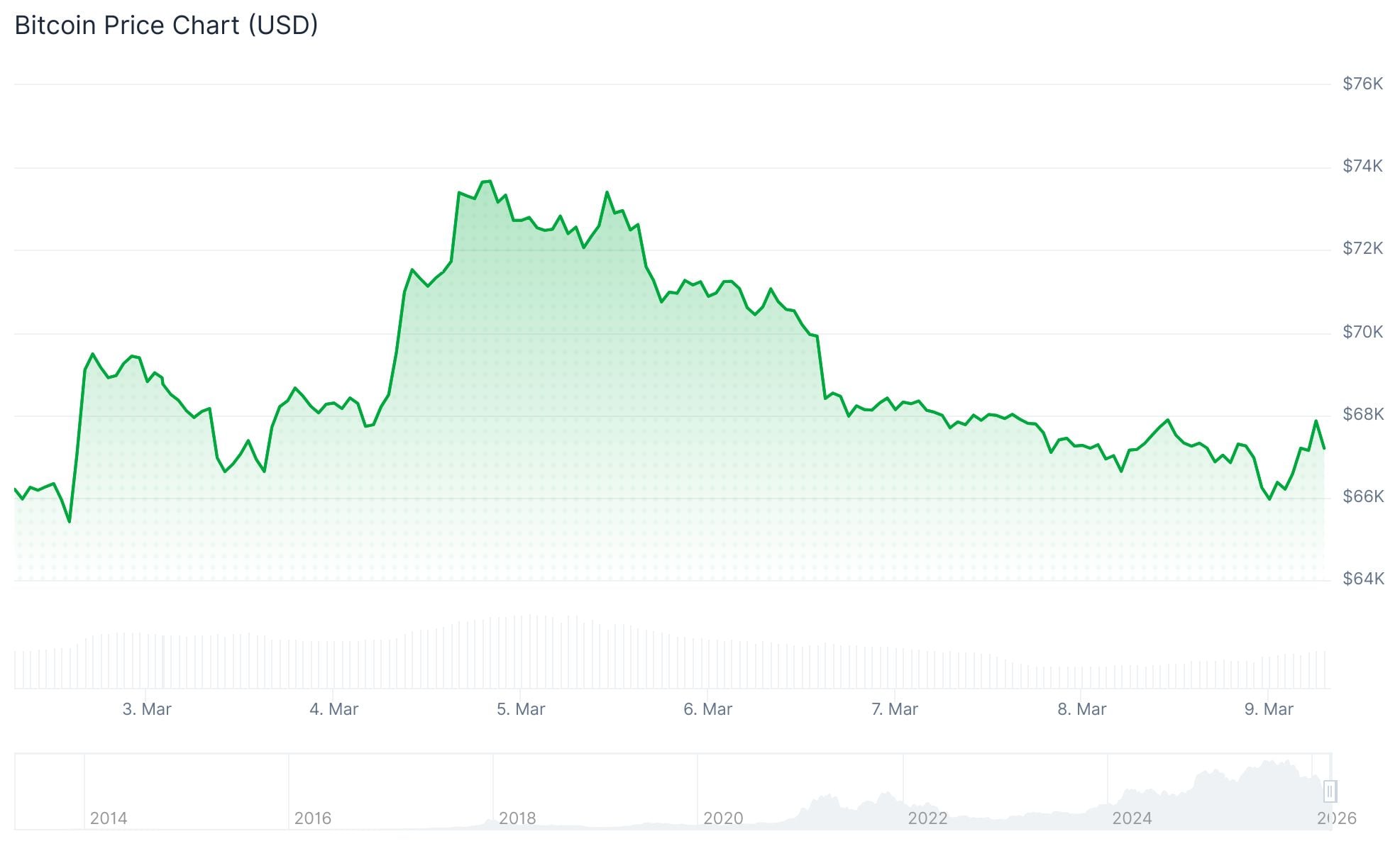
- Bitcoin is trading around $67,000, holding relatively steady compared to falling global equities
- Only 25% of Bitcoin’s price movement is tied to stock market correlation, per NYDIG research
- Iran has named a new supreme leader, signaling continued conflict and further market uncertainty
Wall Street strategist Ed Yardeni has raised his odds of a U.S. stock market crash to 35% for the rest of 2025, up sharply from his earlier estimate of 20%. At the same time, he cut the chances of a market rally to just 5%, down from 20%.
US stocks are facing a growing risk of a sharp selloff this year as the escalating war in Iran hurts global markets, according to veteran strategist Ed Yardeni, updating his outlook for what he describes as “fast-moving times” https://t.co/qJPiN3tZJk
— Bloomberg (@business) March 9, 2026
The change comes as oil prices climbed above $100 a barrel. Higher energy costs raise inflation risk while also slowing economic growth, which puts pressure on both stocks and crypto markets.
Yardeni put it simply: “The U.S. economy and stock market are stuck between Iran and a hard place. So is the Fed.”
The U.S.-Iran conflict continues to escalate. President Trump has threatened further strikes after Iran refused to stand down. Iran also named a new supreme leader, Mojtaba Khamenei, son of Ali Khamenei, who was killed in a U.S. strike. Iran’s top security official has said Trump “must pay the price” for the war.
Bitcoin was trading at around $67,378 on Monday, up just over 1% in 24 hours. That’s a relatively calm number given the turbulence in traditional markets.
S&P 500 futures dropped more than 2% in Asian trading. The VIX, a measure of stock market fear, hit its highest level since the tariff chaos of April 2024. The dollar posted its best weekly gain in a year.
Globally, markets took a hard hit. The MSCI global equity gauge fell 3.7% last week. South Korea has not recovered from its record two-day drop. Hedge funds increased short positions in U.S. equity ETFs.

Investors have also pushed back expectations for the next Fed rate cut to September. Before the conflict began in late February, markets had fully priced in a cut by July.
Bitcoin’s Price Is Not Fully Tied to Stocks
Research from NYDIG shows that only about 25% of Bitcoin’s price moves can be explained by its connection to U.S. stocks. The other 75% is driven by factors specific to the crypto market.
Greg Cipolaro, head of research at NYDIG, said Bitcoin’s recent movement alongside software stocks reflects shared exposure to the current economic environment, not a structural link.
Still, Bitcoin has dropped alongside equities during every major risk-off period since 2020.
Crypto-Linked Stocks Also Feel the Pressure
Crypto-linked stocks have seen big price swings as investors grow more cautious. Bitcoin miner Core Scientific sold some of its Bitcoin holdings as it shifted toward an AI-focused structure. Its stock dropped around the time of the sale.
Ether was up 2.3% to around $1,981. Solana climbed 1.8% to $83.69 but remains the weakest major cryptocurrency over a seven-day period, still down 1.5% on the week.
Ten-year Treasury yields jumped six basis points as markets priced in higher inflation from rising oil costs.
The S&P 500 dropped 2% last week, less than most other markets, partly because the U.S. produces much of its own energy.


