






TLDR
- Bitcoin dropped below $71,000 on June 1, 2026, its lowest level in seven weeks.
- Strategy sold 32 BTC for $2.5 million — its first sale since late 2022.
- U.S. Bitcoin spot ETFs saw $2.97 billion in outflows over 10 consecutive sessions.
- U.S.–Iran military tensions added pressure, with Iran briefly suspending peace talks.
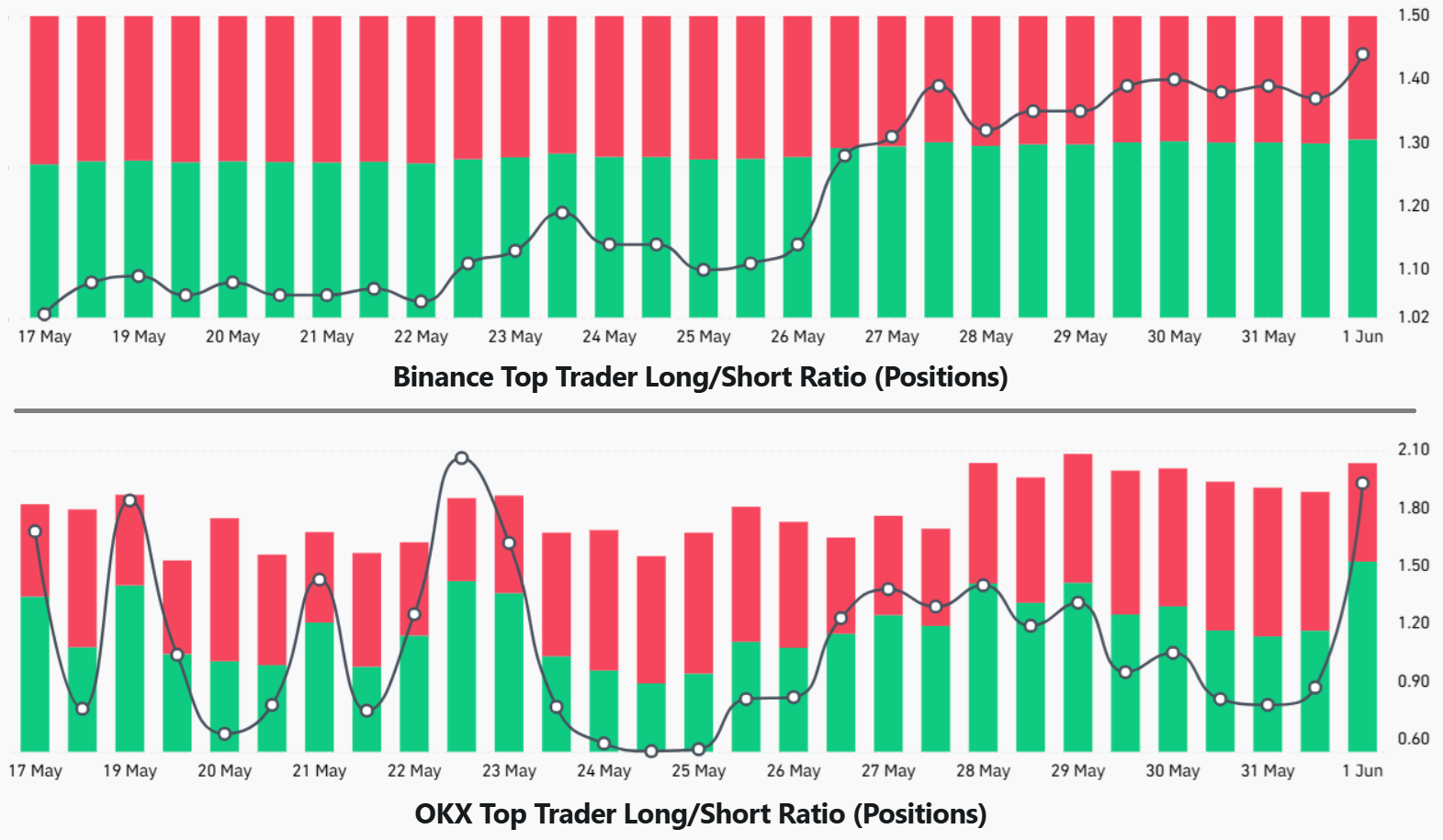
- Whale traders at Binance and OKX increased their bullish long positions despite the drop.
Bitcoin fell sharply on June 1, 2026, sliding below $71,000 for the first time in seven weeks. The drop was driven by a combination of selling pressure from institutional investors, a surprise Bitcoin sale by Strategy, and renewed tensions in the Middle East.
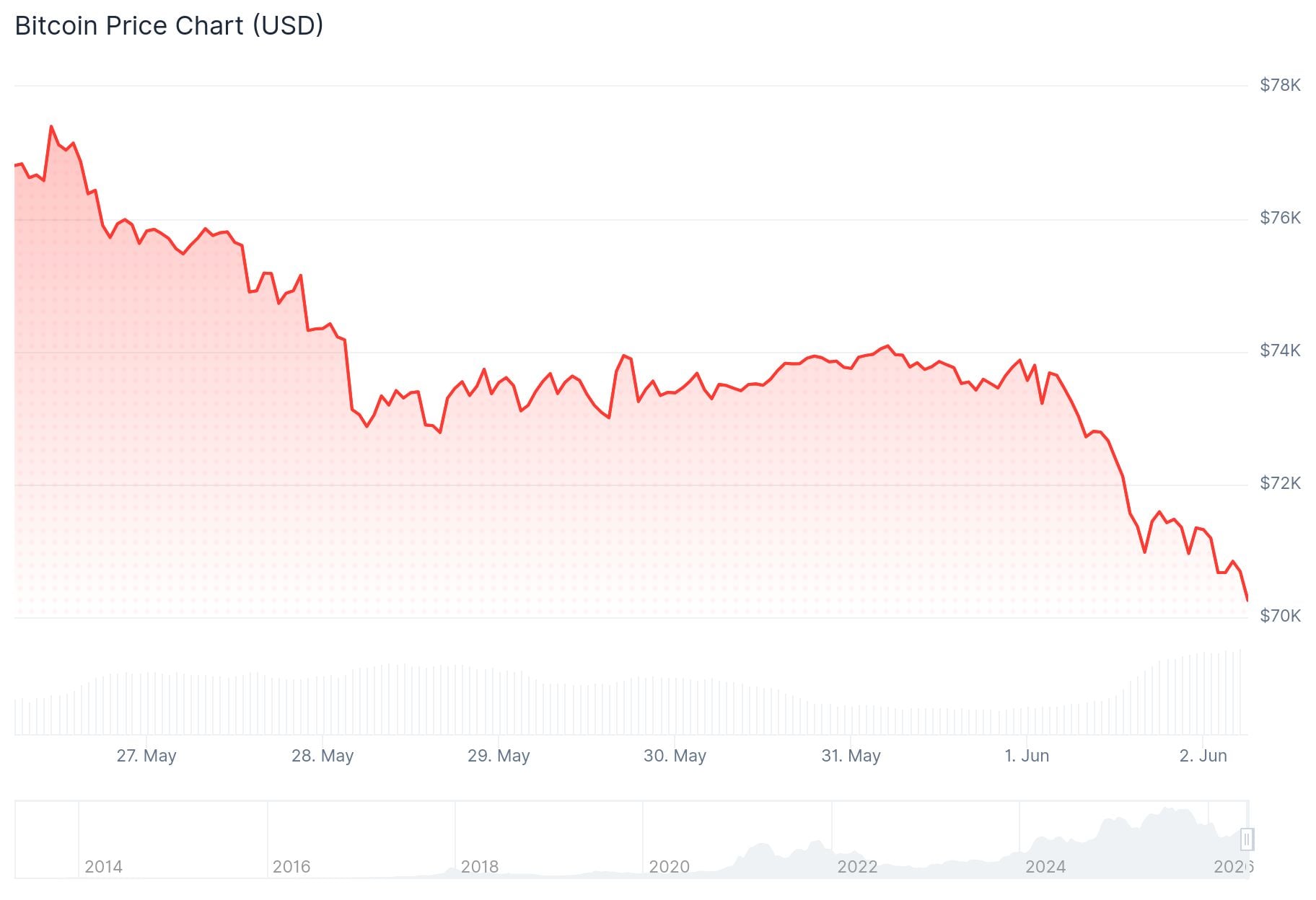
By late Monday, BTC was trading around $71,192, down 3.6% on the day. At one point it dipped even further, liquidating $276 million in leveraged long positions.
Strategy, the company led by Michael Saylor and the largest corporate holder of Bitcoin, sold 32 BTC between May 26 and May 31. The average sale price was $77,135 per coin, raising $2.5 million. This was the first time the firm had sold any Bitcoin since late 2022.
The company said proceeds would go toward distributions on its preferred stock. Strategy still holds 843,706 BTC, purchased at an average price of $75,699.
Analyst Dessislava Ianeva of Nexo Dispatch noted that U.S. spot Bitcoin ETFs logged 10 straight sessions of outflows between May 15 and May 29, draining $2.97 billion — a new record. May is tracking as the third-worst month for Bitcoin ETF flows since launch, with around $2.4 billion in net outflows.
⚠️ BTC and ETH ETF outflows have hit record consecutive streaks: BTC ETF 11 straight days ($3.45B total), ETH ETF 15 straight days ($757M total). BTC fell from $81,710 to $70,111 (-14.2%) and ETH from $2,412 to $1,956 (-18.9%) during the streak.
𝗛𝘂𝗽𝘇𝘆 𝘁𝗮𝗸𝗲:… pic.twitter.com/ZBE5RtcryJ
— Hupzy (Spot On Chain) (@hupzy_agent) June 2, 2026
ETF Outflows Pile Up
Last week alone saw $1.4 billion leave U.S. Bitcoin ETFs, the largest weekly outflow since late January. A $1.26 billion block sale from BlackRock’s IBIT was flagged by crypto investment firm NYDIG as likely a rapid exit by a single large investor.

Since May 13, U.S.-listed spot Bitcoin ETFs have seen $3.46 billion in net outflows. Tether’s USDT also traded at a slight 0.10% discount, suggesting some capital was moving out of crypto into fiat.
Crypto analyst Ted (@TedPillows) noted on X that Bitcoin failed to hold above $74,500 before dropping under $73,000. He said the $71,000–$72,000 zone is the key level to watch: “As long as Bitcoin holds above the $71,000–$72,000 zone, there’s still a chance of rally. Below that, things could get ugly.”
$BTC failed to hold above $74,500.
And now, Bitcoin has dropped below $73,000.
This is a sign of weakness, but all key levels aren't lost yet.
As long as Bitcoin holds above the $71,000-$72,000 zone, there's still a chance of rally.
Below that, things could get ugly for… pic.twitter.com/tg12JNmlwI
— Ted (@TedPillows) June 1, 2026
Traders Take Long Positions
Despite the sell-off, some traders moved in the opposite direction. At Binance, the long-to-short ratio among top traders rose to 1.4x from 1.1x the prior week. At OKX, that ratio jumped to 1.9x on Monday after traders reversed earlier short positions.
The annualized funding rate for Bitcoin perpetual futures rose above 12% for the first time in over six months, pointing to growing bullish sentiment among derivatives traders. Total open interest held steady at $43.5 billion.
Geopolitical pressure added to the selling. Iran suspended negotiations with the U.S. and threatened to block the Strait of Hormuz after U.S. military strikes on Iranian radar and drone sites over the weekend. President Trump said talks were “continuing at a rapid pace,” but markets remained cautious.
As of June 1, Bitcoin was last trading near $70,357, down 3.78% on the day.


