





TLDR
- The CLARITY Act is moving toward Senate floor debate after clearing the Banking Committee vote.
- Lawmakers face a limited calendar before the July 4 recess affects Senate scheduling plans.
- The bill would establish clearer federal oversight rules for digital assets and crypto trading.
- A CBDC provision would require congressional approval before any Federal Reserve retail digital dollar.
- Delayed Senate action could push the bill into a more crowded election-season legislative calendar.
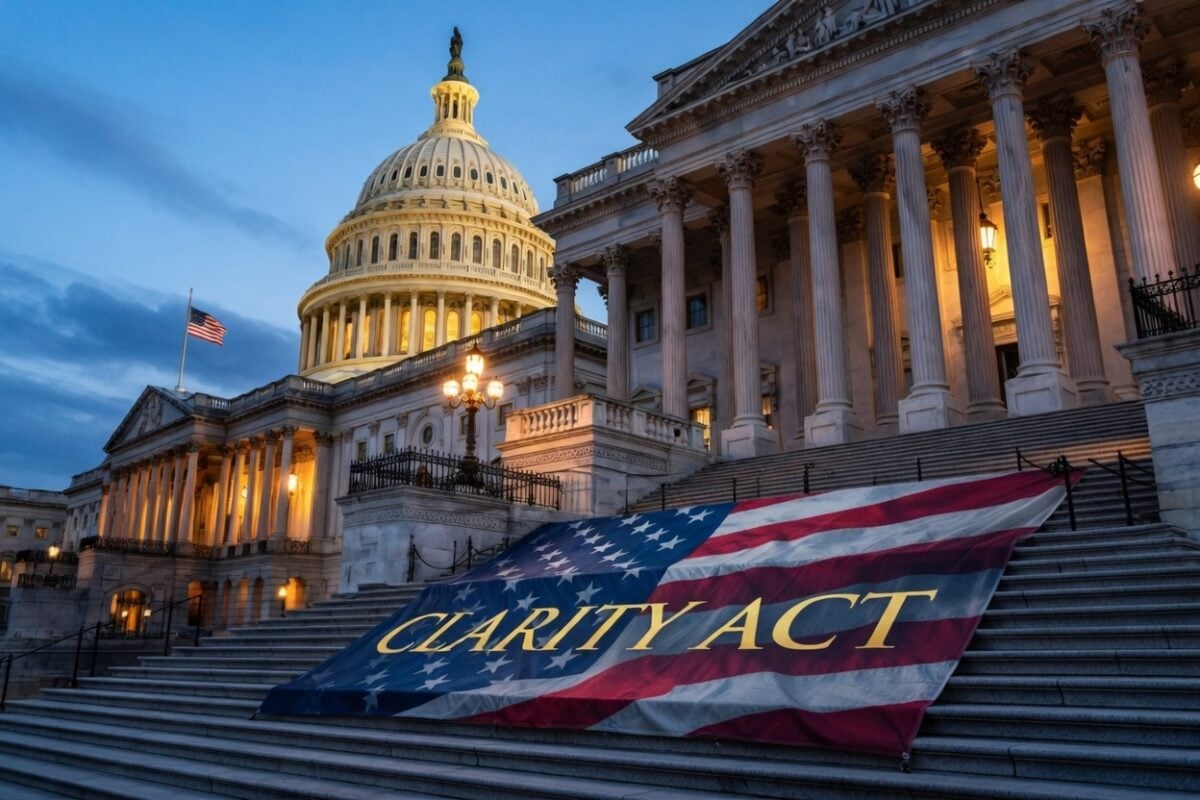
The CLARITY Act is heading toward a Senate floor test as lawmakers return from recess with little time before the July 4 break. After clearing Senate Banking in a 15-9 vote, the bill has become a closely watched measure for crypto market structure and oversight.
The debate now centers on whether Senate leaders can secure floor time and enough support before the deadline. A delay could push the bill into a crowded election-season calendar, adding uncertainty for digital asset regulation.
Senate Floor Timing Narrows Before Recess
The Digital Asset CLARITY Act is moving toward a Senate floor test as lawmakers return from recess with a limited calendar before the July 4 break. The bill cleared the Senate Banking Committee by a 15-9 vote, placing crypto market structure legislation closer to a full chamber debate. Supporters are pressing for quick action because delayed floor time may push the measure into a more difficult election-season schedule.
The July 4 deadline has become a central point in the legislative debate because Congress has few working days before the recess begins. Senate leaders would need to schedule floor consideration while managing other priorities across the chamber. The bill is expected to require broad support because most major Senate legislation must overcome a filibuster threshold.
JUST IN: 🇺🇸 CLARITY Act is “very close to getting done”
The CLARITY Act cleared Senate Banking 15-9.
Now it faces the floor.Lawmakers are back from recess with a narrow runway to pass it before the July 4 break.
Miss that window, and it likely slips past the midterms into a… pic.twitter.com/XYRQvNaQk0
— Crypto Rover (@cryptorover) June 2, 2026
If the measure does not move before the recess, lawmakers may face a longer path to final passage later in the year. The post-recess calendar could bring competing budget, defense, and election-related priorities. That schedule may leave less room for a standalone digital asset market structure bill.
Committee Vote Sets Up Full Senate Test
The Senate Banking Committee vote gave the CLARITY Act a stronger procedural position after months of debate over digital asset oversight. The bill is designed to define how federal agencies supervise crypto markets, trading platforms, and certain digital assets. Its supporters say clearer rules are needed for companies seeking to operate within United States law.

The measure also contains language that would block the Federal Reserve from issuing a retail central bank digital currency without congressional approval. That provision has drawn attention from stablecoin issuers and lawmakers focused on payment systems. Under the reported framework, any retail digital dollar would require direct action from Congress rather than agency rulemaking alone.
The CLARITY Act is also being viewed alongside the GENIUS Act, which established a stablecoin payments framework in 2025. Together, the measures would shape how private stablecoins, trading venues, and digital asset intermediaries operate. The Senate floor vote is now the next test for whether that framework advances before the summer recess.
July 4 Recess Becomes Key Deadline for Digital Asset Rules
The legislative push is unfolding while crypto markets remain sensitive to policy developments, with Bitcoin reported below $72,000 in the provided market context. Traders and industry participants are watching whether Senate action changes expectations for institutional participation. Exchange-traded fund activity and broader digital asset pricing remain part of the market backdrop.
A floor vote before July 4 would give the bill a clearer route through the current Congress. A delay would not end the measure, but it would add scheduling and political risk. Lawmakers would then need to decide whether to attach it to a larger package or revive it later.
The CLARITY Act now stands at a key point for United States crypto regulation, with Senate timing shaping the next stage. The bill’s progress will depend on floor scheduling, vote counts, and negotiations across committees. For digital asset firms, the coming weeks may determine whether market structure rules advance before the summer break.


