





TLDR
- The White House plans to meet with law enforcement groups on Monday to resolve objections to the CLARITY Act’s illicit-finance language.
- The dispute centers on Section 604, which would shield software developers from being treated as “money transmitters.”
- The National Sheriffs Association says the bill gives DeFi tools too broad an exemption from anti-crime rules.
- Senate leaders, including Tim Scott and John Thune, want a floor vote on the bill in July.
- President Trump’s housing bill delay raises questions about whether he might also stall the CLARITY Act.
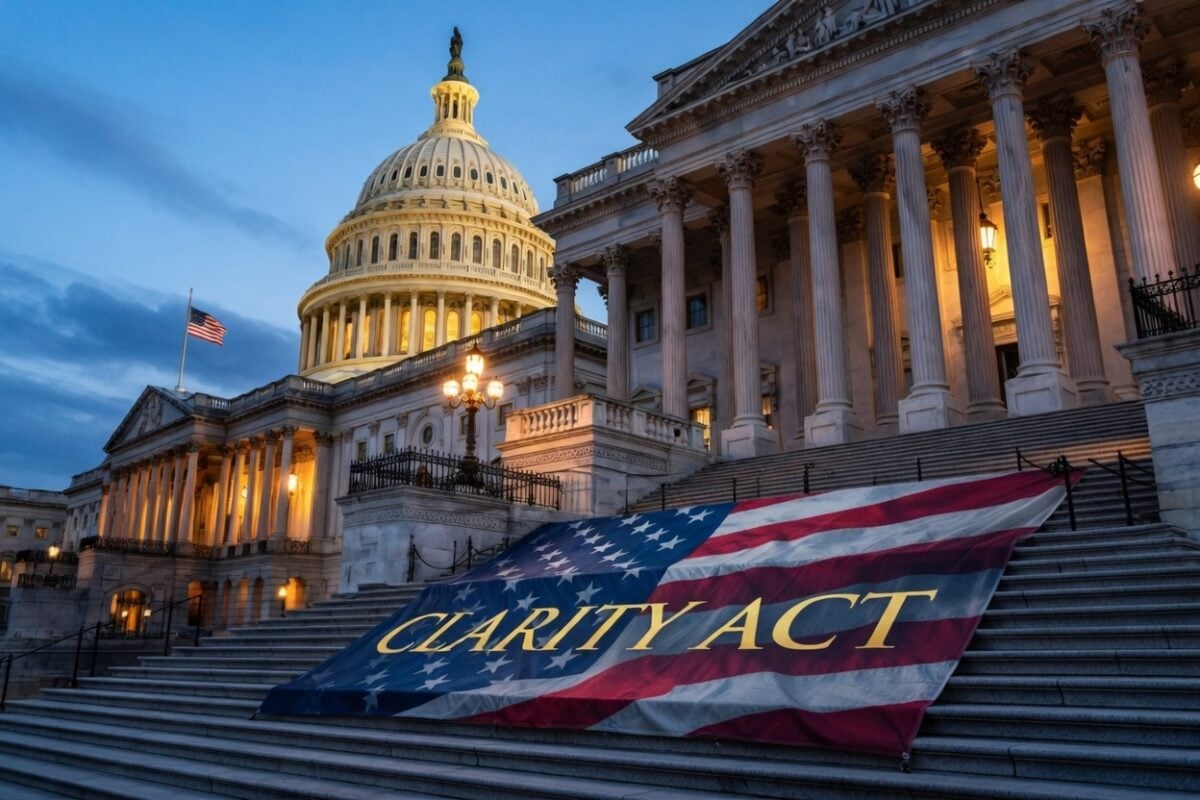
The CLARITY Act, a bill meant to set clear rules for cryptocurrency markets, is facing a tight deadline in the Senate. The White House is now stepping in to try to smooth out one of the bill’s biggest sticking points before time runs out.
🐋 WHALE WATCH: The Senate is in recess but the CLARITY Act isnt dormant White House staff industry leaders and lawmakers are working through the final friction points before the July 13 return. A floor vote is expected later this month.
If it passes regulation by enforcement… pic.twitter.com/Ew3UEOIj8K
— Whale Factor (@WhaleFactor) June 29, 2026
According to a person briefed on the plan, White House officials invited law enforcement groups to a meeting on Monday. The goal is to address concerns about how the bill handles illicit finance.
The Fight Over Section 604
The disagreement focuses on a part of the bill known as the Blockchain Regulatory Certainty Act, listed as Section 604. This section would protect software developers from being classified as money transmitters if they don’t control the tools they build.
Supporters say this protects people who create decentralized finance projects without managing user funds. Critics say it goes too far.
The National Sheriffs Association sent a letter in May saying the exemption was too broad. The group argued that some developers do control money flow and should be regulated under the Bank Secrecy Act.
Other law enforcement officials have voiced support for the bill instead. White House crypto adviser Patrick Witt has met with both sides multiple times this year.

Witt has argued that the bill gives law enforcement new tools to fight crime. He has said the absence of a law leaves a gap that bad actors can exploit.
Senator Elizabeth Warren, the top Democrat on the Banking Committee, has criticized the bill’s approach to illicit finance. She has pointed to crypto’s use by criminal groups and drug cartels as a reason for caution.
A Narrow Window for a Vote
Senate Majority Leader John Thune has said he wants to bring the bill to the floor in the coming weeks. A news report said Thune might call a vote even without full Democratic support.
Banking Committee Chairman Tim Scott posted on social media that the Senate should vote on the bill in July. The Senate has about four weeks of floor time left before its summer break.
The bill needs 60 votes to pass, which means Republicans need Democratic support. Several lawmakers have said they won’t vote yes unless the bill includes ethics rules barring government officials from holding personal crypto interests.
Senator Cynthia Lummis, a supporter of the bill, said negotiators are still working out details on DeFi rules, illicit finance, and ethics provisions. She said the text would be released around the July 4th holiday for a final review.
Outside of the crypto bill, Congress has been dealing with a separate housing bill. President Trump delayed signing it, saying he wants a voter-ID bill passed first.
It is not clear if Trump’s resistance could extend to the CLARITY Act. A policy analyst at TD Cowen said he expects the housing bill to become law by July 10 even without Trump’s signature, due to constitutional rules on unsigned bills.
If Republicans cannot reach 60 votes before the August recess, some expect the bill could be delayed further. That could push the legislation into the next session of Congress in 2027.


