






TLDR
- Morgan Stanley cut its third-quarter 2026 Brent crude forecast by $15 to $75 a barrel
- Strait of Hormuz tanker traffic returned to pre-conflict levels of 30 to 40 ships per day
- Bank now projects a global oil surplus of 4.8 million barrels per day in 2027
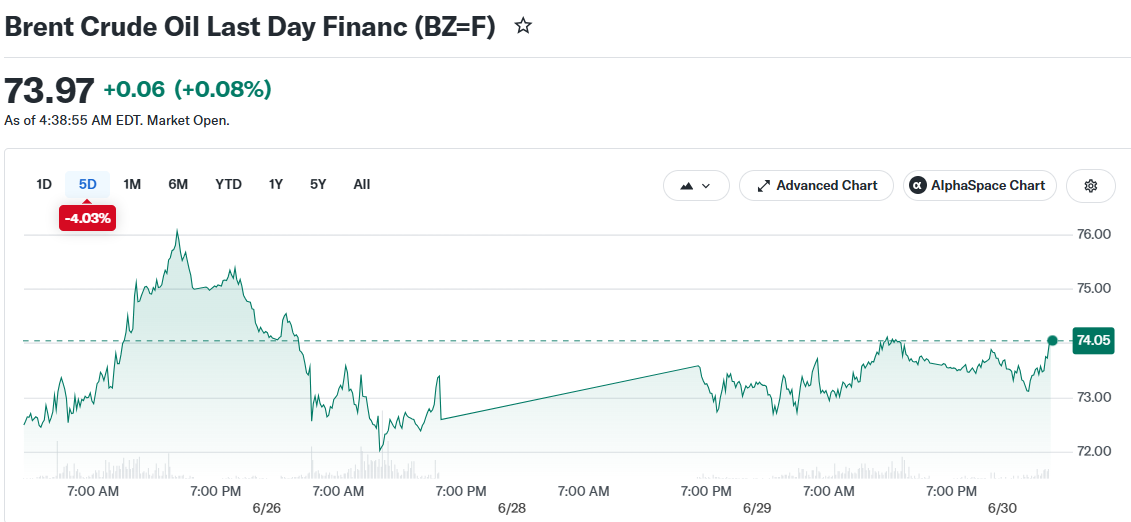
- Brent futures have erased April gains, falling from a peak above $126 to under $74
- Oil is on track for a third straight monthly decline and worst quarter since early 2020
Morgan Stanley has lowered its oil price forecasts after shipping traffic through the Strait of Hormuz recovered faster than analysts expected. The bank cut its third-quarter 2026 Dated Brent forecast by $15, bringing it down to $75 a barrel.
The change comes after a four-month conflict disrupted oil flows through the narrow waterway. The strait is a key passage for oil exports from the Middle East.
Tanker Traffic Nears Pre-Conflict Levels
Morgan Stanley analysts counted 35 oil and gas tankers exiting the Persian Gulf through the strait on Thursday. That number falls within the 30 to 40 range seen before the conflict began in February.
This marked the first time traffic returned to that typical range since fighting started. Tanker companies and their crews appear willing to navigate the strait again, the bank said.
Traffic did slow over the weekend after two ships were hit during a flare-up in the conflict. Still, the overall trend points toward recovery.
To balance the oil market in 2027, flows through Hormuz only need to reach about 65% of pre-conflict levels. That works out to roughly 11 to 12 million barrels a day, according to Morgan Stanley.
Surplus Concerns Replace Shortage Fears
The bank now expects a global oil surplus of 4.8 million barrels per day in 2027. Before the conflict began, Morgan Stanley had projected a smaller surplus of 2 million to 3 million barrels per day for the year.

The closure of the strait had briefly flipped that surplus into a deep deficit. Now that exports are ramping back up, the market is shifting back toward oversupply.
Strong US oil supply and weak demand from China are adding to the surplus risk. Morgan Stanley pointed to these two factors as ongoing pressures on prices.
The bank also cut its fourth-quarter 2026 forecast to $75 a barrel, down from an earlier estimate of $80. For the first half of 2027, it now sees Brent at $75 a barrel, dropping to $70 in the second half.
This marks the second time Morgan Stanley has revised its price forecast since the US and Iran announced an agreement to halt the war and reopen the strait earlier this month.
Brent futures had spiked above $126 a barrel in April during the height of the conflict. Those gains have since been erased entirely.
The most-active September Brent contract closed at $73.91 a barrel on Monday. Prices dipped further on Tuesday, with Brent August futures falling 0.9% to $72.47 a barrel.
US West Texas Intermediate crude for August fell 0.5% to $70.24 a barrel. Oil is now headed for a third consecutive monthly decline.
This would mark the worst quarterly performance for oil since early 2020. Iranian and US negotiating teams were expected to meet in Doha this week, but Iran said on Monday that no meeting had been scheduled.
Weekend missile fire from both sides tested the interim ceasefire that ended the four-month war.
Stop guessing and start investing with confidence. KnockoutStocks gives you the AI insights, market intelligence, and stock research you need to spot opportunities, cut through the noise, and make smarter investment decisions — all in one powerful platform.
Sign up today and get 50% OFF full access to our premium stock picks.
Simply use coupon code SPECIAL50 at checkout to claim your exclusive discount.
Get 3 Free Stock Ebooks
Discover top-performing stocks in AI, Crypto, and Technology with expert analysis.
- Top 10 AI Stocks - Leading AI companies
- Top 10 Crypto Stocks - Blockchain leaders
- Top 10 Tech Stocks - Tech giants



