






TLDR
- Brent crude fell over 9% in two sessions, dropping from above $100 to around $87 a barrel
- The U.S. suspended air strikes on Iran, with President Trump citing ongoing diplomatic talks
- Shipping through the Strait of Hormuz remains far below normal, with fewer than 10 vessels passing daily
- Iran halted retaliatory attacks after the U.S. pause; China is also reportedly involved in diplomatic efforts
- Analysts warn the ceasefire is unofficial and physical oil flows remain heavily constrained
Oil prices have continued to fall as hopes grow that the U.S. and Iran may reach a diplomatic agreement, reducing fears of a long-term disruption to Middle East oil supplies.
Brent crude dropped more than 9% across two sessions, falling from above $100 a barrel last week to around $87.24 on Tuesday. U.S. West Texas Intermediate also fell sharply, settling at $82.61 on Monday — its lowest level since July 16.
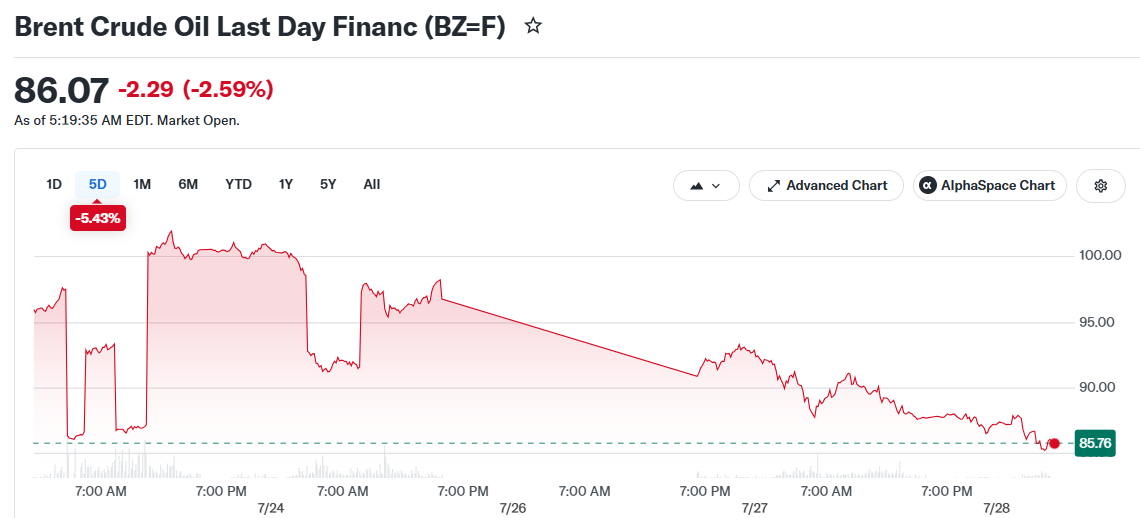
The selloff followed news that President Donald Trump paused U.S. air strikes on Iran over the weekend to allow time for negotiations.
Trump said Monday the U.S. is holding “good talks” with Iran, adding there is “a good chance that something could happen.” He also warned of “strong military action” if diplomacy fails.
🇴🇲🇮🇷 Iran and Oman are drafting the deal to reopen the Strait of Hormuz, and Tehran wants a peace agreement before the U.S. midterms.
-Per the WSJ, the two countries huddled through the weekend into Monday on an arrangement for safe passage through the strait, the narrow fix… pic.twitter.com/NvP5N4Gx1C
— Mario Nawfal (@MarioNawfal) July 28, 2026
Iran halted its own retaliatory attacks following the U.S. pause. Reports also indicate China has been working behind the scenes to help revive dialogue between the two sides.
Shipping Disruptions Remain a Key Concern
Despite the improved mood in markets, physical oil flows through key waterways remain well below normal levels.

Fewer than 10 commodity vessels passed through the Strait of Hormuz daily over the weekend, according to shipping data from Kpler. Analysts say flows fell to roughly 15% of pre-war levels, compared to a normal run rate of around 20 million barrels a day.
“A political pause doesn’t put a single extra barrel on the water right here and now,” said Ole Hvalbye, market analyst at SEB Research.
Traffic through the Bab el-Mandeb strait also remains depressed after Yemen’s Houthis attacked Saudi oil installations along the Red Sea coast, forcing longer and more costly shipping routes.
Negotiators from Iran and Oman are continuing discussions aimed at restoring shipping through the Strait of Hormuz, which normally carries about one-fifth of global oil flows.
Analysts Warn of Continued Volatility
Market analysts say prices will stay volatile until there is a signed framework — not just an informal pause in fighting.
“The market seems to be forever seeking good news from an arena that really is not providing any,” said PVM analyst John Evans. He said oil futures will only fall further if high prices dent demand, not because of “questionable mini-ceasefires.”
IG senior market analyst Tony Sycamore said the selloff reflected growing confidence that an exit from the conflict was possible, but cautioned that the pause remains fragile.
Any breakdown in talks, or renewed attacks on Saudi export infrastructure, could quickly rebuild the risk premium in oil prices.
Elsewhere, Kazakhstan’s main oil export terminal at the Caspian Pipeline Consortium resumed loadings after being halted due to Ukrainian drone attacks, easing some near-term supply concerns.
Stop guessing and start investing with confidence. KnockoutStocks gives you the AI insights, market intelligence, and stock research you need to spot opportunities, cut through the noise, and make smarter investment decisions — all in one powerful platform.
Sign up today and get 50% OFF full access to our premium stock picks.
Simply use coupon code SPECIAL50 at checkout to claim your exclusive discount.
Get 3 Free Stock Ebooks
Discover top-performing stocks in AI, Crypto, and Technology with expert analysis.
- Top 10 AI Stocks - Leading AI companies
- Top 10 Crypto Stocks - Blockchain leaders
- Top 10 Tech Stocks - Tech giants



