





TLDR
- Dutch front-month gas futures rose 0.5% Friday to around €57.50/MWh but still fell roughly 2.5% for the week
- Back-to-back weekly declines driven by tentative diplomatic progress on Middle East maritime corridors
- LNG vessel traffic through the Strait of Hormuz remains severely restricted despite ongoing mediation
- EU gas storage is just 55-57% full entering August, well below the five-year average of 71%
- Iranian naval activity near the strait and demands around vessel passage are keeping supply uncertainty elevated
European gas prices ticked higher on Friday but still closed out their second straight week in the red, as easing geopolitical fears clashed with a tight physical market and fresh tensions in the Persian Gulf.
Benchmark Dutch front-month futures rose 0.5% to around €57.50 per megawatt-hour on Friday. That small gain was not enough to offset the week’s losses, with prices finishing down roughly 2.5% from the previous Friday.
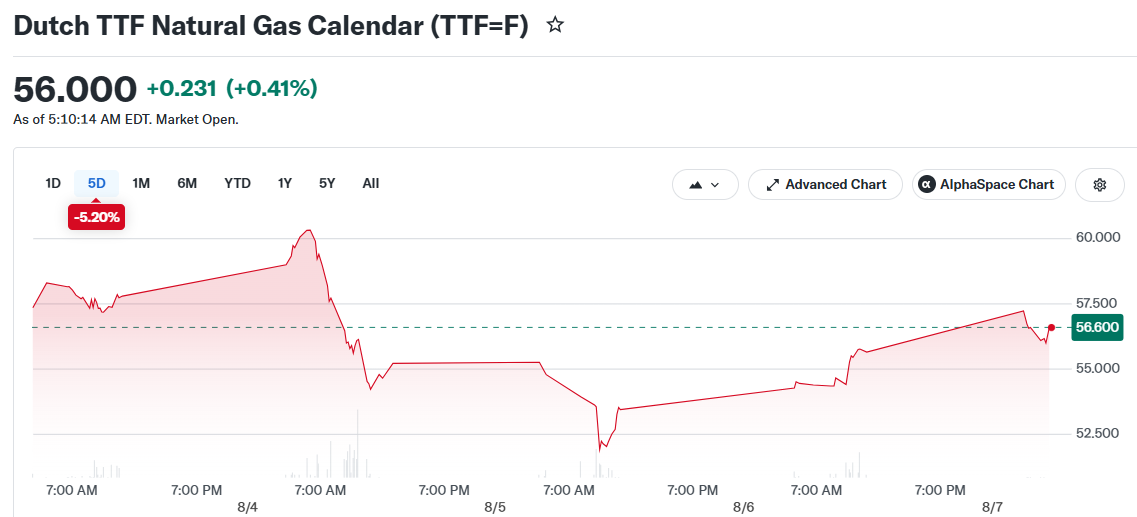
The back-to-back weekly declines came as diplomatic efforts to reopen shipping lanes through the Strait of Hormuz took some heat out of the market. Oman and Qatar have been mediating talks aimed at establishing safe maritime corridors through the waterway, which caused energy traders to pull back on risk premiums that spiked late in July.
A broader decline in global crude prices over the past two weeks also helped ease some of the pressure on European energy markets.
Supply Routes Still Blocked
Despite the diplomatic progress, LNG vessel traffic through the Strait of Hormuz continues to operate under severe restrictions. Shipping delays are slowing the arrival of summer spot cargoes from key Middle Eastern suppliers, particularly Qatar.
🇮🇷 Iran just dropped a draft plan that basically says: “We’ll open Hormuz when we’re good and ready… and on our terms.”
They’ve lined up a new route with Oman, but only if the U.S. lifts its blockade first.
American and Israeli ships? Banned. Anything they call “hostile”?… pic.twitter.com/UVGWbw2Ica
— Mario Nawfal (@MarioNawfal) August 7, 2026
Iranian state media reported Friday that naval forces had conducted operations against what it described as “hostile targets” near the strait, following explosions on Qeshm Island. Tehran is also reportedly seeking to bar US and Israeli vessels from the waterway and is demanding compensation from countries it considers hostile before allowing transit.

Those developments pushed prices back above €57/MWh on Friday, recovering most of the losses posted earlier in the week.
Storage Crunch Adds Pressure
European gas storage is entering August at just 55% to 57% capacity. The five-year average for this time of year is around 71%, leaving European utilities well behind where they would normally be heading into winter.
Unusually high summer temperatures across southern Europe have made the storage shortfall worse. Hot weather has pushed up demand for gas-fired power generation to run air conditioning systems, eating into injection volumes.
European buyers are now competing directly with Asian importers for available LNG cargoes on the global spot market. That competition is expected to keep a firm floor under European gas prices.
Analysts say prices will remain sensitive to any fresh setback in Middle East diplomacy. While talks continue, the physical market remains constrained, limiting how far prices can fall even as geopolitical tensions show early signs of cooling.
The most recent development as of Friday was Iran’s reported naval operation near Qeshm Island, which pulled European gas prices back up after a brief mid-week dip.
Stop guessing and start investing with confidence. KnockoutStocks gives you the AI insights, market intelligence, and stock research you need to spot opportunities, cut through the noise, and make smarter investment decisions — all in one powerful platform.
Sign up today and get 50% OFF full access to our premium stock picks.
Simply use coupon code SPECIAL50 at checkout to claim your exclusive discount.
Get 3 Free Stock Ebooks
Discover top-performing stocks in AI, Crypto, and Technology with expert analysis.
- Top 10 AI Stocks - Leading AI companies
- Top 10 Crypto Stocks - Blockchain leaders
- Top 10 Tech Stocks - Tech giants



