





TLDR
- Gold has fallen for four straight sessions, dropping to a three-week low near $4,327 per ounce
- A stronger U.S. dollar and rising Treasury yields are pushing gold lower
- Markets are now pricing a 70% chance of a Fed rate hike at the September 15-16 meeting
- U.S. strikes on Iran have pushed oil prices higher, fueling inflation concerns
- Gold broke below its 200-day moving average, a key technical level
Gold prices have extended their slide this week, hitting their lowest level in more than three weeks as the dollar strengthens and expectations for a Federal Reserve interest rate hike grow.
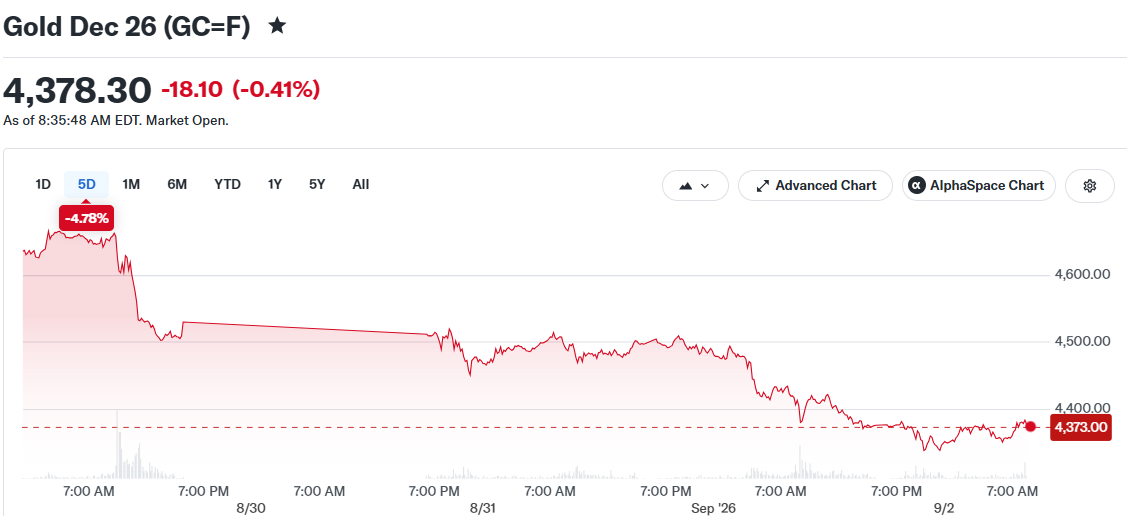
At the time of writing, gold spot prices traded around $4,327 per ounce, while gold futures fell 0.5% to $4,373. The metal has now dropped around 6% on the week.
Fed Rate Hike Fears Weigh on Gold
The pressure on gold comes from multiple directions. Federal Reserve Chair Kevin Warsh delivered a hawkish message at Jackson Hole last week, signaling that rates may need to stay higher for longer.
Fed Governor Michael Barr added to those concerns on Tuesday. He warned that policymakers should be ready to raise interest rates if inflation does not ease, noting that price pressures have remained above the Fed’s 2% target for more than five years.
FED RATE HIKE ODDS SURGE ABOVE 66%
Traders now see a more than 66% chance the Federal Reserve will raise rates by 25 basis points this month
Rate-hike expectations jumped after Kevin Warsh’s hawkish Jackson Hole remarks on Friday.
Just one week ago, markets priced the…
— *Walter Bloomberg (@DeItaone) September 1, 2026
Markets are now pricing in a 70% probability of a rate hike at the September 15-16 Federal Open Market Committee meeting, according to CME’s FedWatch tool.
Higher interest rates tend to hurt gold. The metal pays no yield, so it becomes less attractive when bonds and savings accounts offer better returns.

Middle East Tensions Push Oil Higher
Fresh U.S. military strikes against Iran on Tuesday added another layer of concern. Tehran said it retaliated, marking a sharp escalation after roughly a month of relative calm.
Brent crude was around $94 a barrel and U.S. crude hovered just below $90. Traders are watching whether a prolonged conflict could disrupt oil flows through the Strait of Hormuz.
Higher oil prices feed directly into inflation. That makes it harder for the Fed to hold rates steady or cut them, which in turn keeps pressure on gold.
The U.S. Dollar Index gained 0.1% to 99.73. A stronger dollar makes gold more expensive for buyers using other currencies, which can dampen demand.
Bond Market Selloff Adds Pressure
Global bond yields have also climbed. Thirty-year U.S. Treasury yields rose above 5.28%, returning to levels seen before Treasury Secretary Scott Bessent announced expanded bond buybacks on August 19.
That move had initially lifted gold by around 10% in August, its best monthly performance since January. The rally reflected concerns about rising sovereign debt and currency depreciation, known as the debasement trade.
Gold also broke below its 200-day moving average this week, a level closely watched by technical traders as a measure of longer-term momentum.
Analysts at Sucden Financial said Friday’s U.S. nonfarm payrolls report will likely determine gold’s next move. Softer jobs data could bring buyers back, while another strong reading could push yields higher and extend gold’s decline.
Stop guessing and start investing with confidence. KnockoutStocks gives you the AI insights, market intelligence, and stock research you need to spot opportunities, cut through the noise, and make smarter investment decisions — all in one powerful platform.
Sign up today and get 50% OFF full access to our premium stock picks.
Simply use coupon code SPECIAL50 at checkout to claim your exclusive discount.
Get 3 Free Stock Ebooks
Discover top-performing stocks in AI, Crypto, and Technology with expert analysis.
- Top 10 AI Stocks - Leading AI companies
- Top 10 Crypto Stocks - Blockchain leaders
- Top 10 Tech Stocks - Tech giants



