





TLDR
- The 10-year Treasury yield climbed to 5.041%, its highest point since 2007
- Markets are pricing in a 92%+ chance of a 25 basis point Fed rate hike this week
- August inflation remained well above the Fed’s 2% target, fueling rate hike bets
- Rising oil prices are tightening their correlation with Treasury yields, adding upward pressure
- S&P 500 futures fell 0.3% after the yield spike
The 10-year Treasury yield hit its highest level since 2007 on Tuesday, breaking above the key 5% threshold as markets brace for a likely Federal Reserve rate hike.
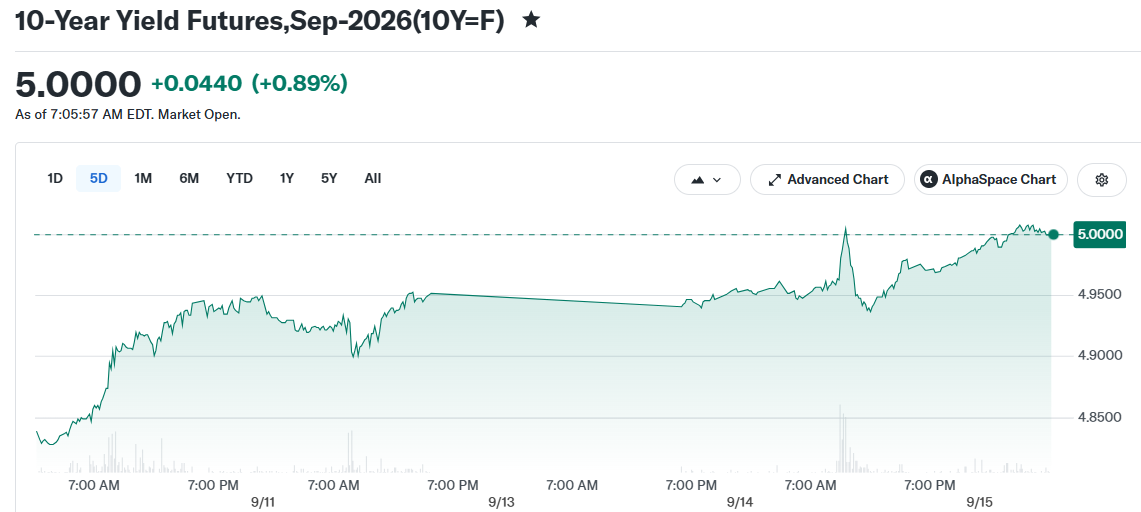
The yield climbed to an intraday high of 5.041% before settling around 5.014% in early trading. The 30-year Treasury bond yield also rose, reaching 5.381%. The 2-year note moved up to 4.663%.
Traders are now pricing in more than a 92% chance that the Fed will raise rates by 25 basis points at its two-day policy meeting, which started Tuesday, according to the CME FedWatch tool.
The main driver is inflation. August price data showed inflation still running well above the Fed’s 2% annual target, giving the central bank reason to keep tightening.
Concerns about U.S. fiscal health are also playing a role. A growing federal deficit and rising debt levels have some investors demanding a higher return to keep buying U.S. government debt.
Oil Prices Adding Pressure
One factor making things worse is the link between oil prices and Treasury yields. The one-month rolling correlation between West Texas Intermediate crude and the 10-year yield has reached 0.96, according to BMO Capital Markets.
Steve Sosnick, chief strategist at Interactive Brokers, said the relationship between oil and inflation expectations is unusually tight right now. He said that as long as oil prices stay high, interest rate pressure will continue.

Jonathan Liang, Standard Chartered’s CIO of fixed income and FX, said the link between inflation expectations and Treasury yields is likely to persist while inflation stays above the Fed’s target.
Stock Market Feels the Strain
The 5% level on the 10-year yield is seen as a psychological line in the sand for markets. Investors who can now earn safer returns in bonds may pull money away from stocks.
That pressure showed up quickly. S&P 500 futures fell 0.3% early Tuesday following the yield spike.
The stock market had already been under strain heading into this week. Higher yields make it more expensive for companies to borrow and reduce the appeal of holding equities when bonds offer competitive returns.
Yields and bond prices move in opposite directions. When yields rise, existing bond values fall, pushing investors to demand even higher returns on new debt.
The Fed meeting continues Wednesday, with a rate decision expected. Markets will be watching closely for any signals about future hikes beyond this week.
The 10-year yield at these levels marks the highest point for the benchmark rate in over 16 years, a development that is being felt across both bond and equity markets.
Stop guessing and start investing with confidence. KnockoutStocks gives you the AI insights, market intelligence, and stock research you need to spot opportunities, cut through the noise, and make smarter investment decisions — all in one powerful platform.
Sign up today and get 50% OFF full access to our premium stock picks.
Simply use coupon code SPECIAL50 at checkout to claim your exclusive discount.
Get 3 Free Stock Ebooks
Discover top-performing stocks in AI, Crypto, and Technology with expert analysis.
- Top 10 AI Stocks - Leading AI companies
- Top 10 Crypto Stocks - Blockchain leaders
- Top 10 Tech Stocks - Tech giants



