






TLDR
- Gold rose 0.6% to $4,139.91 an ounce Tuesday, recovering slightly after a 4% drop on Monday.
- Rising oil prices tied to the US-Iran standoff over the Strait of Hormuz are fueling inflation worries.
- The 10-year Treasury yield hit its highest level in 19 years, making gold less attractive to hold.
- Gold has fallen about 7% over the past month as the Fed raised interest rates and signaled more hikes may come.
- Traders are watching Wednesday’s inflation report and Friday’s jobs report for clues on the Fed’s next move.
Gold prices moved higher on Tuesday after a rough start to the week. The metal had dropped 4% on Monday, one of its steepest single day declines in recent months.
Spot gold rose 0.6% to $4,139.91 an ounce by 05:33 ET. Gold futures ticked up 0.1% to $4,171.90 an ounce.
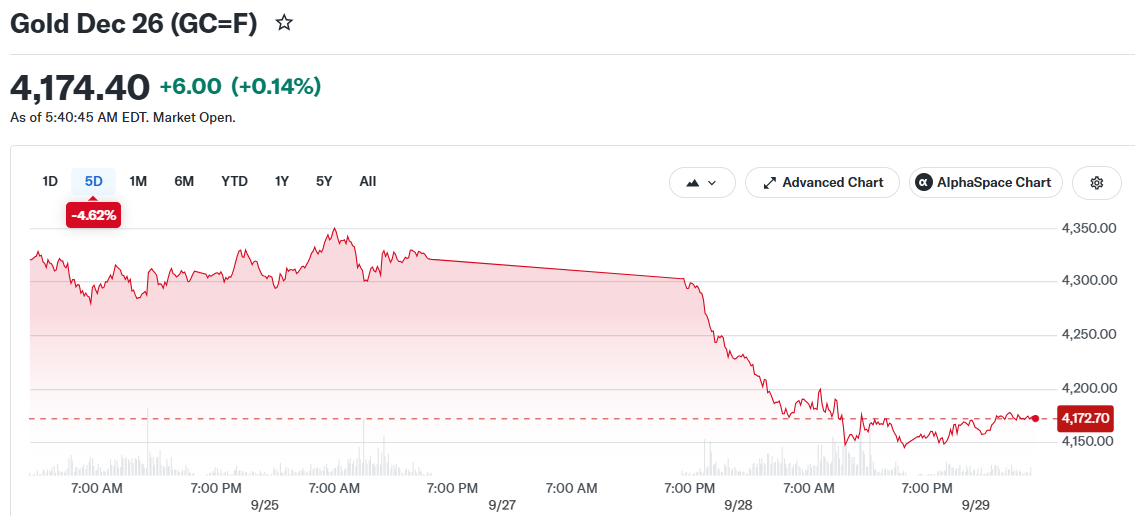
Despite the small bounce, gold remains close to a seven week low. The metal has struggled against a mix of rising yields and a stronger US dollar.
Iran Standoff Keeps Oil and Inflation Fears Elevated
Oil prices kept climbing as Iran held firm on its conditions for reopening the Strait of Hormuz. The waterway is a critical route for global energy shipments.
President Trump rejected Iran’s latest offer, which would have reopened the strait within seven days. Iranian officials have reportedly said they see little chance of a deal before the US midterm elections in November.
The conflict between the US and Iran is now in its eighth month. It continues to disrupt energy flows and raise concerns about inflation.
Higher oil prices tend to push inflation higher. That makes central banks more likely to raise interest rates, which can hurt gold since it does not pay interest or dividends.

Treasury Yields Climb to Multi-Decade High
The renewed rise in oil prices added pressure to the US Treasury market on Monday. The 10-year Treasury yield climbed to its highest level in 19 years.
Higher yields raise the cost of holding gold. This is because investors can earn more from bonds instead of holding a metal that generates no income.
BREAKING: Spot gold and silver prices extend losses to nearly -4% and -5% on the day as the US 10Y Note Yield rises to a fresh 19-year high.
Gold and silver have erased a combined -$1.2 trillion in market cap today. pic.twitter.com/nSTrKkOYZQ
— The Kobeissi Letter (@KobeissiLetter) September 28, 2026
Over the past month, gold has fallen about 7%. The decline followed the Federal Reserve’s first interest rate increase since 2023.
Fed officials also left the door open for more rate hikes this year. Markets currently see about a 70% chance of another increase in October.
Analysts at ANZ said the short term outlook for gold remains difficult. They pointed to higher yields and inflation risks as the main headwinds facing the metal.
A separate report from last week showed gold futures falling for three straight sessions. That decline came as the US dollar strengthened and the 10-year yield reached its highest point since July 2007.
Silver also fell sharply during that stretch, settling down 2.4% to $64.382 a troy ounce.
Traders are now looking ahead to two major economic reports. Wednesday brings the personal consumption expenditures data, which is the Fed’s preferred measure of inflation.
Friday’s nonfarm payrolls report will offer another look at the health of the US job market. Both reports could shape expectations for the Fed’s next interest rate decision.
For now, gold remains caught between conflicting forces. Rising oil prices and geopolitical tension support demand for safe haven assets, while rising yields and a strong dollar continue to work against the metal.
Stop guessing and start investing with confidence. KnockoutStocks gives you the AI insights, market intelligence, and stock research you need to spot opportunities, cut through the noise, and make smarter investment decisions — all in one powerful platform.
Sign up today and get 50% OFF full access to our premium stock picks.
Simply use coupon code SPECIAL50 at checkout to claim your exclusive discount.
Get 3 Free Stock Ebooks
Discover top-performing stocks in AI, Crypto, and Technology with expert analysis.
- Top 10 AI Stocks - Leading AI companies
- Top 10 Crypto Stocks - Blockchain leaders
- Top 10 Tech Stocks - Tech giants



