





TLDR
- The Nuclear Regulatory Commission approved a construction permit for GE Vernova and Hitachi’s BWRX-300 reactor, to be built in Tennessee.
- Approval took just 14 months, four months faster than the NRC’s own schedule.
- It’s only the second construction permit granted for a new type of US reactor in over a decade.
- The Tennessee Valley Authority is still seeking a partner, possibly a data center, to help fund construction.
- GEV stock closed at $962.49, up 1% on the day and up 6% over the past month.
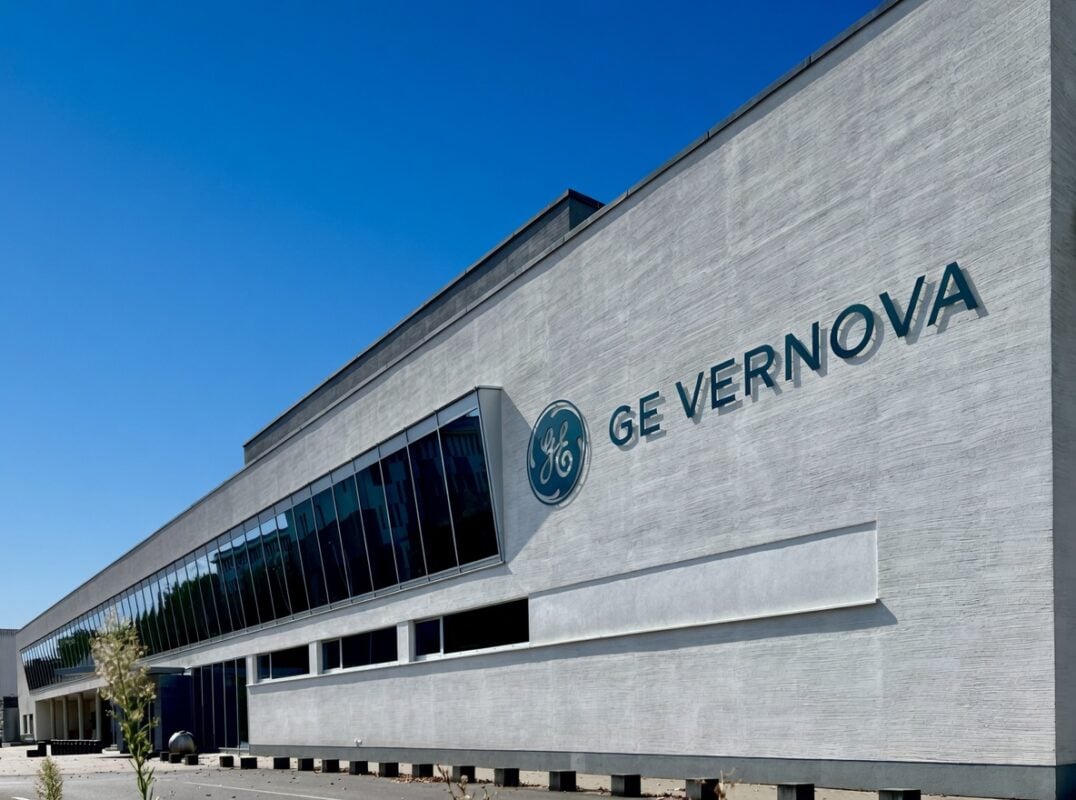
GE Vernova stock closed at $962.49 on Tuesday, up 1% on the day. The move came as the Nuclear Regulatory Commission approved a construction permit for a new reactor built with partner Hitachi.
The reactor is called the BWRX-300. It’s a smaller version of the boiling-water reactors GE has built for decades.
It will be built in Tennessee at a site called Clinch River. The site is controlled by the Tennessee Valley Authority, a government-owned utility.
The approval took just 14 months. That’s four months ahead of the NRC’s own expected schedule.
Congress and the Trump administration have pushed the NRC to move faster on reactor reviews. This approval is one sign of that pressure paying off.
It’s only the second construction permit issued for a new US reactor design in more than ten years. The first went to TerraPower, a Bill Gates backed startup building in Wyoming.

A construction permit isn’t a guarantee the reactor gets built. But it’s a real step past press releases and toward actual construction.
Why the Smaller Design Matters
The BWRX-300 has 300 megawatts of capacity. That’s enough to power roughly 300,000 homes.
Older reactor designs often topped 1,000 megawatts. The smaller size lets parts be prefabricated and assembled faster, which customers like.
Canada is already building one in Ontario, with plans for up to four total. Nuclear developer Blue Energy applied for a permit to build one in Texas earlier this month.
The Funding Question
The TVA still needs to find a partner to help cover the cost. A spokesman said the utility is wary of the price tag on a new reactor like this.
That partner could be a data center or another big commercial customer that needs steady power. Nothing is locked in yet.
New reactors tend to cost more than most other power plants. That’s part of why US utilities have been slow to build them.
The bet is that costs drop as more reactors get built. Engineers can standardize the process instead of solving new problems each time.
Canada estimates its fourth BWRX-300 will cost 33% to 40% less than its first. TVA spokesman Scott Allen Fiedler said Tennessee can use this approval as a template for faster sign-offs down the line.
Neither GE Vernova nor Hitachi makes most of its money from nuclear power. Both companies lean on other business lines for the bulk of revenue.
For GE Vernova, nuclear still matters strategically. Most of its current profit comes from natural gas turbines feeding AI data center demand.
Nuclear could give the company a second growth path in the 2030s. That would hold whether or not the gas turbine boom keeps going.
Zacks currently rates GEV a Hold, with a Zacks Rank of #3. Analysts expect the company’s upcoming earnings to show $4.08 per share, up 149% year-over-year, on revenue of $12.07 billion.
Stop guessing and start investing with confidence. KnockoutStocks gives you the AI insights, market intelligence, and stock research you need to spot opportunities, cut through the noise, and make smarter investment decisions — all in one powerful platform.
Sign up today and get 50% OFF full access to our premium stock picks.
Simply use coupon code SPECIAL50 at checkout to claim your exclusive discount.
Get 3 Free Stock Ebooks
Discover top-performing stocks in AI, Crypto, and Technology with expert analysis.
- Top 10 AI Stocks - Leading AI companies
- Top 10 Crypto Stocks - Blockchain leaders
- Top 10 Tech Stocks - Tech giants



