






TLDR
- The October 10, 2025 crash wiped out roughly $19 billion in leveraged crypto positions in hours.
- Bitcoin and ether order books are now deeper than before the crash, showing more market maker capital has returned.
- Altcoin liquidity and overall spot trading volume remain well below pre-crash levels.
- Leverage levels rose again heading into the one-year anniversary, leading to over $1 billion in fresh liquidations.
- Analysts say the same risky conditions behind last year’s crash are still present in the market.
Nearly a year has passed since bitcoin suffered one of its most violent drops in history. On October 10, 2025, bitcoin fell from around $122,000 to $105,000 within minutes.
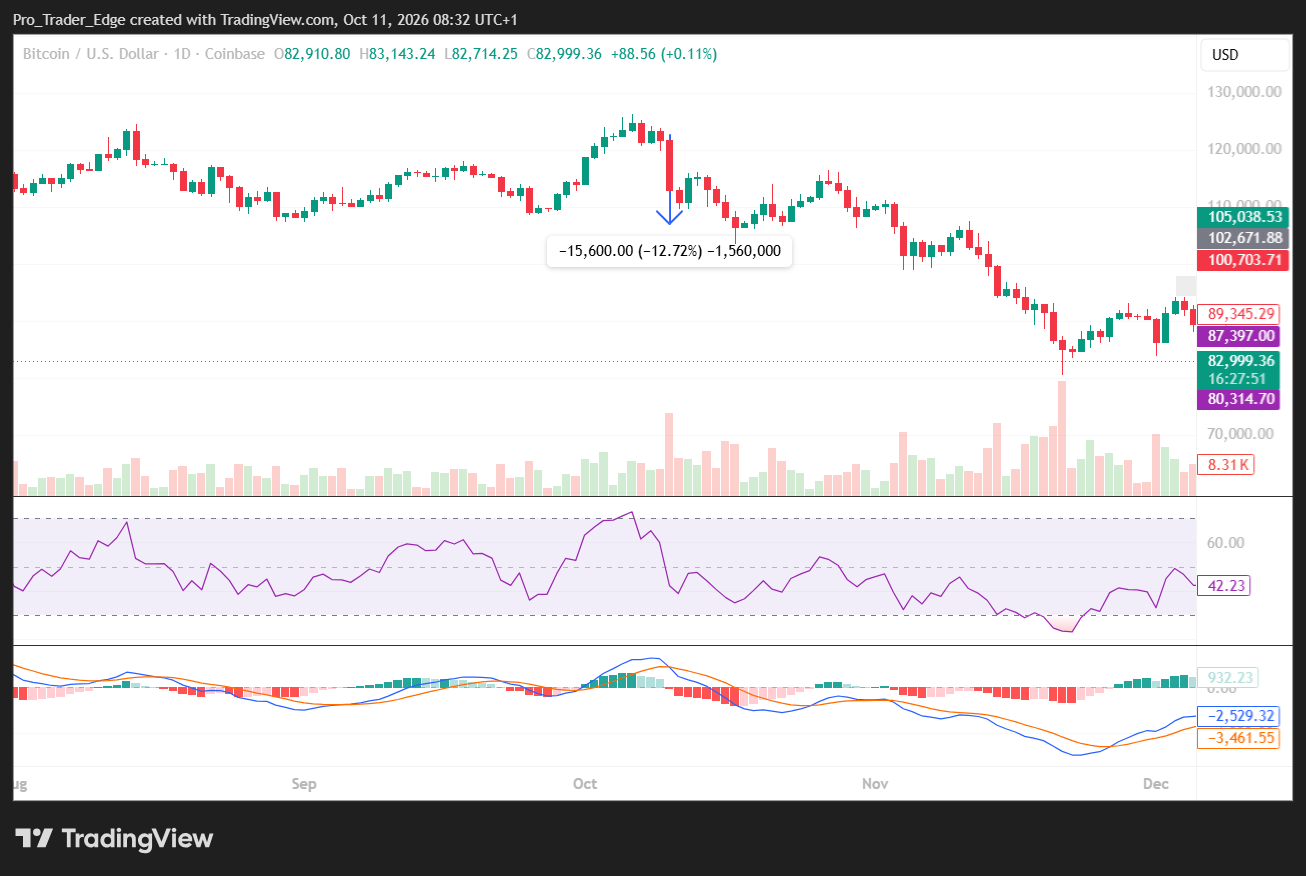
The crash came after President Trump announced tariffs on Chinese imports. It triggered about $19 billion in liquidations across crypto markets in a single day.
A year later, traders and researchers are asking the same question. Has the market actually learned anything, or is it repeating old mistakes?
What Has Changed Since the Crash
Market data shows some real improvement in parts of the crypto market. Bitcoin and ether order books are deeper now than they were before the crash.
🔥ON THIS DAY: The 10/10 crypto wipeout that FLIPPED the market.
A year later, Bitcoin is STILL DOWN over 34% from the TOP of its massive RED weekly sell-off candle.$BTC reached an all-time high over $126,200 on October 6, 2025.
After four days, on October 10, crypto suffered… pic.twitter.com/JaZ0RrfW37
— Coin Bureau (@coinbureau) October 10, 2026
On October 7, about $11.7 million sat within 1% of bitcoin’s price. That is roughly 75% more than on the day of the crash a year ago.
Ether’s recovery looks even stronger in some ways. Depth within 0.5% of its price has more than doubled since the crash.

Researchers say this growth reflects real capital returning to the market. It is not simply a result of lower prices making the numbers look bigger.
Mark Connors of Risk Dimensions says traders now have better tools to track risk. He pointed to improved visibility into order books and trader positioning as a factor.
“More information means greater certainty, less volatility,” Connors said.
Where The Risks Remain
Not every part of the market has recovered. Altcoin liquidity has fallen steadily since the start of 2025, with depth down about a third in some measures.
Spot trading volume also remains weak. Weekly volume averaged around $279 billion over four recent weeks, nearly two-thirds below the $801 billion traded during the week of the crash.
Leverage, the practice of trading with borrowed money, also has not gone away. Heading into the anniversary week, traders actually increased their borrowed bets rather than reducing them.
That left the market exposed again. Bitcoin slid toward $80,000 this week, and over $1 billion in positions were liquidated in 24 hours.
CryptoQuant’s Estimated Leverage Ratio, which measures borrowing against bitcoin held on exchanges, climbed through the week before easing slightly. It remains above where it started.
Funding rates, the fees paid by traders betting on price increases, are much lower than last year. Deribit’s rate sat near 7.1% annualized this week, compared to 26.9% before the 2025 crash.
Sentiment also has not shifted much. The Fear and Greed Index read 64, or “greed,” even after this week’s selloff.
Chris Sullivan of Hyperion Decimus recommends traders avoid leverage and watch funding rates closely. He also suggests long-term holders move bitcoin off exchanges into self-custody.
Connors says the four-year cycle tied to bitcoin halvings no longer offers the same reliable signal it once did. He believes economic and political events now play a larger role in price swings.
Bitcoin currently trades around $82,699, down about 35% from its October 2025 record near $126,000. Glassnode data shows the next cluster of leveraged bets sits near $75,000.


