






TLDR
- Bernstein identifies Bitcoin’s $60,000 low as the cycle bottom, with BTC now approaching $80,000
- Over 60% of Bitcoin’s supply has not moved in more than a year, signaling strong long-term holders
- Institutional ETF inflows and Strategy’s continued BTC accumulation are key demand drivers
- Stablecoin supply hit a record high above $300 billion, reflecting real-world usage growth
- Tokenized real-world assets grew 110% year-over-year to $345 billion
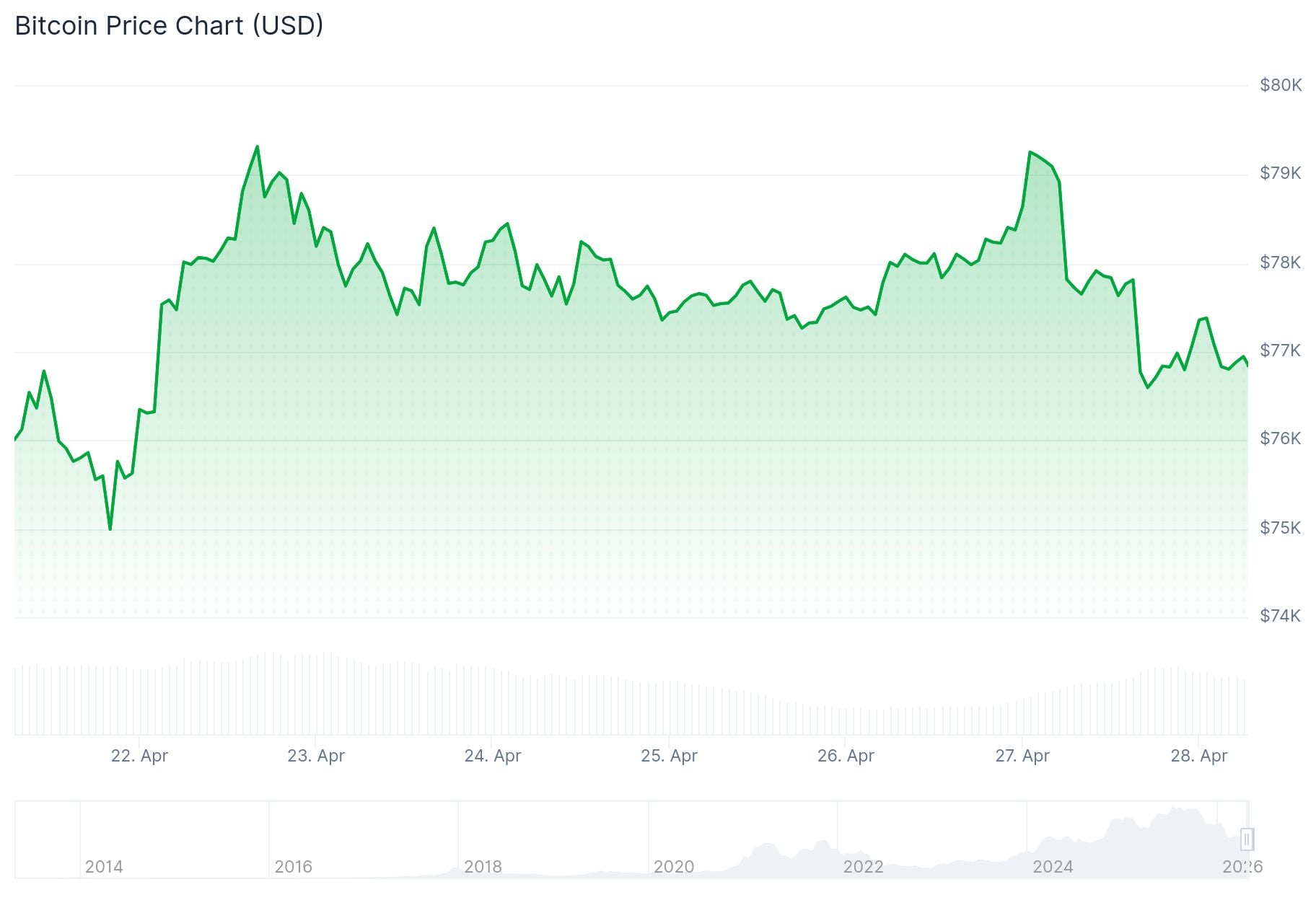
Bitcoin is closing in on $80,000 after research firm Bernstein declared the recent drop to $60,000 a clear cycle bottom. The firm’s latest report calls for a bull market that is both higher and longer than anything seen in previous cycles.
Bernstein analysts led by Gautam Chhugani published the findings on April 27. The team argued that the fundamentals underpinning Bitcoin today are structurally different from past recoveries.
“The best days of crypto are ahead which will reflect in a higher and structurally longer crypto bull cycle,” Chhugani wrote in a note to clients.
The report points to three main forces driving what Bernstein calls an “asymmetric upside” for crypto. These are institutional ETF inflows, corporate Bitcoin buying through Strategy, and deeper integration of blockchain with traditional finance.
More than 60% of Bitcoin’s total circulating supply has not moved in over a year. This signals a large base of long-term holders, which reduces the amount of Bitcoin available to sell and historically supports price increases.
Institutional Demand Reshapes the Market
Michael Saylor’s Strategy currently holds 818,334 BTC. Its STRC product is drawing income-focused investors with a high-yield approach to Bitcoin exposure.
Morgan Stanley and Charles Schwab have also expanded access to Bitcoin. Morgan Stanley moved through its Bitcoin ETF, while Schwab launched a spot trading platform, opening the market to more investors.
These inflows are providing a consistent demand floor that was not present in earlier cycles, according to Bernstein.

Stablecoins and Real-World Assets Hit New Highs
Global stablecoin supply crossed $300 billion for the first time. Bernstein notes this reflects real-world demand for digital dollar payments and cross-border settlements, not just speculation.
Tokenized real-world assets, including private credit and US Treasury bonds, grew 110% year-over-year to $345 billion. This shows institutional adoption of blockchain infrastructure is expanding across traditional asset classes.
Platforms like Hyperliquid are seeing increased activity in tokenized versions of stocks and commodities like oil.
On the risk side, Bernstein flagged quantum computing as a long-term concern for blockchain security. However, the firm believes the ecosystem has time to transition to post-quantum security standards before it becomes a real threat.
Bitcoin is currently approaching $80,000 as these dynamics play out in the market.


