





TLDR
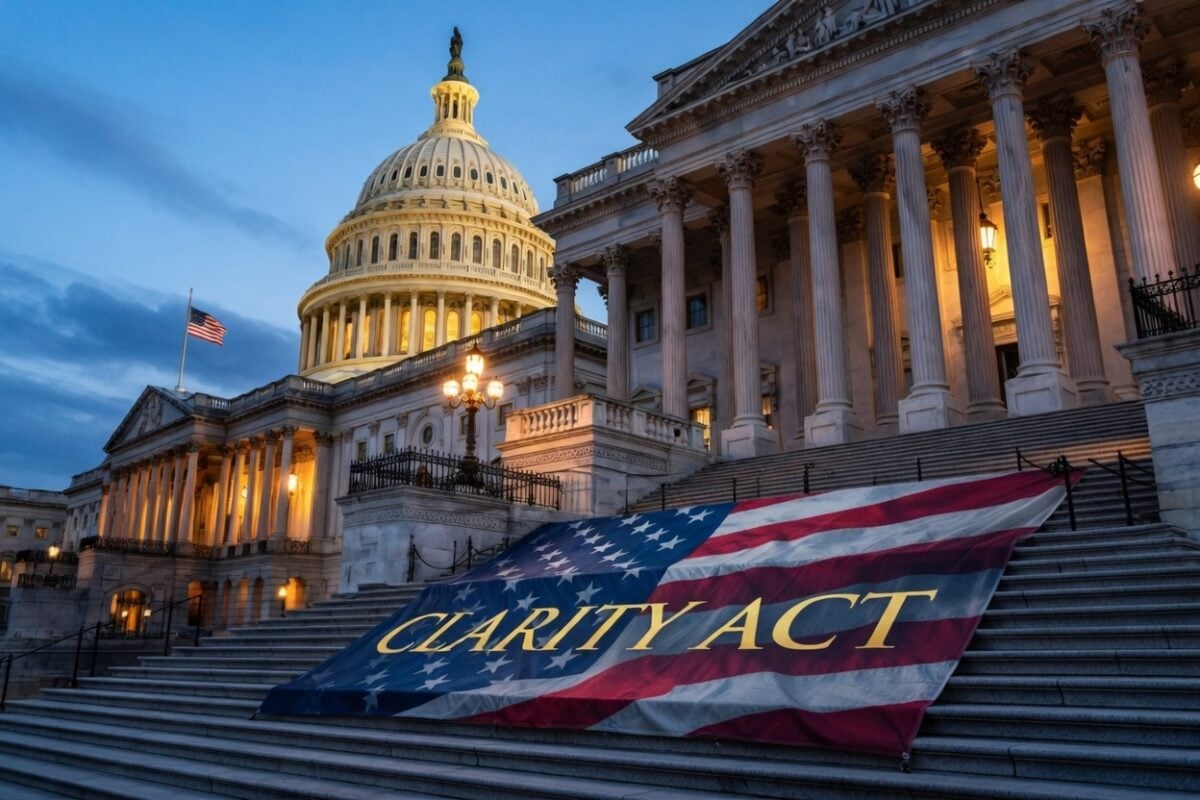
- Former Defense Secretary Mark Esper called the CLARITY Act a national security bill, not just a financial services bill
- Esper warned China is building payment systems to bypass US dollar dominance
- The Senate will not vote on the bill before the August recess
- Senate Majority Leader John Thune filed cloture for a September 15 Senate floor vote
- President Trump’s crypto business ties and unresolved ethics concerns remain the biggest obstacles
Former US Defense Secretary Mark Esper publicly backed the CLARITY Act last Saturday, calling on the Senate to pass it quickly. Writing in the Financial Times, Esper said weak US digital asset rules are a gift to America’s rivals.
Former Pentagon Chief Calls CLARITY Act a National Security Must
Former Defense Secretary Mark Esper urged the Senate to pass the CLARITY Act in a Financial Times op-ed Saturday. He argued weak digital asset rules let China and North Korea undermine American financial power.… pic.twitter.com/NdOKQ58xiX
— BSCN (@BSCNews) August 10, 2026
Esper argued that China is already building state-directed payment systems designed to cut around American financial oversight and weaken the US dollar’s global role. He said the threat is real and growing.
“I have long argued that China is the greatest strategic threat of our lifetime,” Esper wrote. He also sits on the Coinbase Global Advisory Council.
Esper also pointed to North Korea’s Lazarus Group as a specific threat. He said the CLARITY Act would give the Treasury Department better tools to cut off crypto loopholes used by North Korean actors to dodge US financial controls.
The bill would extend the Treasury’s special-measures authority under Section 311 of the USA Patriot Act, which Esper described as “one of our sharpest weapons against rogue actors.”
Senate Vote Pushed to September
Despite Esper’s push, the Senate will not vote on the CLARITY Act before the August recess. Senate Majority Leader John Thune filed cloture on Saturday, setting up a potential floor vote on September 15.
The delay came after it became clear during the week that a procedural vote would likely fail. Legislative aides and industry sources said the number of unresolved issues made even a procedural vote nearly impossible.

The biggest sticking point is ethics. President Trump’s crypto business ties have alarmed Democrats for over a year. His reported $1.4 billion in profit from crypto was described by one source as the “kill shot” for negotiations.
Other issues remain open too. Law enforcement provisions, agriculture-related matters, and growing concerns about stablecoin yield and rewards are all still being worked through.
What Happens Next
Senators Angela Alsobrook and Cynthia Lummis both said they remain committed to passing the bill. Lummis said she will not give up, while Alsobrook said the goal is still to get it right on a bipartisan basis.
Industry sources are more divided. One person following the bill said convincing enough Democrats remains hard, partly because of the ethics concerns and partly due to November election dynamics.
A Senate staffer told CoinDesk that a “legitimate” deal would be needed to secure Democratic votes.
Senator Thom Tillis told Politico that “the odds drop precipitously” as the election and the lengthy recess approach.
Two sources told CoinDesk the bill still has a real chance at passage, noting the August target was always an industry hope rather than a firm deadline. The next five weeks of negotiations will be key.


