



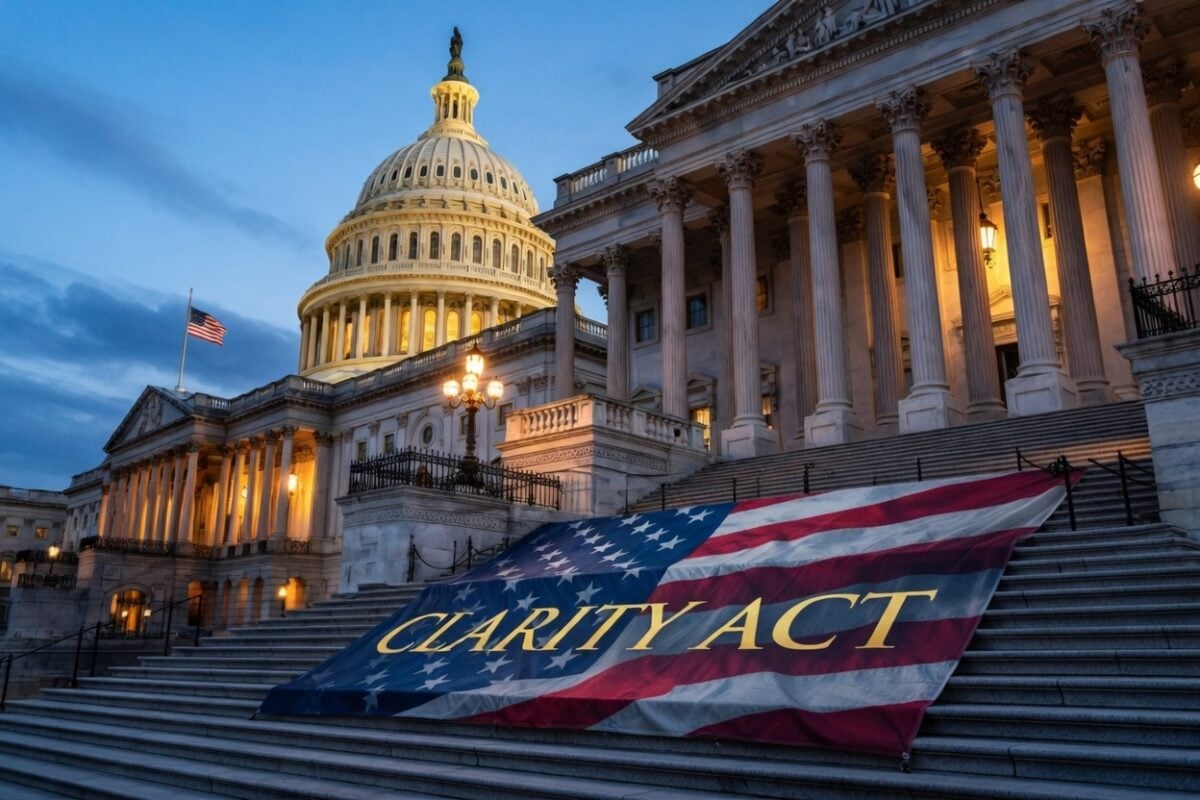


TLDR
- The CLARITY Act cleared Senate Banking by a 15-9 vote.
- The bill now heads toward a Senate floor vote.
- Lawmakers face a short window before the July 4 recess.
- The bill focuses on digital asset market structure rules.
- A filibuster could require 60 Senate votes for passage.
The CLARITY Act is moving toward a Senate floor test after clearing the Senate Banking Committee 15-9. Lawmakers returned from recess with limited time before the July 4 break. The bill is now framed as a key crypto market structure measure, with supporters pressing for action before the election calendar makes floor time harder to secure in the coming weeks.
Banking Vote Sends Bill Toward Floor
The bill passed through the Senate Banking Committee by a 15-9 vote. That result gives Senate leaders a basis for floor action. The next step is scheduling debate, amendments, and a final vote. Floor timing remains central because the July 4 recess is close. The CLARITY Act is a digital asset market structure bill.
It seeks clearer rules for crypto markets, exchanges, and oversight. Lawmakers have debated how agencies should share authority over digital assets. The measure now moves from committee review to a wider Senate test. Some backers described the measure as “very close to getting done.” Their focus is now on votes, floor time, and procedure.
JUST IN: 🇺🇸 CLARITY Act is “very close to getting done”
The CLARITY Act cleared Senate Banking 15-9.
Now it faces the floor.Lawmakers are back from recess with a narrow runway to pass it before the July 4 break.
Miss that window, and it likely slips past the midterms into a… pic.twitter.com/XYRQvNaQk0
— Crypto Rover (@cryptorover) June 2, 2026
A final Senate vote may require 60 votes if opponents force a filibuster. That threshold makes bipartisan support important for passage. The committee vote does not guarantee Senate passage. It does show that the bill has moved beyond early talks. Sponsors now need leadership support and enough votes across party lines.
July 4 Recess Shapes the Schedule
Lawmakers returned from recess with a short calendar. The July 4 break creates a narrow window for action. If the bill is not called soon, it could face a long delay. Election season can reduce floor time for complex policy measures. The timing has drawn attention across the crypto sector.
Supporters argue that clear rules could help firms plan in the United States. Critics may still seek changes before any final vote. The floor debate will show how much support remains outside the committee. Delay could also move the bill into a different Congress. That would reset some talks and add new political risks.

Party control and committee priorities can change after midterm elections. For that reason, the next few weeks are central to the bill’s path. Senate leaders also face other bills before the recess. That competition can shape the calendar. Crypto legislation may need a clear slot to avoid slipping into later talks.
Market Structure Debate Moves to Full Senate
The bill arrives during a mixed period for digital asset markets. Reports cited Bitcoin below $72,000 and outflows from exchange traded funds. Those moves have kept market attention on price. Yet the policy debate is moving on a separate track. The CLARITY Act would address oversight questions for digital assets such as Bitcoin.
It could help define how trading platforms are supervised. It could also set clearer lines between regulators. These provisions are designed to reduce uncertainty for institutions and market operators. Industry groups have pushed for rules that separate compliant firms from bad actors. Consumer protection questions remain part of the debate.
Those issues could shape proposed amendments. The full Senate will now decide whether the bill advances before the holiday break. Passage would move the measure closer to becoming law. Failure to act could leave it waiting for another legislative vehicle. For now, the July 4 deadline remains the main test.


