






TLDR
- The S&P 500 is within 1.5% of its all-time high despite rising oil prices from Iran tensions
- Jim Cramer says low interest rates, not geopolitics, are the main driver keeping stocks up
- The 10-year Treasury yield peaked on March 27 and has since rolled over
- The Fed may treat tariff and energy-driven inflation as temporary “one-offs”
- Tech stocks like Microsoft and Salesforce led gains while energy stocks lagged
The S&P 500 has climbed back to within 1.5% of its January record close, even as tensions linked to Iran have pushed oil prices higher. CNBC’s Jim Cramer says the reason stocks are holding up is straightforward: interest rates remain low.
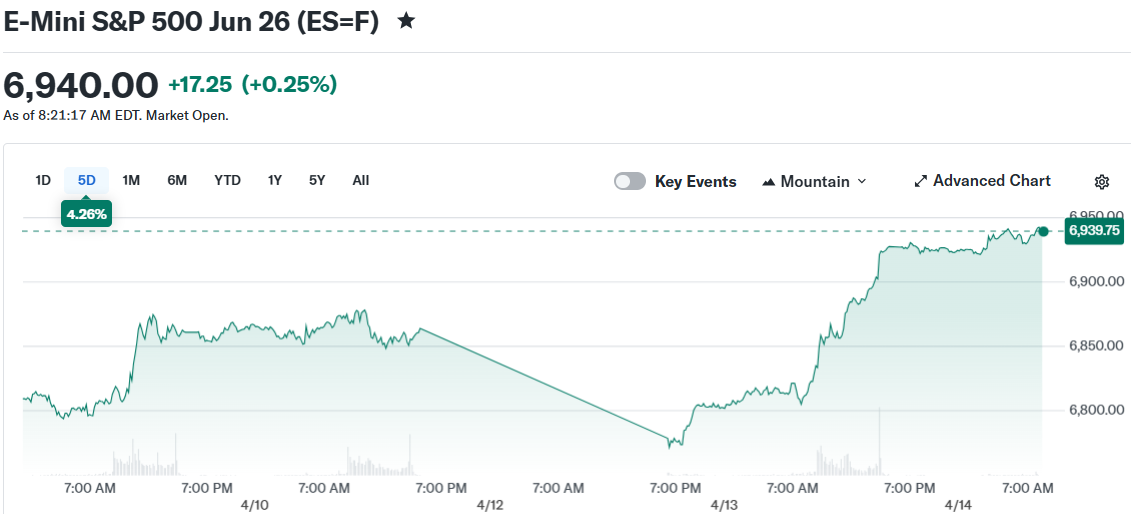
“If interest rates were spiking, this market would be very different,” Cramer said on Mad Money.
The U.S. and Israel struck Iran on February 28. Bond yields rose initially in response. But the 10-year Treasury yield peaked on March 27 and has since come down. The S&P 500 hit its lowest close of the year on March 30, then recovered.
Cramer says that timeline is not a coincidence.
When rates fall, future company earnings are worth more in today’s dollars. That pushes investors to pay higher price-to-earnings multiples for stocks. That dynamic has stayed in place even as oil prices climbed due to supply risks near the Strait of Hormuz.
In past cycles, rising oil prices alongside geopolitical tension would have weighed heavily on equities. Cramer acknowledged that history is “being disobeyed and ignored” this time around.
Why This Energy Shock Is Different
One reason the oil spike has not hurt stocks more is that the U.S. economy relies less on oil than it once did. Vehicles are more fuel efficient, and natural gas plays a larger role in domestic energy.
“Natural gas, not oil, is our secret weapon,” Cramer said.
Natural gas remains far cheaper in the U.S. than in most other countries. That keeps inflation from running as hot as it might otherwise during an oil price surge.

Cramer also said the Federal Reserve may not treat current inflation as a reason to raise rates. Tariffs and energy costs have pushed prices up, but the Fed could view those as temporary pressures rather than lasting inflation.
“The Fed will most likely asterisk these increases as all one-off price increases,” he said.
Kevin Warsh, President Trump’s nominee to replace Jerome Powell as Fed chair, would take over next month when Powell’s term expires. Cramer suggested the new Fed leadership is unlikely to raise short-term rates and may even move toward cuts if inflation cools.
Tech Leads, Energy Lags
Market action on Monday reflected Cramer’s thesis. Technology names led gains while energy stocks underperformed, even as oil prices stayed elevated.
Cramer pointed out that geopolitical events in the Middle East have no direct connection to the earnings outlook for most U.S. companies.
“What’s the Strait of Hormuz have to do with the price-to-earnings ratio of Bristol Myers?” he said. “The answer is nothing.”
The 10-year Treasury yield was down slightly on Monday as stocks continued to hold near recent highs.
Stop guessing and start investing with confidence. KnockoutStocks gives you the AI insights, market intelligence, and stock research you need to spot opportunities, cut through the noise, and make smarter investment decisions — all in one powerful platform.
Sign up today and get 50% OFF full access to our premium stock picks.
Simply use coupon code SPECIAL50 at checkout to claim your exclusive discount.
Get 3 Free Stock Ebooks
Discover top-performing stocks in AI, Crypto, and Technology with expert analysis.
- Top 10 AI Stocks - Leading AI companies
- Top 10 Crypto Stocks - Blockchain leaders
- Top 10 Tech Stocks - Tech giants



