






TLDR
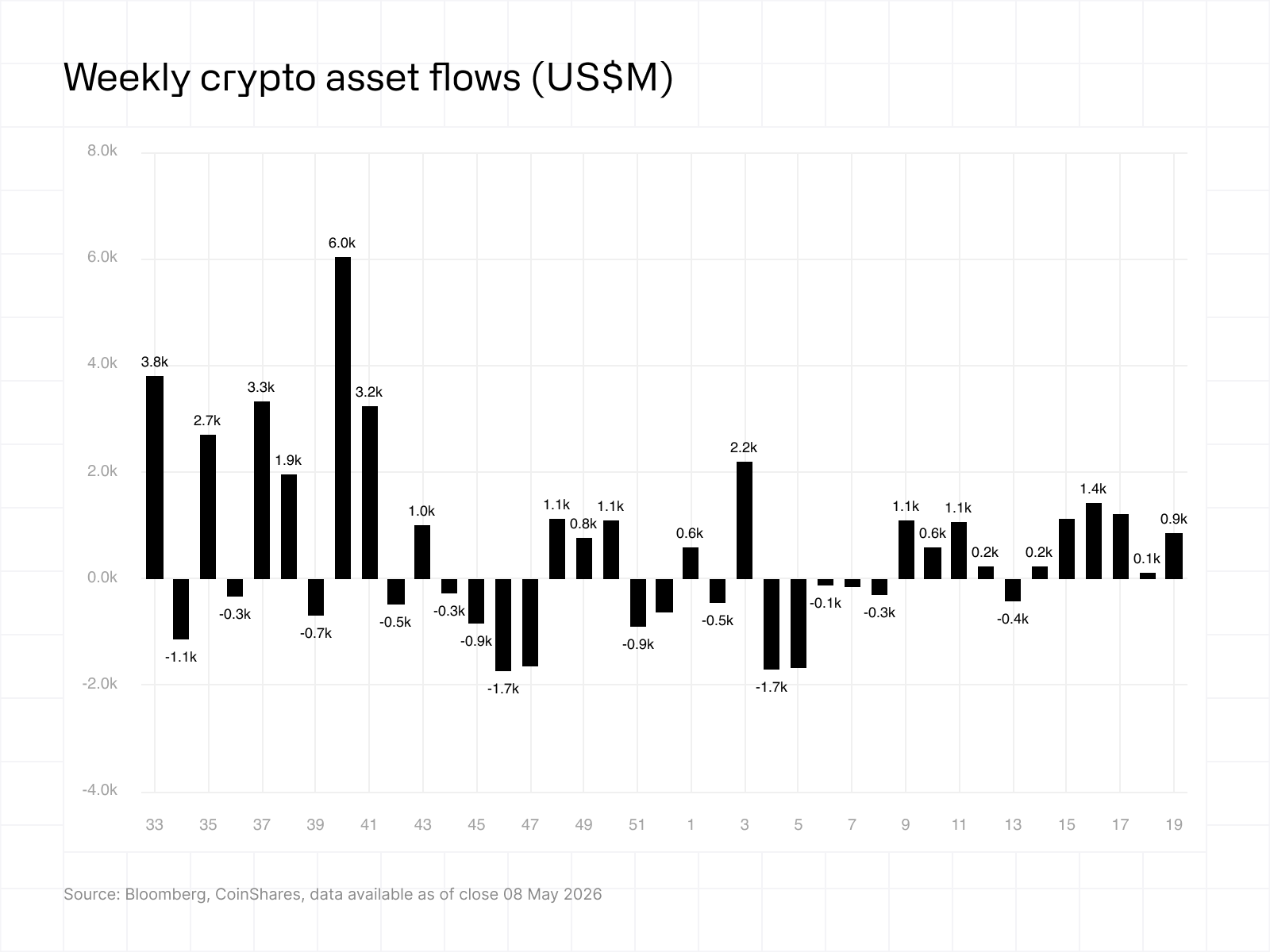
- Digital asset investment products recorded $857.9M in net inflows last week.
- CoinShares said crypto funds have now posted six straight weeks of inflows.
- Bitcoin led all assets with $706.1M in weekly inflows.
- Ethereum added $77.1M after reversing the prior week’s outflows.
- Short-Bitcoin products saw $14.4M in outflows, the largest weekly exit this year.
Digital asset investment products recorded $857.9 million in net inflows last week, extending their inflow streak to six consecutive weeks as investors increased exposure to Bitcoin and major altcoins ahead of a key U.S. crypto regulation vote.
CoinShares data showed that last week’s inflows marked the strongest single-week total since April 24. The inflows pushed total assets under management in digital asset investment products to about $160 billion.
Bitcoin led the market with $706.1 million in inflows, bringing its year-to-date total to $4.9 billion. The move came as Bitcoin traded above $80,000 during the week before moving near the $81,000 range.
Short-Bitcoin products recorded $14.4 million in outflows, the steepest weekly exit this year. The data suggests some investors reduced bearish positions as Bitcoin held above major support levels.
Bitcoin Leads Weekly Crypto Fund Inflows
Bitcoin remained the main source of institutional demand, but altcoin participation also increased. Ethereum attracted $77.1 million in fresh inflows after posting $81.6 million in outflows the previous week.
Solana added $47.6 million, while XRP investment products brought in $39.6 million. The figures show that investors are adding exposure beyond Bitcoin, although BTC still accounts for most new capital entering crypto funds.

The broader crypto market continued to track Bitcoin’s movement around technical resistance. Bitcoin traded near $81,000 after briefly moving above $82,000 over the weekend. Market analyst Ali Martinez said the 200-day simple moving average near $82,500 remains a major resistance level.
A move above that area could open a path toward $94,000, according to the analysis. A rejection could bring attention back to the 50-day simple moving average near $75,000.
CLARITY Act Supports Market Sentiment
The inflow streak comes as traders watch the Digital Asset Market CLARITY Act, which is scheduled for a Senate Banking Committee markup on Thursday. The bill would create a federal framework for digital asset market structure and define oversight roles for the SEC and CFTC.
Prediction market odds on Polymarket recently moved to 75% for the bill becoming law in 2026. That marked a recovery from 45% two weeks earlier after senators reached a compromise on stablecoin yield language.
Senators Thom Tillis and Angela Alsobrooks finalized language that would restrict bank-like interest products tied to stablecoins while preserving rewards linked to certain activities. Banking groups continue to argue that the language leaves room for interest-like rewards, but Senate leaders appear ready to move ahead.
Coin Bureau co-founder Nic Puckrin said the CLARITY Act has become a major driver of fund inflows because institutions have waited for clearer crypto rules since last year. He also said regulatory progress is one factor among several, with institutional demand already building in the background.
A committee approval would move the bill closer to a full Senate floor vote. The White House has reportedly targeted July 4 for final approval, although the bill still faces debate over stablecoins, DeFi oversight and ethics provisions.
Macro Risks Remain in Focus
Analysts said the inflows may also reflect capital rotation and dip-buying after Bitcoin’s sharp decline from its October 2025 high near $126,200. Bitunix analyst Dean Chen said recent inflows may show value-seeking activity rather than a confirmed long-term bull cycle.
The market also faces several macro risks this week. U.S. inflation data remains a major focus, with traders watching whether CPI figures raise or lower expectations for Federal Reserve rate cuts. A hotter inflation reading could lift Treasury yields, strengthen the dollar and pressure crypto assets.
Geopolitical events also remain active. Russia and Ukraine entered a fragile U.S.-brokered ceasefire that included a prisoner swap, while Russian President Vladimir Putin signaled that the war may be approaching an end. Markets are watching whether those comments lead to a longer peace process.
In the Middle East, U.S.-Iran talks remain stalled after President Donald Trump rejected Tehran’s latest counterproposal. Iran has demanded an end to hostilities, the lifting of the U.S. naval blockade, reparations and recognition of its authority over the Strait of Hormuz.
Oil prices remain a risk for crypto markets because higher energy costs can feed inflation and delay monetary easing. Puckrin said geopolitics, energy prices and inflation remain larger risks if banking opposition slows crypto legislation.


