






TLDR
- The EU’s energy chief warned member states of a price crisis linked to the Iran war’s impact on oil and gas markets.
- EU gas storage is around 70% full, below the seasonal norm and 12 percentage points lower than last year.
- Europe imports about 80% of its gas, leaving it exposed to disruptions from the closed Strait of Hormuz.
- Officials suggested countries could lower storage targets to 80% under existing EU flexibility rules.
- Governments were urged to cut public building heating, outdoor heating, and unnecessary lighting to save energy.
The European Union is warning of a possible energy price crisis this winter. The warning comes as the war involving Iran continues to disrupt oil and gas markets around the world.
🚨🇪🇺 EUROPE'S ENERGY CRISIS IS BACK!
Gas prices have nearly TRIPLED this year, and Brussels warns this could be the EU's WORST winter since 2022.
Russia was cut off. Now Europe is scrambling for energy while prices EXPLODE. pic.twitter.com/2tZ7W9g9gE
— Global Dissident (@GlobalDiss) September 26, 2026
EU Energy Commissioner Dan Jorgensen sent a letter to energy ministers across the bloc. Reuters and Bloomberg both viewed copies of the letter.
“We are facing a price crisis linking to a supply crisis,” Jorgensen wrote in the letter.
Why Gas Prices Are Rising
Europe relies on foreign countries for most of its energy. Imports cover about 80% of the bloc’s gas needs.
This makes Europe vulnerable when global supply routes are disrupted. The Strait of Hormuz normally carries about 20% of the world’s oil and liquefied natural gas.
The ongoing conflict has effectively closed that route. This has pushed prices higher across Europe.
European gas prices have more than doubled since the U.S.-led war on Iran began in late February. Prices reached their highest level since late 2022 earlier this month.

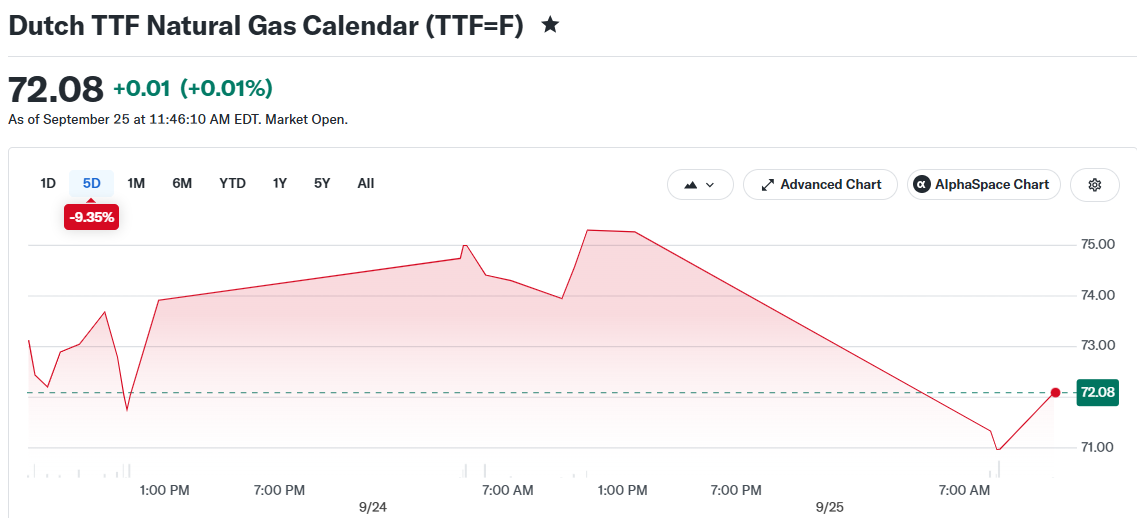
There is no current shortage of gas supply in Europe. But the higher costs are creating problems for countries trying to fill storage before winter arrives.
Storage Levels Fall Behind Schedule
EU-wide gas storage sits at about 70% full. That is 12 percentage points lower than the same period last year, according to data from Gas Infrastructure Europe.
Storage is also below the seasonal norm of 86%. Higher near-term prices have made it more costly for countries to keep filling their reserves over the summer.
Jorgensen said the EU is in a better position than it was during the 2021 crisis. Back then, Russia reduced gas deliveries to Europe, causing supply problems.
Since then, Europe has increased its capacity to import liquefied natural gas. It has also added more renewable energy sources and reduced overall gas demand.
Despite this progress, Jorgensen urged governments to step up preparations for winter. Demand for heating typically peaks during the colder months.
He suggested that countries could use flexibility built into EU gas storage rules. This would allow them to lower their filling target from 90% down to 80%.
That change could ease pressure on both prices and the cost of refilling storage tanks.
Jorgensen also called on governments to sustain gas injections into storage where needed. He asked countries to reduce gas and electricity demand for as long as necessary.
Suggested measures include limiting temperatures in public buildings. Officials also proposed preventing outdoor heating and turning off unnecessary public lighting.
A European Commission spokesperson did not immediately respond to a request for comment on the letter.
The letter reflects growing concern among EU officials as winter approaches. Energy ministers across member states are now reviewing the recommendations.
Stop guessing and start investing with confidence. KnockoutStocks gives you the AI insights, market intelligence, and stock research you need to spot opportunities, cut through the noise, and make smarter investment decisions — all in one powerful platform.
Sign up today and get 50% OFF full access to our premium stock picks.
Simply use coupon code SPECIAL50 at checkout to claim your exclusive discount.
Get 3 Free Stock Ebooks
Discover top-performing stocks in AI, Crypto, and Technology with expert analysis.
- Top 10 AI Stocks - Leading AI companies
- Top 10 Crypto Stocks - Blockchain leaders
- Top 10 Tech Stocks - Tech giants



