





The origin story of a platform shapes everything about it. FanDuel’s origin is daily fantasy sports — a platform that built its audience through the specific engagement patterns of fantasy leagues before converting that audience into licensed sports bettors when US regulation allowed. The product it built reflects that origin: American sports culture at the centre, a betting interface designed for the fantasy sports brain, fiat banking as the payment default.
BetMGM’s origin is Las Vegas — the MGM Resorts brand that built its reputation across decades of land-based casino operation before bringing that heritage online. The product it built reflects that origin: casino depth informed by physical casino experience, a brand that carries the weight of MGM’s name, fiat banking as the payment infrastructure that the traditional casino player uses.
Both origins produced genuine products for genuine players. Both continue to serve those players consistently.
ZunaBet’s origin is 2026 — a team with over 20 years of combined industry experience that looked at the player arriving at online gambling now and built specifically for them. The product it built reflects that origin: crypto-native infrastructure, a game library drawn from sixty-three different providers, esports as a genuine betting category, and a loyalty program that states its return before the player makes their first deposit. This article compares all three origins and what they produced.
FanDuel: What the Fantasy Sports Origin Produced
FanDuel’s conversion from daily fantasy sports platform to licensed sportsbook was smooth because the audience was already there. Players who had spent years managing fantasy rosters and following statistical outcomes converted naturally into sports bettors. The brand they trusted for fantasy became the brand they trusted for betting. The platform capitalised on that trust and built a sportsbook around the specific way its audience understood sports.
The result is a sportsbook with genuine strengths for its market. American sports coverage is the core — NFL structured around how fantasy-origin bettors engage with football statistics and team performance, NBA, MLB, and NHL with comparable depth. The app is polished through years of iteration. In-play coverage is functional and well-developed. The betting experience reflects a platform that understands its audience from the inside.
The casino has grown alongside the sportsbook. A game library from established providers, live dealer content, standard table game variants. The product serves the player whose primary gambling interest is sports betting.

FanDuel Rewards operates on points accumulation toward tier-based benefits and redemption options. The system works for the player satisfied with the fantasy sports model of earning and spending points. For the player who calculates the effective cash return per dollar of activity and compares it against a direct percentage, the system typically delivers less than it appeared to.
The payment infrastructure reflects the origin era. Fiat banking — banking channels, processing timelines, and limited crypto. The payment experience was designed for the player who arrived from fantasy sports with a bank account rather than a crypto wallet.
BetMGM: What the Las Vegas Origin Produced
BetMGM’s translation of the MGM Resorts brand into online gambling produced a product that reflects genuine casino heritage. The casino offering is where that heritage shows most clearly — a substantial game library from established providers, strong live dealer content informed by decades of table game operation, and a product that reflects what a major casino operator understands about how casino players engage with their games.
The brand carries weight that purely digital competitors find difficult to replicate. The MGM name represents a level of implied quality assurance built across physical casino operations. Players who have been to MGM properties and trust the brand carry that trust into the online product.
The sportsbook covers major US and global sports with in-play betting and a product that serves the player whose primary interest includes both casino and sports betting. The combination reflects the broader MGM entertainment brand rather than a purely sports-first platform.
MGM Rewards is the loyalty dimension that most distinguishes BetMGM from its competitors. For the player who visits MGM properties in person — hotels, restaurants, physical casinos — the ability to earn online and benefit in person has genuine cross-platform value. For the exclusively online player the program functions as a points accumulation system with the limitations all such systems share. The land-based connection that makes it distinctive is irrelevant to the player who never uses MGM properties off-screen.
The payment infrastructure reflects the traditional casino origin. Fiat banking across standard channels. Minimal crypto. The infrastructure was built for the player who arrives from land-based casino culture with traditional payment expectations.
ZunaBet: What the 2026 Origin Produced
ZunaBet launched in 2026 under Strathvale Group Ltd, operating under an Anjouan gaming license and registered in Belize. The team carries over 20 years of combined industry experience. It is not a US licensed operator and it does not hold state-level certification. It is a crypto-first, internationally accessible platform whose 2026 origin produced a product entirely unlike what either US platform’s origin could have produced.
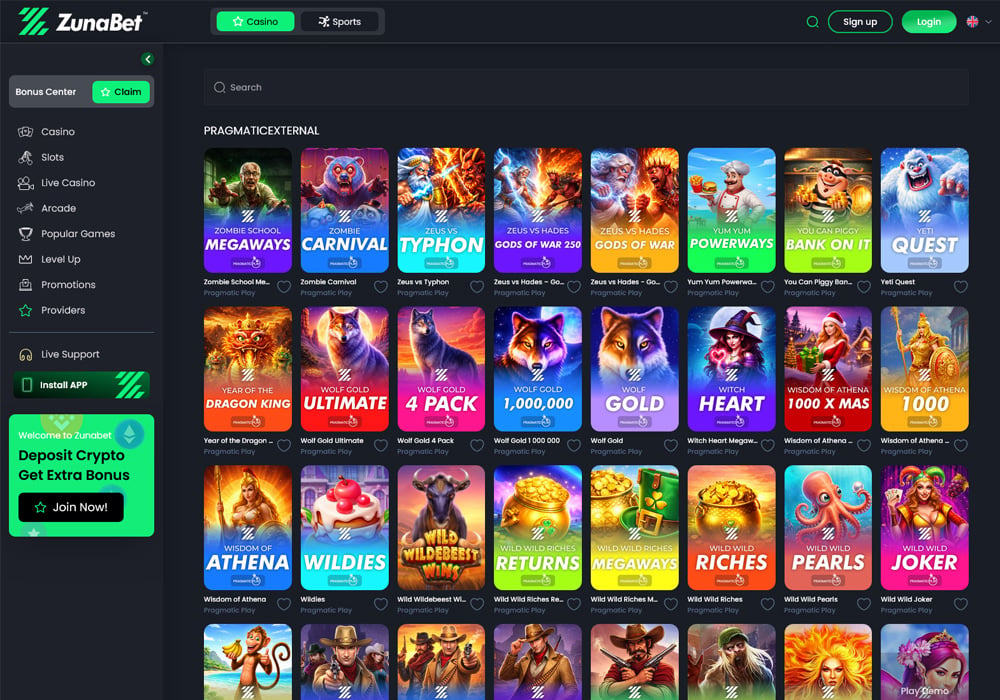
The game library is the first product of that origin. ZunaBet carries 11,294 titles from 63 providers. The 2026 origin meant building relationships with sixty-three different game suppliers from the start — not accumulating them over years of operation. Evolution for the full live dealer catalogue. Pragmatic Play across multiple product categories. Hacksaw Gaming for the high-volatility mechanics that experienced players specifically seek. Yggdrasil for its distinctive design philosophy. BGaming whose output speaks directly to the crypto-native player the 2026 origin was building for. Different mechanics, different volatility profiles, different visual identities across sixty-three creative approaches — genuine variety that neither earlier origin could have produced for the same player.
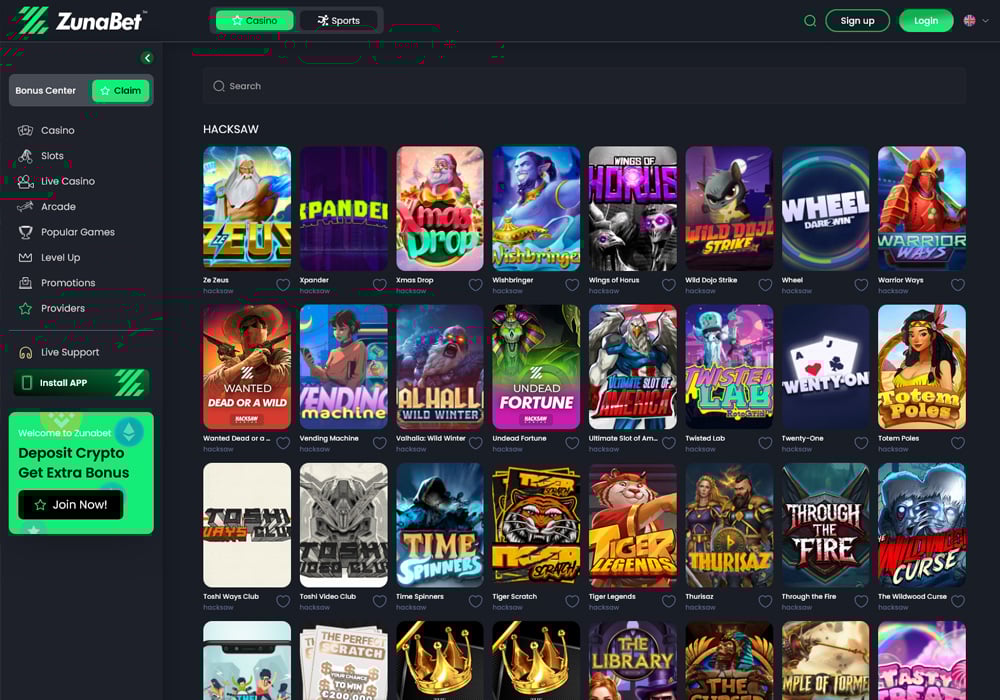
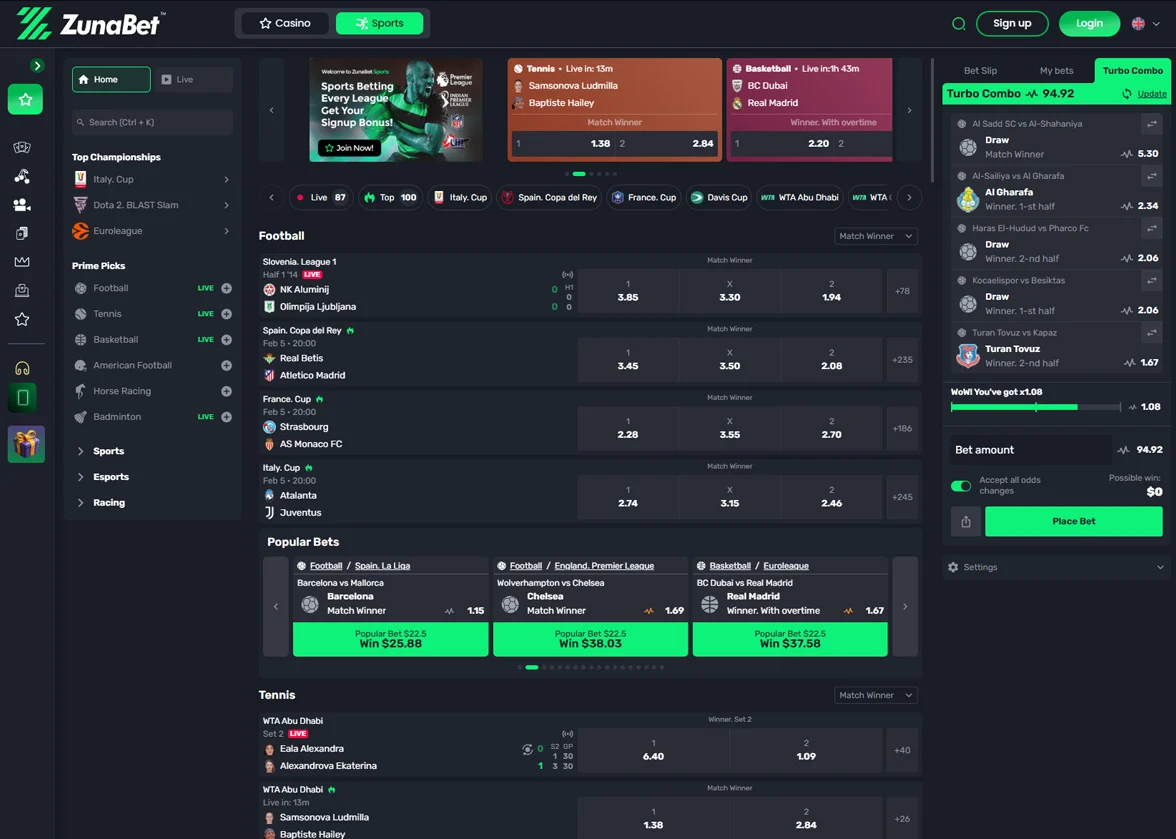
The sportsbook is the second product of that origin. Football, basketball, tennis, NHL, and other major global sports alongside CS2, Dota 2, League of Legends, and Valorant as genuine primary markets. The 2026 origin included esports as a foundational sportsbook category rather than a feature added in response to demographic data. Virtual sports and combat sports complete a sportsbook designed around the modern player’s full betting activity.
The payment infrastructure is the third and most structurally significant product of that origin. More than 20 cryptocurrencies supported natively — BTC, ETH, USDT across multiple chains, SOL, DOGE, ADA, XRP, and others. No platform processing fees. Withdrawals settling in minutes. Apps across iOS, Android, Windows, and MacOS with 24-hour live chat support. The 2026 origin meant building payment infrastructure around what cryptocurrency enables rather than around what banking infrastructure constrains.
Payments: Three Origins, Three Outcomes
The payment comparison across the three platforms is a direct comparison between what three different origins produced.
FanDuel’s fantasy sports origin produced a player who arrived with a bank account. The payment infrastructure built for that player processes withdrawals through fiat banking channels with business-day timelines. Crypto arrived as a later response to demand rather than a founding infrastructure decision.
BetMGM’s Las Vegas origin produced a player who arrived with traditional casino payment expectations. The payment infrastructure built for that player processes withdrawals through banking channels with similar timelines. Crypto arrived minimally and without native infrastructure commitment.
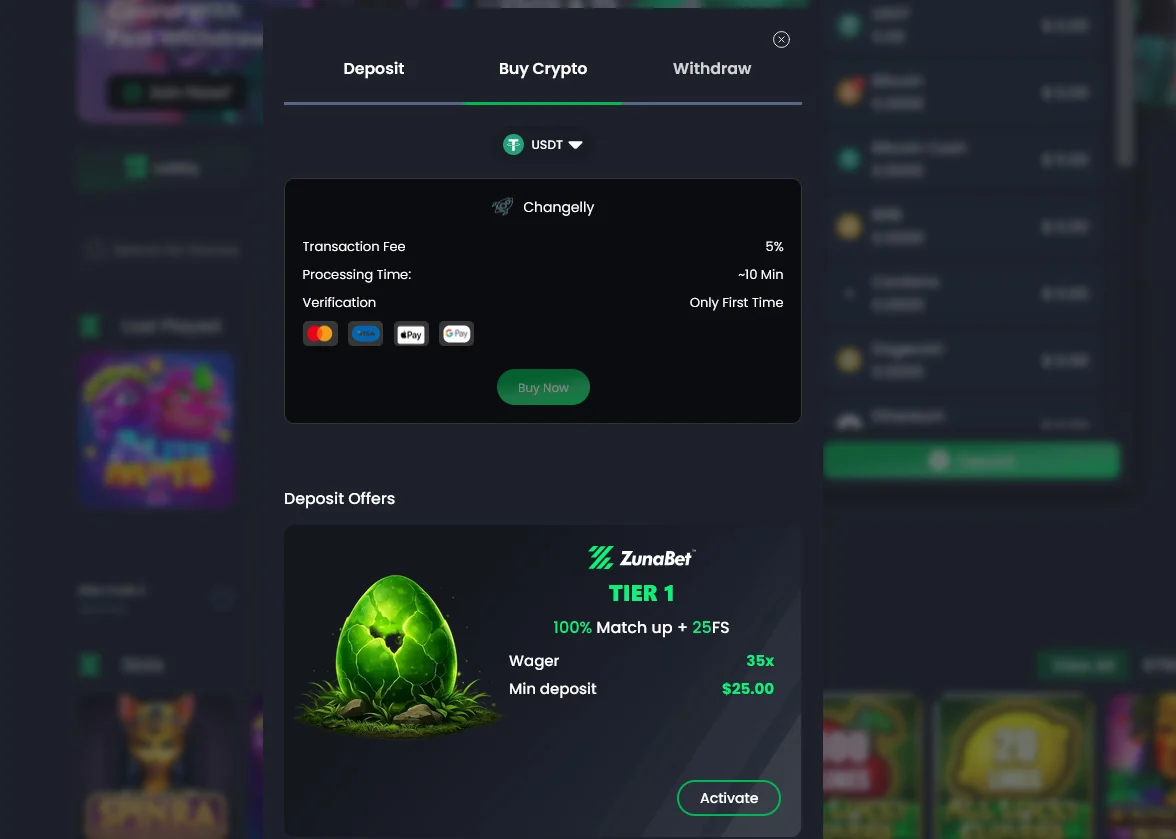
ZunaBet’s 2026 origin produced a player who arrived with a crypto wallet. The payment infrastructure built for that player processes withdrawals through native crypto infrastructure at network speed. The origin produced minutes rather than days because the player it was built for expected minutes.
Three origins. Three payment outcomes. For the player whose origin is 2026 — crypto-native, expecting instant transactions — only one outcome fits.
Loyalty Programs: Three Origins, Three Outcomes
The loyalty comparison follows the same origin logic.
FanDuel’s fantasy sports origin produced a player familiar with points systems — earning in-game currency through participation and spending it on advantages. FanDuel Rewards reflects that familiarity. The points accumulate, convert, and redeem. The effective return is lower than the headline descriptions suggested for players who calculate carefully.
BetMGM’s Las Vegas origin produced a player familiar with casino loyalty programs that connect to physical rewards — hotel stays, dining credits, entertainment access. MGM Rewards reflects that familiarity. The connection to land-based benefits is the system’s distinctive feature. For the online-only player that feature is irrelevant and the system becomes a standard points program.
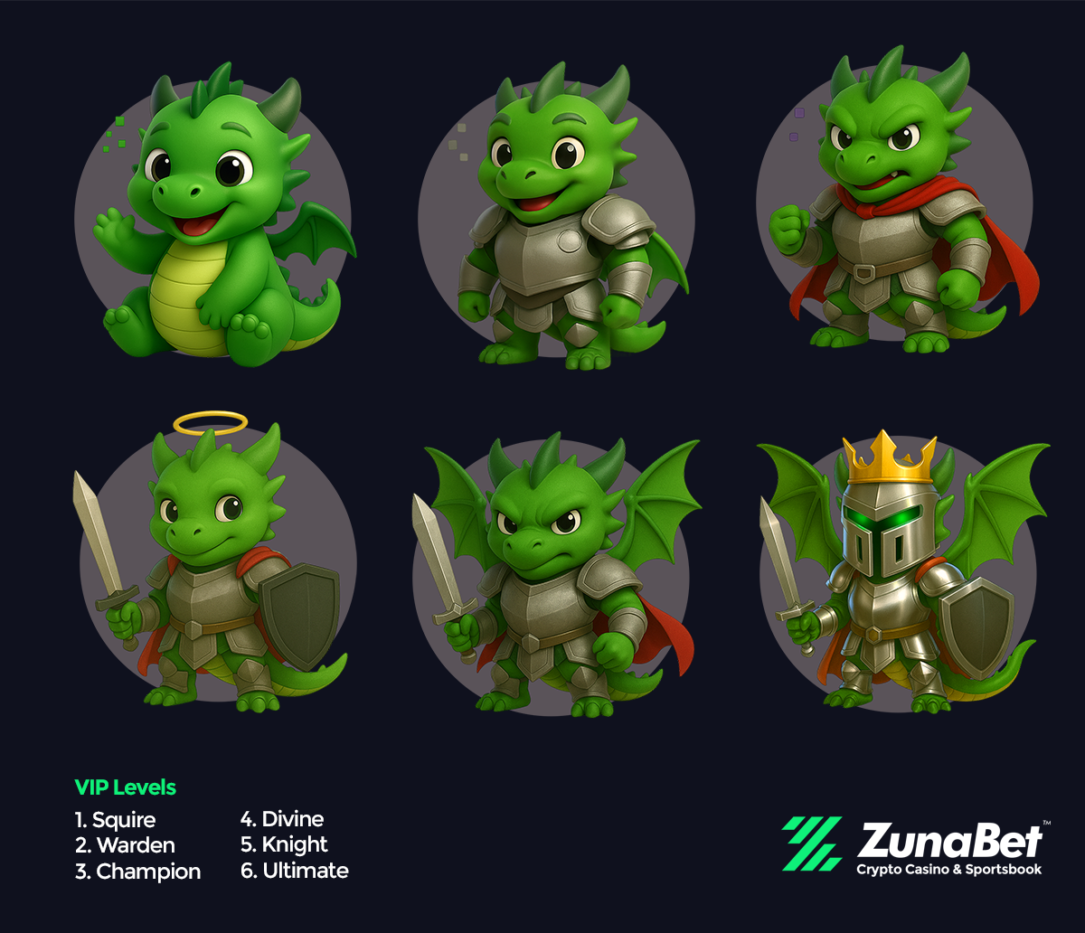
ZunaBet’s 2026 origin produced a player familiar with direct transparent returns — a generation that expects to know what they are getting before they commit. The dragon evolution loyalty system reflects that familiarity. Six tiers — Squire, Warden, Champion, Divine, Knight, and Ultimate — with a gamified mascot called Zuno and direct rakeback rates of 1%, 2%, 4%, 5%, 10%, and 20%. All tiers open. All rates applying to all activity. No conversion. No invitation.
Twenty percent at the Ultimate tier. The 2026 origin produced a loyalty program that states its return because the player it was built for demands to know it before committing. Additional tier benefits — up to 1,000 free spins, VIP club access, double wheel spins — extend the outcome beyond the core structure.
Three origins. Three loyalty outcomes. For the player whose origin is 2026 — transparency-expecting, calculation-making — only one outcome fits.
The Welcome Bonus
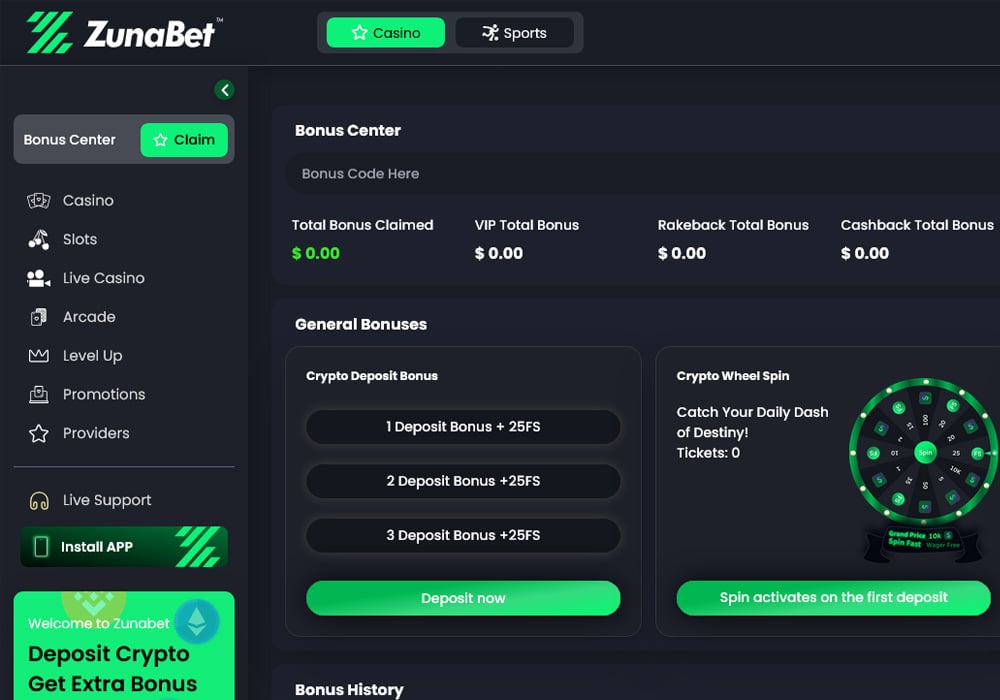
ZunaBet new players receive a bonus across three deposits totalling up to $5,000 plus 75 free spins. First deposit matched 100% up to $2,000 with 25 free spins. Second deposit matched 50% up to $1,500 with 25 spins. Third deposit matched 100% up to $1,500 with 25 spins.
FanDuel and BetMGM offer welcome promotions within their respective regulated US markets. Current terms vary by state and should be confirmed directly on each platform.
What Three Origins Produce in 2026
FanDuel’s fantasy sports origin produced a platform that serves the US sports bettor who came through that funnel. The outcome is genuine and the players it serves are well served.
BetMGM’s Las Vegas origin produced a platform that serves the US casino player who carries MGM brand trust and values the land-based connection. The outcome is genuine and the players it serves are well served.
ZunaBet’s 2026 origin produced a platform that serves the player neither earlier origin was designed for. The crypto-native player. The esports bettor. The player who wants sixty-three providers worth of casino variety and a loyalty program that requires only multiplication to evaluate.
ZunaBet launched in 2026 and its origin is recent enough that the track record is still being established. What earlier origins produced over years, ZunaBet’s origin is still proving over months. Players should include that honestly in the comparison.
But for the player whose own origin is 2026 — who arrived at online gambling this year with crypto in their wallet, esports on their screen, and transparency as a non-negotiable expectation — the platform whose origin matches theirs is ZunaBet.


