





TLDR
- Gold fell 1% to around $4,669 per ounce in Asian trading on Monday
- President Trump rejected Iran’s latest peace proposal, calling it “totally unacceptable”
- Oil prices surged nearly 5% as the Strait of Hormuz remains closed
- A stronger U.S. dollar and high interest rate expectations added pressure on gold
- Trump is set to meet China’s Xi Jinping this week to discuss Iran, trade, and energy
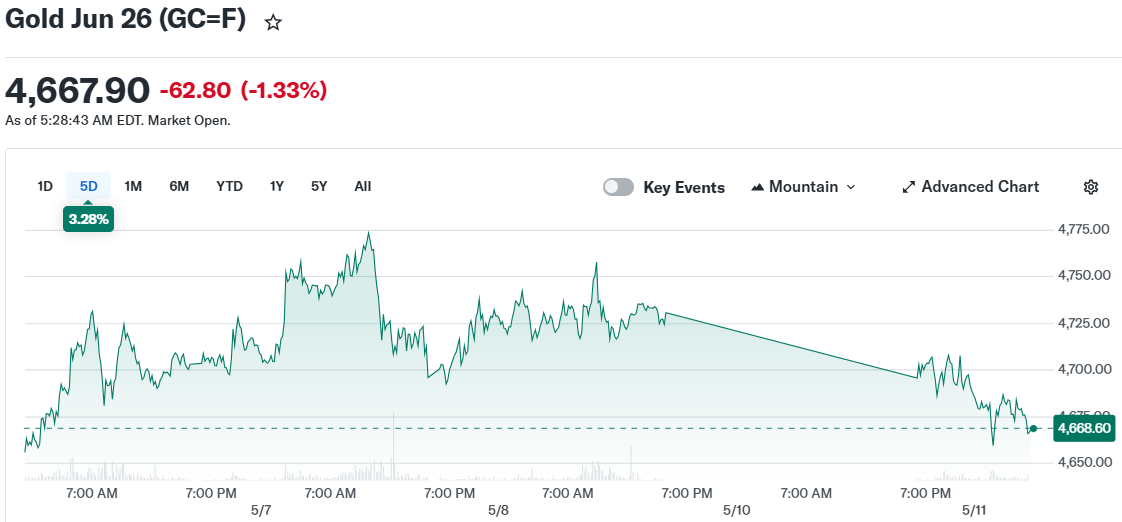
Gold dropped about 1% in Asian trading on Monday, pulling back after gains of more than 2% last week. The move came after President Donald Trump rejected Iran’s latest response to a U.S. peace proposal.
Trump called Tehran’s counter-offer “totally unacceptable.” Iran had refused to dismantle its nuclear facilities or suspend uranium enrichment for 20 years, according to the Wall Street Journal.
Iran did offer to gradually reopen the Strait of Hormuz and end the conflict. It also agreed that some of its highly enriched uranium would be diluted and the rest sent to a third country. But that was not enough for Washington.
"I have just read the response from Iran’s so-called 'Representatives.' I don’t like it — TOTALLY UNACCEPTABLE! Thank you for your attention to this matter." -President DONALD J. TRUMP pic.twitter.com/MIQDS9Ujjy
— The White House (@WhiteHouse) May 10, 2026
Spot gold fell to $4,669.82 an ounce by early Monday. U.S. gold futures also dropped, falling to $4,678.31.
The Strait of Hormuz remains closed. That stretch of water is one of the world’s most important oil shipping routes. Its continued closure pushed oil prices up nearly 5% in early trade.
Why Rising Oil Hurts Gold
Higher oil prices feed into broader inflation concerns. When inflation looks likely to stay high, central banks tend to keep interest rates elevated.

That is bad news for gold. The metal pays no interest, so it becomes less attractive when rates stay high and investors can earn more from other assets.
Soojin Kim from MUFG said markets are now pricing in higher rates to deal with inflation risks tied to elevated energy prices. That is putting direct pressure on gold.
Strong U.S. jobs data from last week added to that pressure. The payrolls report came in better than expected, which supports the view that the Federal Reserve will hold rates higher for longer.
The U.S. Dollar Index rose 0.2% in Asian hours. A stronger dollar also weighs on gold, as it makes the metal more expensive for buyers using other currencies.
What Happens Next
Investor attention is now turning to upcoming U.S. inflation data. Any surprise in those numbers could shift expectations around Fed policy.
Trump is also traveling to China later this week to meet President Xi Jinping. Iran, trade, and global energy security are all on the agenda.
Silver edged up 0.2% to $80.51 per ounce. Platinum fell 1.4% to $2,030.04 per ounce.
Copper was mixed. London benchmark copper futures rose 0.3% to $13,608.33 a ton, while U.S. copper futures gained 0.4% to $6.32 a pound.
Gold had risen on hopes of a U.S.-Iran deal last week. Those hopes have now faded, but the inflation and rate outlook is now the bigger force pushing the metal lower.
Stop guessing and start investing with confidence. KnockoutStocks gives you the AI insights, market intelligence, and stock research you need to spot opportunities, cut through the noise, and make smarter investment decisions — all in one powerful platform.
Sign up today and get 50% OFF full access to our premium stock picks.
Simply use coupon code SPECIAL50 at checkout to claim your exclusive discount.
Get 3 Free Stock Ebooks
Discover top-performing stocks in AI, Crypto, and Technology with expert analysis.
- Top 10 AI Stocks - Leading AI companies
- Top 10 Crypto Stocks - Blockchain leaders
- Top 10 Tech Stocks - Tech giants



