






TLDR
- Gold rose past $4,400 an ounce, its highest level in over two months
- The rally follows a 2.4% jump on Friday after weak U.S. jobs data
- Traders are watching Wednesday’s CPI and Thursday’s PPI inflation reports
- Stalled U.S.-Iran talks and Strait of Hormuz uncertainty are pushing oil prices higher
- China’s central bank increased gold reserves in July by the most since October 2023
Gold is pushing higher as investors keep a close eye on U.S. inflation data and ongoing diplomatic tensions around the Strait of Hormuz.
Spot gold climbed 0.4% to $4,407.79 an ounce on Tuesday. Gold futures gained 1.1% to $4,467.59. The metal is now at its highest point in more than two months.
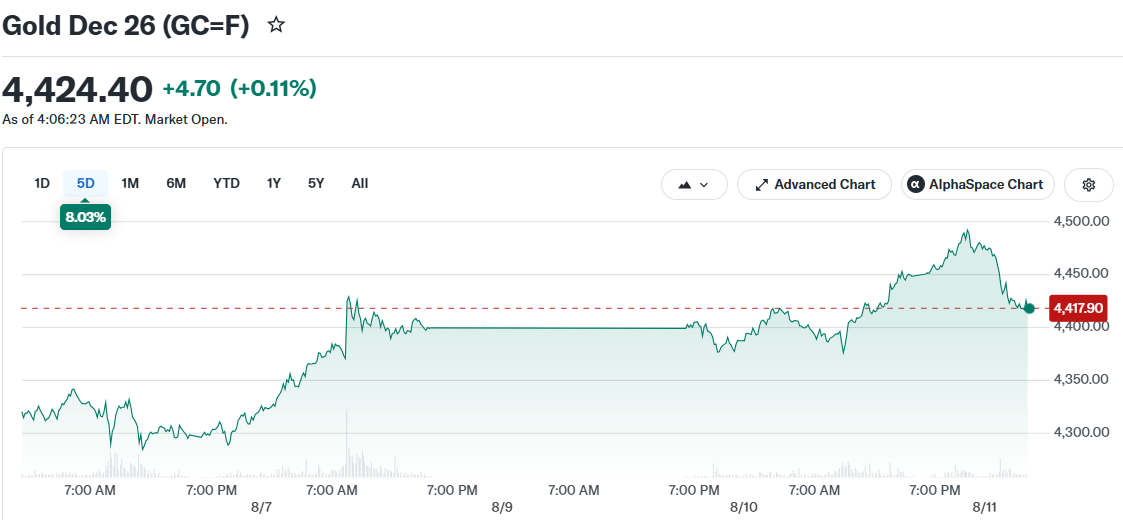
The latest move builds on a strong two-session run. Gold added 3.6% over Monday and Friday combined, after U.S. nonfarm payrolls came in weaker than expected for July.
Monday’s close near $4,390 was the highest daily finish in almost ten weeks. The metal has now recovered from a June low of $3,942.
Inflation Data in Focus
Traders are waiting on Wednesday’s consumer price index report. Economists expect a 0.1% rise in July, following a 0.4% decline the month before.
Thursday’s producer price index will also be watched closely. Together, the two reports could shape expectations for the Federal Reserve’s next move on interest rates.
Markets are currently pricing a 52% chance of a rate hike in September and an 81% chance by December, according to CME FedWatch data.

Cleveland Fed President Beth Hammack said multiple rate hikes may still be needed to bring inflation back to 2%. She was one of three officials who voted against holding rates steady last month.
Gold does not pay interest, so it tends to lose appeal when rates rise. But buyers have returned despite that risk.
Analysts at IG point to fear-of-missing-out buying, short-covering, and safe-haven demand as the main drivers. Investors who missed gold’s dip toward $4,000 are now chasing the rebound.
Iran Tensions and Oil Prices Add Pressure
The Strait of Hormuz remains a key risk. Iran said it is close to a deal with Oman on alternative shipping lanes, but added that the U.S. must meet further conditions before the strait reopens.
Iranian Foreign Ministry spokesperson Esmail Baghaei said Iran will not reopen the Strait of Hormuz until the United States ends its naval blockade on Iranian ports. Iran wants the U.S. to lift blockade, pay compensation for months of war damage, lift economic sanctions and… pic.twitter.com/jABYrN4exa
— The Associated Press (@AP) August 10, 2026
President Donald Trump made new demands on Iran this week, clouding hopes for a near-term agreement. Oil held a three-day gain as a result.
Higher oil prices raise inflation risks, which could force the Fed to keep rates elevated for longer. That creates a mixed picture for gold.
China is providing steady support from the demand side. The People’s Bank of China increased its gold reserves in July by the most since October 2023.
Gold-backed exchange-traded funds in China also saw greater inflows last week, adding to buying momentum.
Technically, analysts see resistance in the $4,460 to $4,500 zone. A break above that range could open the door to a move toward $5,000, though that level remains well above current prices.
Gold is still roughly 17% below where it traded before the Iran war began in late February.
Stop guessing and start investing with confidence. KnockoutStocks gives you the AI insights, market intelligence, and stock research you need to spot opportunities, cut through the noise, and make smarter investment decisions — all in one powerful platform.
Sign up today and get 50% OFF full access to our premium stock picks.
Simply use coupon code SPECIAL50 at checkout to claim your exclusive discount.
Get 3 Free Stock Ebooks
Discover top-performing stocks in AI, Crypto, and Technology with expert analysis.
- Top 10 AI Stocks - Leading AI companies
- Top 10 Crypto Stocks - Blockchain leaders
- Top 10 Tech Stocks - Tech giants



