





TLDR
- Gold is trading near a three-month high at around $4,660 an ounce after gaining more than 7% in the past week
- Falling oil prices and lower US Treasury yields are reducing inflation pressure, supporting gold’s price
- Iran and Oman held talks on a temporary maritime corridor to reopen the Strait of Hormuz
- Fed Chair Kevin Warsh’s speech at Jackson Hole on Friday is being closely watched for rate policy clues
- PCE inflation data due Wednesday will give traders another read on the US economy
Gold prices dipped slightly on Wednesday but stayed close to a three-month high, supported by falling oil prices and lower Treasury yields that have eased inflation concerns.
Gold spot traded around $4,660 an ounce, while gold futures edged up to $4,699. Silver rose 0.7% to $69.05, and platinum gained 0.3%.
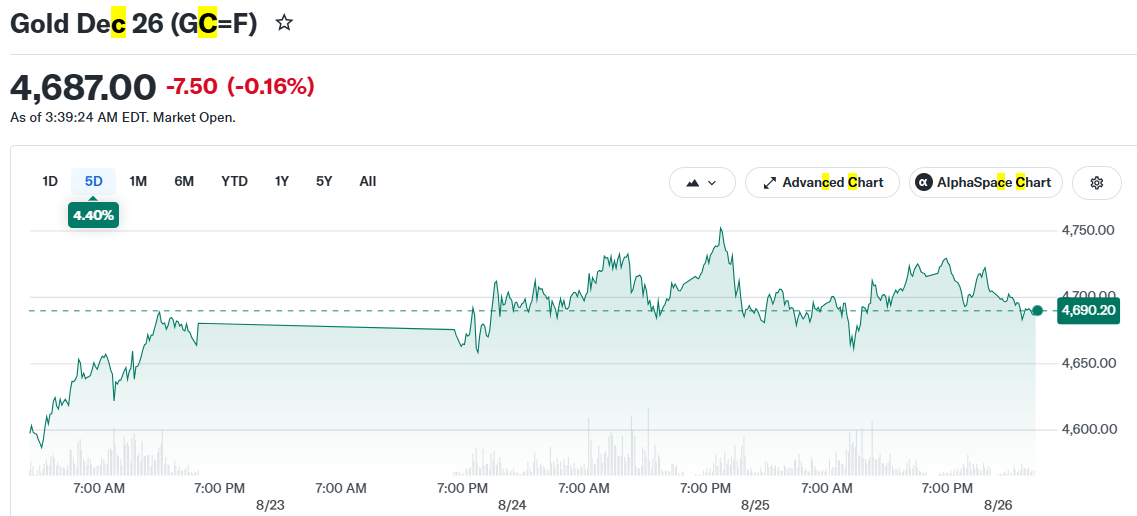
The metal has gained more than 7% over the past week, a run driven partly by the US Treasury’s move to ramp up buybacks of long-dated government debt.
That action revived what traders call the “debasement trade,” where investors buy gold to protect against government deficits and currency weakness. It helped fuel gold’s record-breaking rally in 2025 and is back in focus now.
Oil Drop Takes Pressure Off the Fed
Oil prices fell on Tuesday as Iran and Oman held talks about creating a temporary joint maritime corridor that could allow some shipping through the Strait of Hormuz to resume.
Lower oil prices matter for gold because energy costs feed directly into inflation. When oil is cheaper, inflation tends to ease, which reduces pressure on the Federal Reserve to keep interest rates high.
High interest rates are generally a headwind for gold because the metal pays no interest. When rates are elevated, yield-bearing assets become more attractive by comparison.

Treasury yields fell by around five to seven basis points across the curve on Tuesday, adding further support to gold’s price.
Boston Fed President Susan Collins said she supports holding rates steady for now, as long as inflation continues to move toward the Fed’s 2% target.
Jackson Hole and PCE Data in Focus
Traders are watching two key events that could move gold in the short term.
First is the US Personal Consumption Expenditures report due Wednesday. The PCE is the Fed’s preferred inflation gauge and will offer a fresh read on price pressures in the economy.
🚨 REMINDER: 🇺🇸 US PCE INFLATION DROPS TODAY AT 8:30 AM ET!
Previous: 3.7% · Forecast: 3.6%
IF PCE > 3.6% → risk off
IF PCE < 3.6% → risk onLast inflation print before Kevin Warsh speaks at Jackson Hole on Friday. pic.twitter.com/Jn9GCjhwWR
— Crypto Rover (@cryptorover) August 26, 2026
Second is the Jackson Hole symposium on Friday, where Fed Chair Kevin Warsh is set to deliver his first major speech since taking the role.
Warsh has faced criticism for not being clear about his economic views. Markets are hoping Friday’s address will give a better sense of where the Fed stands on rate cuts.
ANZ analysts noted that Treasury Secretary Scott Bessent gave no new signals about debt management plans, though reports suggest the Treasury may use cash reserves to buy back older, higher-yielding bonds.
The US Dollar Index was little changed at 99.01, staying flat after a slight dip the previous session.
Gold’s near-term direction will likely depend on what the PCE data and Warsh’s speech reveal about inflation and Fed policy.
Stop guessing and start investing with confidence. KnockoutStocks gives you the AI insights, market intelligence, and stock research you need to spot opportunities, cut through the noise, and make smarter investment decisions — all in one powerful platform.
Sign up today and get 50% OFF full access to our premium stock picks.
Simply use coupon code SPECIAL50 at checkout to claim your exclusive discount.
Get 3 Free Stock Ebooks
Discover top-performing stocks in AI, Crypto, and Technology with expert analysis.
- Top 10 AI Stocks - Leading AI companies
- Top 10 Crypto Stocks - Blockchain leaders
- Top 10 Tech Stocks - Tech giants



