





TLDR
- Gold is up about 10% in August, its strongest monthly gain since January
- Fed Chair Kevin Warsh’s hawkish inflation comments triggered a 3.2% drop on Friday
- Markets now price a 57% chance of a September rate hike, pressuring gold
- Rising oil prices after U.S.-Iran military exchanges are adding to inflation concerns
- The U.S. Treasury’s bond purchases earlier this month helped fuel August’s rally
Gold prices slipped on Monday as investors weighed the Federal Reserve’s latest signals on interest rates. Despite the pullback, gold is still on track for its best month since January, up around 10% in August.
As of Monday morning, gold spot prices fell 0.4% to $4,438.30 an ounce. Gold futures dropped 0.9% to $4,488.41.
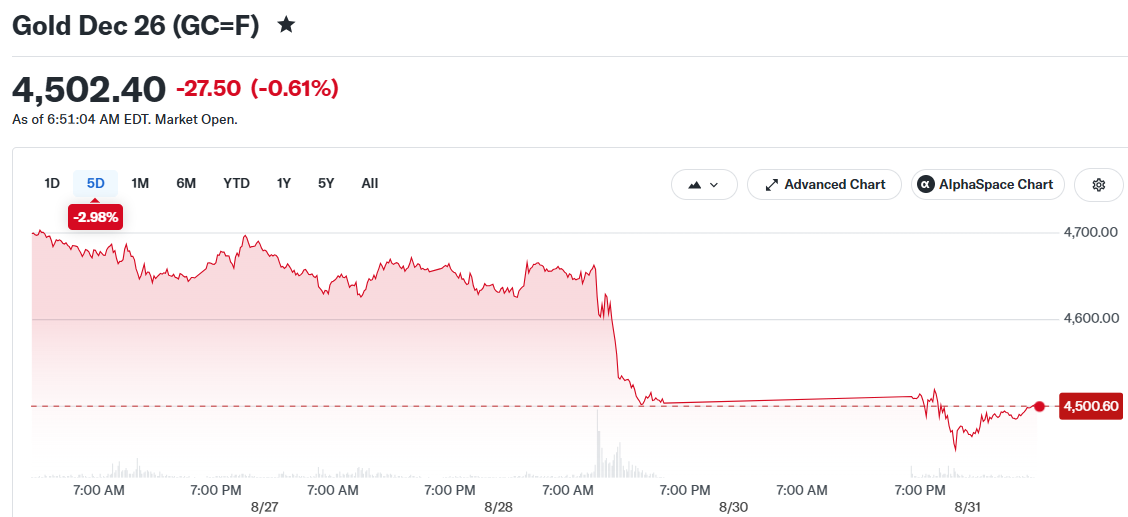
The drop follows a sharp 3.2% decline on Friday, gold’s biggest single-day fall since early June. That sell-off came after Fed Chair Kevin Warsh said at Jackson Hole that the Fed still has work to do to bring inflation down to its 2% target.
Fed Rate Hike Bets Rise
Warsh’s comments shifted market expectations fast. Traders now price roughly a 57% probability of a September rate hike, according to CME’s FedWatch tool.
Odds of a Fed rate hike in 2026 jumped to 64% after Fed Chair Kevin Warsh said the Fed has “work to do” if inflation doesn’t move toward 2% fast enough. pic.twitter.com/YwcywqcAxH
— Wall St Engine (@wallstengine) August 28, 2026
Gold does not pay interest, so when rates are expected to rise, bonds and other interest-bearing assets become more attractive by comparison. That shift in expectations pulls money away from gold.
A stronger dollar, which followed Warsh’s remarks, also puts downward pressure on gold. When the dollar rises, gold becomes more expensive for buyers holding other currencies.

ANZ analysts said the retreat was a direct result of Warsh’s warning. They still expect the downside to be limited, saying the long-term case for holding gold remains in place.
The 10-year Treasury yield was trading near 4.71% on Monday, according to ING commodities strategist Ewa Manthey. She said persistent inflation and the prospect of further rate increases could keep pressure on gold.
U.S. Treasury Move and Oil Add to the Picture
Gold’s August rally got a boost earlier in the month when the U.S. Treasury unexpectedly increased its purchases of longer-dated government bonds. That move pushed yields lower and weighed on the dollar.
It also raised concerns about rising government debt and whether efforts to control borrowing costs could weaken confidence in U.S. assets. That brought the debasement trade back into focus.
The debasement theme helped drive gold’s roughly 65% rally in 2025. Investors bought gold as a hedge against budget deficits, currency depreciation, and falling purchasing power.
Oil prices added another layer of concern. Brent crude rose to around $89.38 a barrel and U.S. crude reached $84.50 after U.S. forces struck Iranian launchers on Larak Island on Sunday. Iran then reportedly attacked U.S. forces in Jordan, raising fears of a wider conflict that could keep energy prices high.
Higher oil prices feed into inflation, which complicates the Fed’s path and keeps rate hike expectations elevated.
Gold had recovered sharply from its late June low near $3,942 before Friday’s sell-off. Markets will now watch upcoming U.S. jobs and inflation data closely for clues on whether the Fed will move in September.
Stop guessing and start investing with confidence. KnockoutStocks gives you the AI insights, market intelligence, and stock research you need to spot opportunities, cut through the noise, and make smarter investment decisions — all in one powerful platform.
Sign up today and get 50% OFF full access to our premium stock picks.
Simply use coupon code SPECIAL50 at checkout to claim your exclusive discount.
Get 3 Free Stock Ebooks
Discover top-performing stocks in AI, Crypto, and Technology with expert analysis.
- Top 10 AI Stocks - Leading AI companies
- Top 10 Crypto Stocks - Blockchain leaders
- Top 10 Tech Stocks - Tech giants



