





TLDR
- The Federal Reserve raised interest rates by 0.25% on Wednesday, the first hike since 2023
- Spot gold rose 1.2% to $4,314.57 after initially slipping, while gold futures fell 0.8%
- The Fed’s median rate projection for end of 2026 rose to 4.1%, up from 3.8%
- Fed Chair Kevin Warsh flagged ongoing inflation concerns, with many goods still rising above 3% annually
- Analysts say gold needs to reclaim $4,539 to reverse its current downtrend
The Federal Reserve raised its benchmark interest rate by a quarter of a percentage point on Wednesday, the first increase since 2023. The decision was unanimous. Markets had widely expected the move.
Spot gold initially fell on the news but recovered, rising 1.2% to $4,314.57 an ounce during early Thursday trading. Gold futures moved in the opposite direction, falling 0.8% to $4,354.09 an ounce.
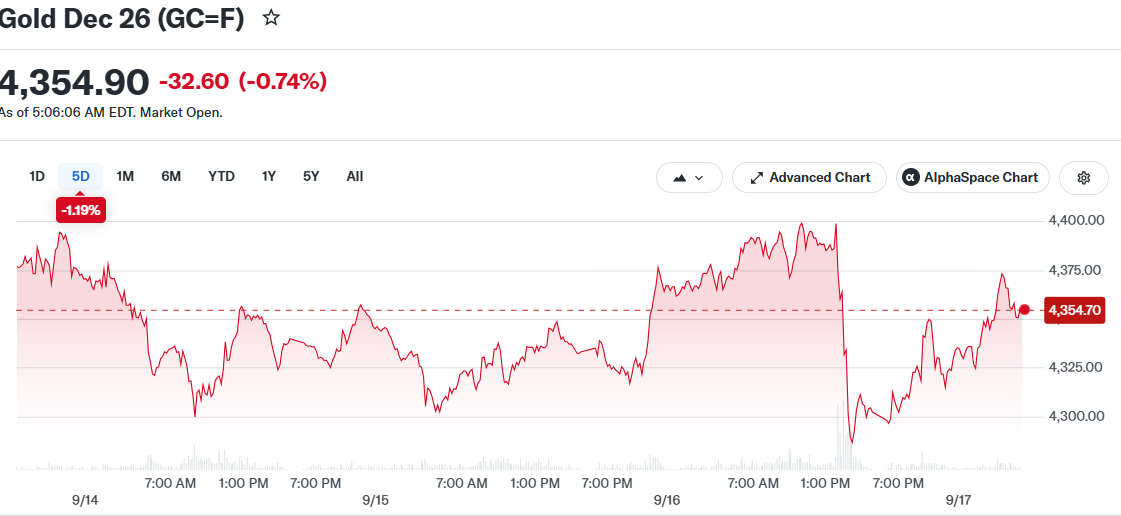
In New York, gold was last seen down 0.5% at $4,365.50 a troy ounce, reflecting continued volatility around the rate decision.
Why the Rate Hike Hurts Gold
Gold does not pay interest, which makes it less attractive when rates rise. Investors can earn more from interest-bearing assets like bonds, reducing demand for the metal.
A stronger dollar adds further pressure. When the dollar rises, gold becomes more expensive for buyers using other currencies, which can lower demand.
Treasury yields fell across the curve after the Fed’s decision, while the dollar strengthened. That combination kept gold under pressure through much of the session.
Fed Chair Kevin Warsh, speaking after the meeting, said too many categories of goods and services were still showing annualized price increases above 3% over both six-month and twelve-month periods.

The Fed’s median projection for the policy rate at the end of 2026 rose to 4.1%, up from a previous estimate of 3.8%. That signals the central bank is prepared to raise rates further.
Markets read that guidance as hawkish, meaning tighter monetary policy could be on the way.
What Analysts Are Watching
Tony Sycamore, senior market analyst at IG, said expectations for another Fed hike later this year and an additional 50 basis points of increases in the first half of 2027 have added to the headwinds for gold.
He said gold needs to climb back above its 200-day moving average near $4,539 to show the pullback from the $4,697 high has ended.
Until that happens, Sycamore expects the decline could extend to around $4,200. He identified $4,000 as the next major support level after that.
MUFG analyst Soojin Kim noted that gold’s price path is now increasingly tied to the pace of U.S. interest rate increases.
She said inflation and elevated Treasury yields limit gold’s upside, even though geopolitical risks and safe-haven demand continue to provide some support.
The Fed’s guidance points to more rate increases ahead, keeping pressure on the metal in the near term.
Stop guessing and start investing with confidence. KnockoutStocks gives you the AI insights, market intelligence, and stock research you need to spot opportunities, cut through the noise, and make smarter investment decisions — all in one powerful platform.
Sign up today and get 50% OFF full access to our premium stock picks.
Simply use coupon code SPECIAL50 at checkout to claim your exclusive discount.
Get 3 Free Stock Ebooks
Discover top-performing stocks in AI, Crypto, and Technology with expert analysis.
- Top 10 AI Stocks - Leading AI companies
- Top 10 Crypto Stocks - Blockchain leaders
- Top 10 Tech Stocks - Tech giants



