





TLDR
- European gas prices jumped over 40% after Qatar halted LNG production following Iranian drone strikes on the Ras Laffan complex
- QatarEnergy suspended all LNG output after strikes hit two of its gas facilities
- The Strait of Hormuz closure is cutting off over one-fifth of global LNG supply
- Goldman Sachs raised its Q2 TTF forecast to 45 euros/MWh, up from 36 euros/MWh, and warns prices could rise 130% from last week’s levels
- Europe’s low gas storage levels heading into the rebuild season are making the supply crunch worse
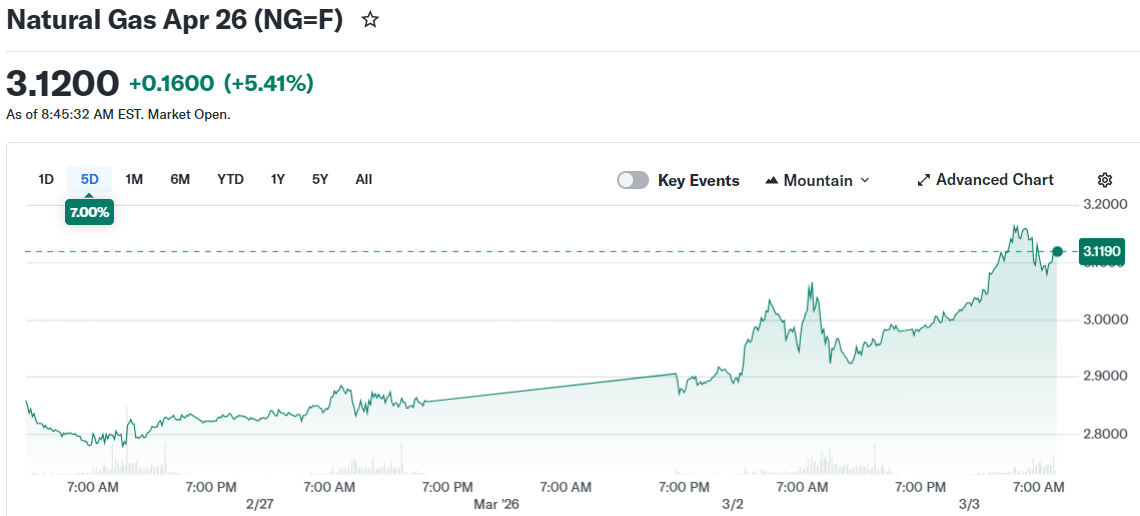
European gas prices have surged for a second straight day after Qatar shut down its liquefied natural gas production. The Dutch TTF benchmark, the main measure for European gas prices, jumped more than 40% to top 62 euros per megawatt-hour on Tuesday.
The spike followed a decision by QatarEnergy to halt all LNG output at its Ras Laffan complex. The company said it suspended production after Iranian drone strikes hit two of its gas facilities.
Qatar is the world’s second-largest LNG exporter. While it mainly supplies customers in Asia, a long outage would force both Asian and European buyers to compete for the same limited supply on global spot markets.
The crisis was already building before the production halt. Futures started climbing on Monday after Iran effectively closed the Strait of Hormuz, a key shipping lane at the mouth of the Persian Gulf.
The Strait of Hormuz handles more than one-fifth of all LNG shipped globally. Iranian officials have threatened to attack any ships trying to pass through it.
Analysts at ANZ called it “the biggest threat to world gas markets since Russia invaded Ukraine in 2022.” That conflict sent European gas prices to record highs and triggered a continent-wide energy crisis.
Goldman Sachs Raises European Gas Price Forecasts
Goldman Sachs analysts, including Samantha Dart and Frederik Witzemann, raised their April TTF price forecast to 55 euros per megawatt-hour. That is up from their previous estimate of 36 euros per megawatt-hour.

The bank’s average forecast for the second quarter of 2026 is now 45 euros per megawatt-hour, compared to an earlier estimate of 36 euros. Goldman warned prices could climb as much as 130% from where they were trading last week.
The TTF had risen more than 31% to around 58.60 euros per megawatt-hour on Tuesday. That puts it near its highest level since 2023.
Europe imports around 5% of its gas from the Middle East. While that share is smaller than Asia’s exposure, the indirect pressure through global spot markets is already pushing prices up.
Europe’s Storage Levels Add Pressure
Europe’s gas storage levels are already below seasonal norms, heading into the period when the continent needs to rebuild reserves ahead of next winter. Higher-than-expected use of gas for electricity generation last winter made the situation worse.
Goldman’s analysts said uncertainty around how long the Qatari outage lasts, combined with ongoing threats to Strait of Hormuz shipping, will “drive TTF prices temporarily higher still.”
Alternative supplies exist but are limited. The U.S. could increase LNG exports, but traders say American output alone would not be enough to replace a long-term loss of Qatari supply.
The Center for Strategic and International Studies told the New York Times that tighter gas supplies to Asia could push Asian buyers toward U.S. and other non-Middle Eastern sources. European prices may keep rising even after QatarEnergy restarts output, analysts said.
Goldman Sachs said the TTF was hovering around its highest levels since 2023 as of Tuesday morning.
Considering a new stock? You may want to see what’s on our watchlist first.
Our team at Knockout Stocks follows top-performing analysts and market-moving trends to spot potential winners early. We’ve identified five stocks gaining quiet attention that could be worth watching now. Create your free account to unlock the full report and get ongoing stock insights.Get 3 Free Stock Ebooks
Discover top-performing stocks in AI, Crypto, and Technology with expert analysis.
- Top 10 AI Stocks - Leading AI companies
- Top 10 Crypto Stocks - Blockchain leaders
- Top 10 Tech Stocks - Tech giants



