





TLDR
- Brent crude fell 0.67% to $89.10 and WTI dropped 0.77% to $82.89 on Friday
- Both benchmarks are on track for weekly losses of 4% to 5.5%
- Trump administration says it has no interest in reviving the June peace deal with Iran
- The U.S. is close to securing long-term access to Venezuela’s oil reserves
- Venezuela is reportedly considering leaving OPEC as ties with Washington grow
Oil prices dropped on Friday, putting both major benchmarks on course for a weekly loss after two straight weeks of gains.
Brent crude fell to $89.10 a barrel, while West Texas Intermediate dropped to $82.89. For the week, Brent is down around 5.3% and WTI is off about 4.3%.
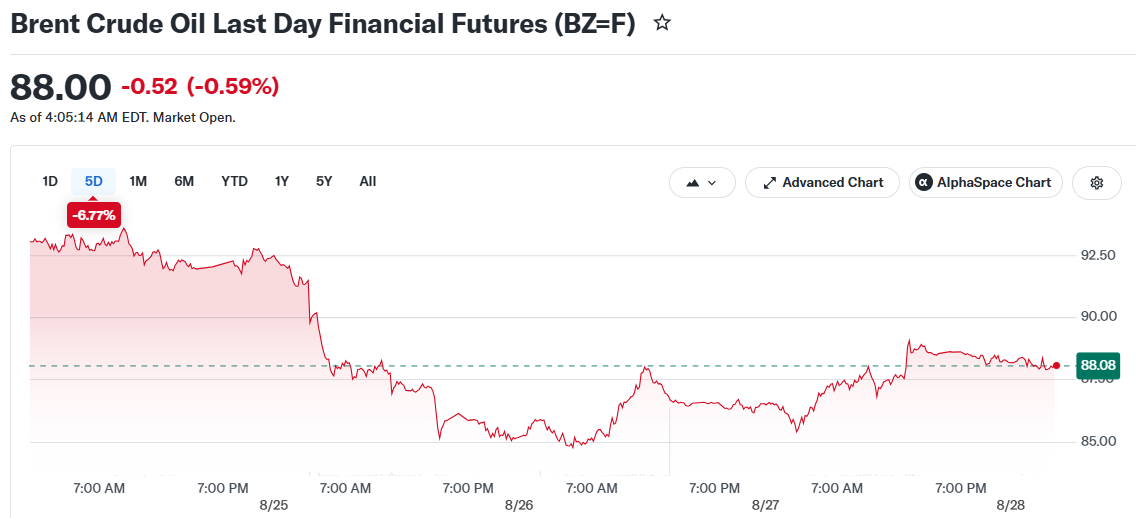
The losses come despite a brief rebound on Thursday, when markets reacted to a Wall Street Journal report that the Trump administration has no interest in returning to the terms of a June peace deal with Iran.
Tehran has repeatedly said the U.S. must honor that deal before new talks can begin. The agreement lapsed earlier in August.
Washington said earlier this week it was not in active talks with Iran, even as other countries have tried to push both sides back to the table.
Iran and the Strait of Hormuz
The Strait of Hormuz remains a key pressure point for oil markets. Iran and Oman have reportedly agreed to allow some traffic through the waterway, and Iran said it is preparing a list of conditions for a fuller reopening.
🚨🇺🇸🇮🇷 BREAKING: CENTCOM says it cleared Iran's mines and the Strait of Hormuz is open
Admiral Brad Cooper's account is that Navy divers, SEALs and air power spent months clearing the internationally recognized traffic lanes of IRGC mines, with nearly 1,500 vessels escorted out…
— Mario Nawfal (@MarioNawfal) August 28, 2026

Before the U.S.-Iran war, the strait supplied about one-fifth of the world’s oil. Any reopening would add supply back to the market, which has weighed on prices.
Goldman Sachs estimated total Gulf exports are now running at 15 to 16 million barrels per day. That is 7 to 8 million barrels below pre-war levels but 5 to 6 million above the lowest point seen in March.
Analysts at ING said producers are adapting and becoming more comfortable moving oil through the strait despite ongoing conflict.
On Monday, the U.S. announced what it called the toughest sanctions in history on Iran. Tehran called the move inhumane and said the sanctions had lost their effectiveness.
Venezuela in Focus
A separate development is also weighing on oil. The Trump administration is reportedly close to securing long-term access to a portion of Venezuela’s oil reserves.
The deal would allow American companies to develop a group of Venezuelan oilfields. Washington ousted leader Nicolas Maduro and took control of the country’s oil industry earlier this year.
Analysts have cautioned that any actual supply increase from Venezuela will take time, given the state of the country’s oil infrastructure.
Venezuela is also reportedly considering leaving OPEC as its ties with the U.S. deepen. That would be the second major exit from the producer group after the United Arab Emirates announced it would also leave.
Geopolitical tensions added to market uncertainty after Moscow warned it could strike British military targets in response to Kyiv using British-supplied cruise missiles. Trump said he does not believe Russia will attack a NATO country.
Stop guessing and start investing with confidence. KnockoutStocks gives you the AI insights, market intelligence, and stock research you need to spot opportunities, cut through the noise, and make smarter investment decisions — all in one powerful platform.
Sign up today and get 50% OFF full access to our premium stock picks.
Simply use coupon code SPECIAL50 at checkout to claim your exclusive discount.
Get 3 Free Stock Ebooks
Discover top-performing stocks in AI, Crypto, and Technology with expert analysis.
- Top 10 AI Stocks - Leading AI companies
- Top 10 Crypto Stocks - Blockchain leaders
- Top 10 Tech Stocks - Tech giants



