





TLDR
- Ron Wyden urged Senate leaders to preserve BRCA in the CLARITY Act.
- BRCA protects non-custodial developers from money transmitter rules.
- Wyden said BRCA keeps DOJ and FinCEN powers over illicit actors.
- Developer protections remain a key issue in CLARITY Act talks.
- Lummis said the CLARITY Act may be the last crypto bill chance before 2030.
Senator Ron Wyden is pressing Senate leaders to preserve legal protections for non-custodial blockchain developers as lawmakers continue talks over the CLARITY Act, a major crypto market structure bill facing a tight Senate calendar.
In a letter to Senate Majority Leader John Thune and Senate Democratic Leader Charles Schumer, Wyden asked leadership to keep Section 604 in the bill. The provision is known as the Blockchain Regulatory Certainty Act, or BRCA, and is designed to clarify that developers who do not control user funds should not be treated as money transmitters only for publishing software.
Wyden Pushes to Preserve BRCA
Wyden said BRCA would codify existing federal policy while keeping enforcement tools available for the Department of Justice and the Financial Crimes Enforcement Network. He argued that the provision would help law enforcement focus on unlicensed money transmitters rather than neutral software developers.
“Smart policy will empower law enforcement to do its job and facilitate innovation at the same time,” Wyden wrote in the letter. He urged Senate leaders to include BRCA in any CLARITY Act package brought to the floor.
The Oregon Democrat also said the provision includes a limit on its protections. Developers accused of transferring or using funds tied to illicit activity would not be covered by the safe harbor.
“The provision also includes a common-sense exception,” Wyden wrote, adding that bad actors could still be held accountable while neutral developers avoid being treated as financial intermediaries.
Developer Protections Remain Disputed
BRCA has support from many crypto industry groups, which say the language would give open-source developers clearer legal treatment. They argue that developers who write and publish software should not face money transmitter rules when they do not custody funds.

Some law enforcement groups have raised concerns about the measure. Critics have warned that broad developer protections could make it harder to investigate human trafficking, illicit finance, and other crimes involving blockchain tools.
Wyden rejected that view in his letter, saying the provision preserves the ability of DOJ and FinCEN to pursue illicit actors. His position aligns with earlier comments from federal officials who have said developers without criminal involvement should not face prosecution.
Acting Attorney General Todd Blanche previously said enforcement should focus on people directly involved in illegal activity, not developers who lack control over funds or criminal intent.
CLARITY Act Faces Senate Pressure
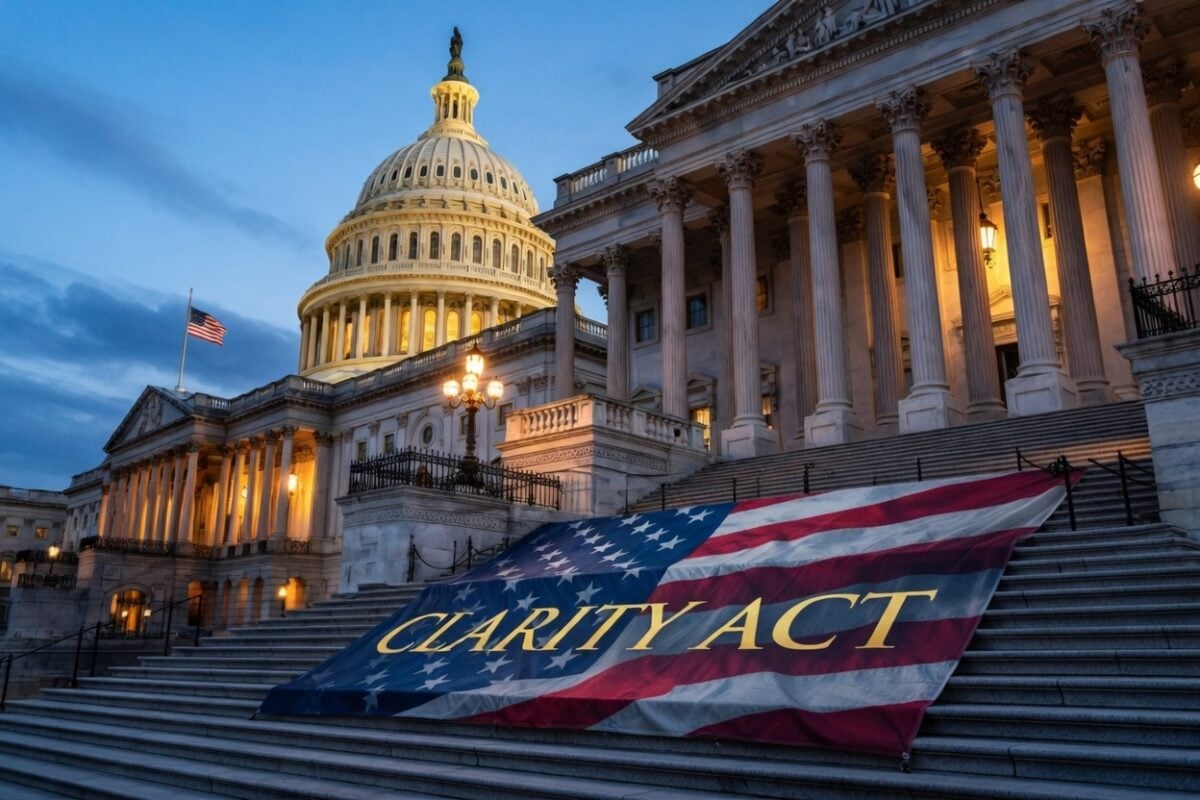
The developer protection fight has become one of the unresolved issues as lawmakers seek to advance the CLARITY Act. The bill aims to create a broader market structure for digital assets and define agency oversight of crypto markets.
Senator Cynthia Lummis, who introduced BRCA as a standalone bill with Wyden as the Democratic cosponsor, has also pushed for stronger protections for DeFi and blockchain developers. She said the bill may be the last chance to pass digital asset legislation before 2030.
Lummis wrote that failing to pass the CLARITY Act could let another country write the rules for digital assets while the United States spends years catching up. Senator Bernie Moreno also called for a floor vote this month.
The Senate still faces disputes over developer liability, ethics rules for public officials with digital asset ties, and stablecoin yield issues. With lawmakers set to leave Washington in August and elections approaching in November, the window for a floor vote is narrowing.
HUGE: The CLARITY Act hasn't even passed yet – but we can already see where crypto is headed.
BlackRock, Franklin Templeton, JPMorgan, DTCC, SWIFT and all the big boys just completed a Sandbox to test how tokenized U.S. money market funds could be used as collateral across… pic.twitter.com/GpUJ2BIwyv
— Mark (@markchadwickx) July 8, 2026
Institutional tokenization work is also moving while the bill remains under review. BlackRock, Franklin Templeton, JPMorgan, DTCC, SWIFT, and other firms recently completed sandbox testing of tokenized U.S. money market funds as collateral across networks including Ethereum, Solana, XRP Ledger, Avalanche, Stellar, Hedera, BNB Chain, and Canton.


