






TLDR
- Solana validators approved SGP-0002, doubling the annual disinflation rate from 15% to 30%
- The proposal passed with 67% support and 60.7% stake participation
- SOL will reach its 1.5% terminal inflation rate in ~2.8 years instead of ~5.7 years
- Solana spot ETFs recorded $138M in net inflows over 10 days, with a $47M single-day high
- Bitwise’s BSOL crossed $1 billion in assets under management, holding 9.3M SOL
Solana’s validator network has voted to accelerate how quickly the network reduces its token issuance. The proposal, called SGP-0002 or “Double Disinflation,” passed with 67% support, 25.16% against, and 7.84% abstaining. Participation reached 60.7% of eligible stake.
🚨HUGE: Solana votes to cancel 18.9 MILLION $SOL in a final-seconds cliffhanger.
Solana prints new $SOL every day to pay stakers, and validators just voted to shrink that printing twice as fast, meaning 18.9 MILLION tokens will simply never exist.
The vote needed two-thirds to… pic.twitter.com/PLCKrv3k7S
— Coin Bureau (@coinbureau) August 28, 2026
The change doubles Solana’s annual disinflation rate from 15% to 30%. The long-term inflation target of 1.5% stays the same — it just gets there faster.
Under the old schedule, Solana would have hit that 1.5% terminal rate in about 5.7 years. Under the new one, it gets there in roughly 2.8 years. That means an estimated 18.9 million fewer SOL will be issued over the next six years.
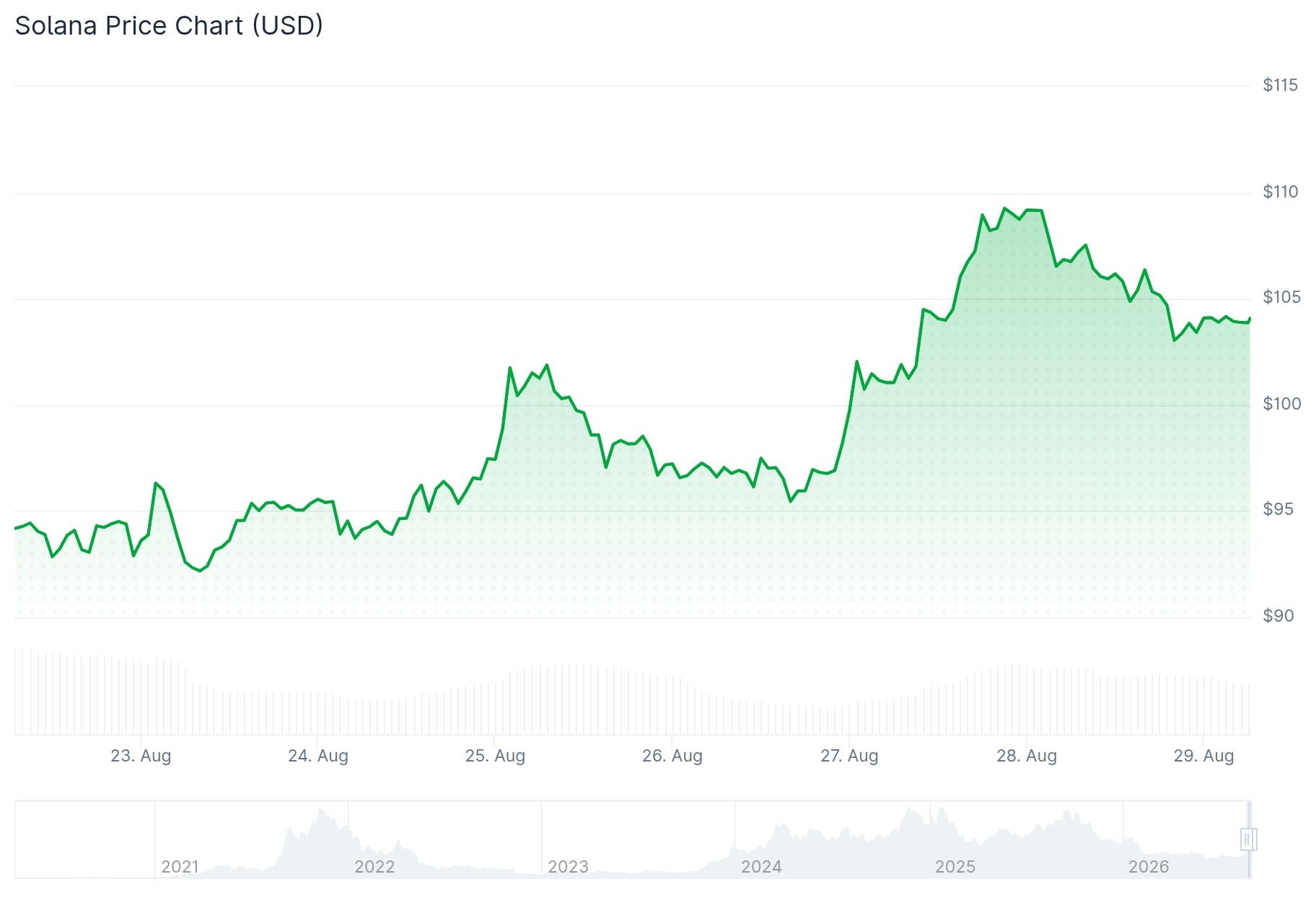
This is good news for SOL holders, who will face less dilution. However, validators and delegators will receive lower staking rewards as a result.
The vote was part of Solana’s first binding governance process. The same vote also approved a proposed Solana Constitution and rejected a separate proposal on resource and inclusion fees.
Not everyone agreed. Figment, the largest voter in the governance data with 17.1 million SOL staked, voted entirely against SGP-0002. Helius and Jupiter backed it.

Kraken’s position shifted during the vote. The exchange initially voted against the proposal at 12:33 UTC, briefly pushing support below the required threshold. By the end of voting, more than 90% of its roughly 8.9 million SOL stake had flipped in favor.
Analyst Ted Pillows on X noted that a whale bought $29.58 million in $SOL on Binance on the day of the vote, adding that “big money is getting more interested in Solana after the double disinflation proposal passed.”
A whale bought $29,580,000 in $SOL today on Binance.
It seems like big money is getting more interested in Solana after the double disinflation proposal passed. pic.twitter.com/HCahUc7FyO
— Ted (@TedPillows) August 28, 2026
ETF Inflows Hit Record Stretch
While the governance vote was playing out, Solana’s ETF market was posting strong numbers. Glassnode reported that Solana spot ETFs recorded $138 million in net inflows over 10 days, calling it the “strongest stretch on record.”
Bitwise Solana ETF just cracked the $1b mark. First one to do it. The category has seen $1.7b in cumulative flows w really no outflow stretch despite coming off a nightmare downturn first half of year. Impressive. Chart from @JSeyff Solana report out today on BI ETF<go>. pic.twitter.com/0myCedI6sC
— Eric Balchunas (@EricBalchunas) August 28, 2026
A single day saw $47 million in inflows, showing demand was concentrated rather than spread evenly. Bloomberg ETF analyst Eric Balchunas noted that US Solana ETFs have pulled in roughly $1.7 billion in cumulative net inflows since launch, with little sustained outflow.
Bitwise BSOL Crosses $1 Billion
Bitwise’s BSOL ETF became the first Solana ETF to cross $1 billion in assets under management. As of August 26, BSOL held 9,332,360.79 SOL worth approximately $1.02 billion.
Bitwise launched BSOL in October 2025 as the first U.S. ETP with 100% direct exposure to SOL. It now serves as the leading Solana ETF by assets held.
US Solana ETFs have attracted roughly $1.7 billion in cumulative net inflows, with little sustained outflow since their launch, according to Balchunas.


