





TLDR
- Xiaomi’s April EV deliveries topped 30,000 units, up 50% month-over-month
- Stock closed 6.75% higher in Hong Kong; rose as much as 11% intraday
- New-generation SU7 has accumulated over 70,000 locked orders since launch
- Year-to-date deliveries reach 109,000 units — 20% of the 550,000 full-year target
- Analysts warn near-term profits may stay under pressure due to subsidies and ramp-up costs
Xiaomi’s EV business had a strong April, and the market noticed.
The company delivered more than 30,000 electric vehicles last month, a 50% jump from March and its fastest monthly growth so far this year. The stock closed up 6.75% in Hong Kong on Monday, after briefly surging as much as 11% intraday to HK$31.56.
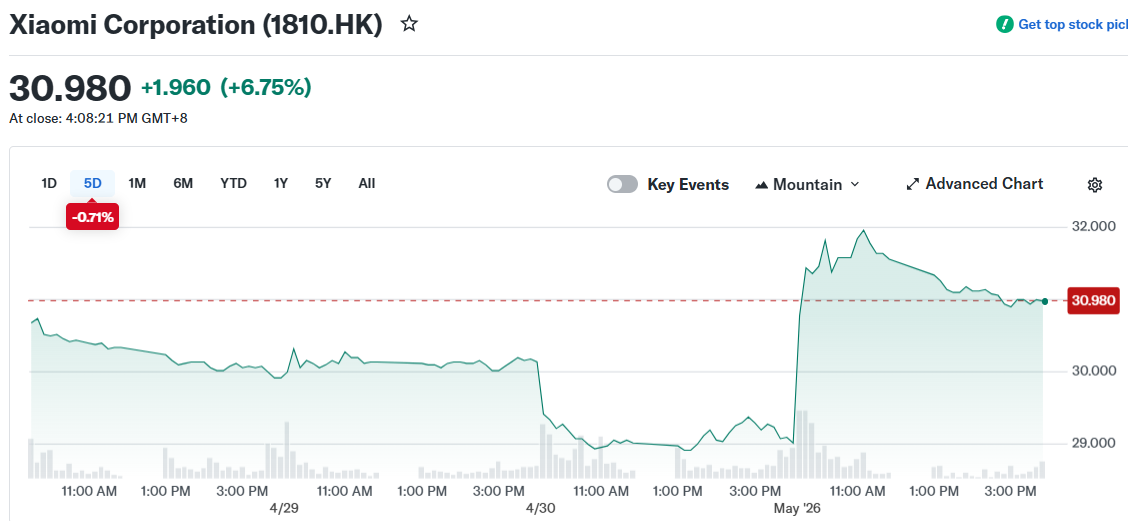
Trading volume hit HK$5.2 billion, putting Xiaomi among the most actively traded stocks on the main board that day.
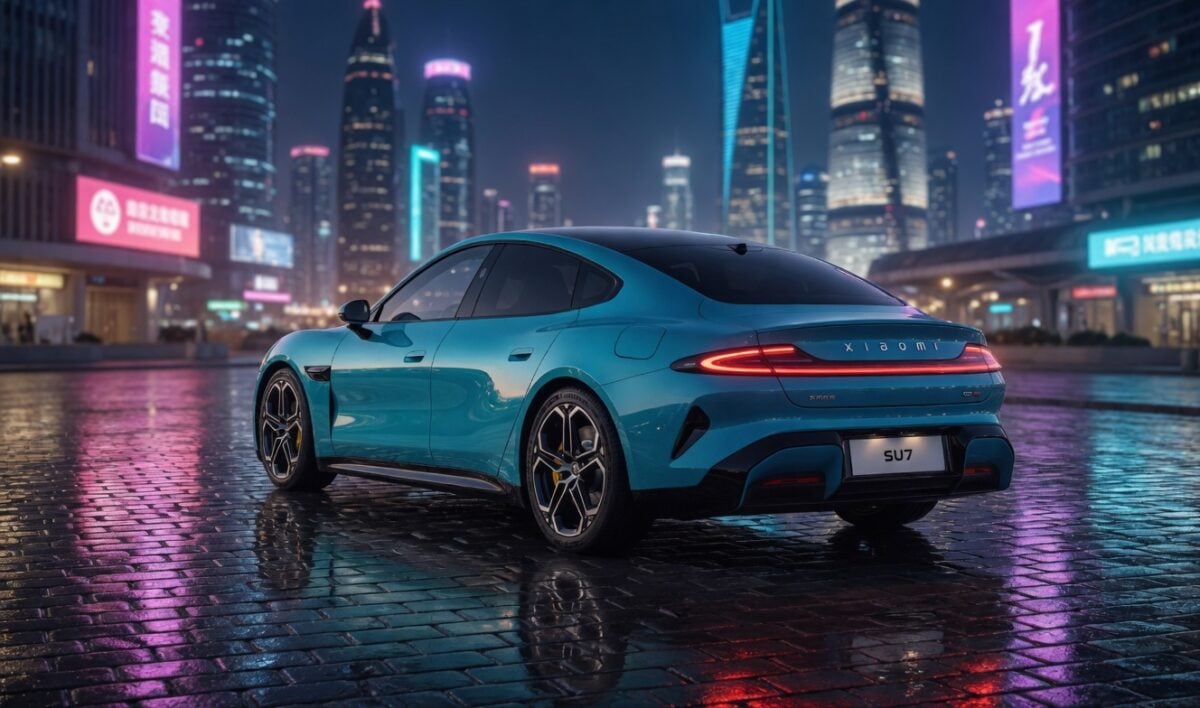
The April momentum was driven heavily by the new-generation SU7, Xiaomi’s flagship sedan, which entered its first full month of deliveries after launching in late March.
CEO Lei Jun posted on Weibo Sunday that locked orders for the new SU7 had already crossed 70,000 units. He noted some configuration options would be phased out after the launch window to improve production efficiency.
The standard SU7 starts at 219,900 yuan (around $32,200), with Pro and Max variants at 249,900 yuan and 303,900 yuan. That’s about 10,000 yuan below presale estimates, but roughly 4,000 yuan above the first-generation model from 2024.
From January through April, Xiaomi shipped 109,000 EVs in total — an 11% rise year-over-year, but only about 20% of its 550,000-unit delivery target for 2026.

To hit that full-year number, monthly deliveries would need to exceed 55,000 units for the rest of the year. That’s a steep climb from current levels.
Analyst Caution on Earnings
Despite the delivery numbers, analysts aren’t fully bullish on the near-term financials.
Citi analysts led by Kyna Wong flagged that first-quarter revenue likely fell both sequentially and year-on-year. They projected around 97 billion yuan in Q1 revenue — down 17% quarter-on-quarter and 13% year-on-year.
The core smartphone business is facing pressure from rising memory costs, even as Xiaomi shifts toward higher-priced models.
On the EV side, profitability is expected to remain tight due to ongoing subsidies and production ramp-up costs.
What’s Coming Next
Lead times give some sense of demand. The YU7 base model sits at 7 to 10 weeks. The new SU7 base model stretches to 8 to 11 weeks, with the Max at 9 to 12 weeks.
Xiaomi currently operates 495 stores across 165 cities and plans to open two more in May.
The YU7 GT model is expected to launch in late May, with additional models planned for the second half of 2026.
As of end of April, Xiaomi has 110,000 deliveries in the books and a long road ahead to meet its annual target.
Stop guessing and start investing with confidence. KnockoutStocks gives you the AI insights, market intelligence, and stock research you need to spot opportunities, cut through the noise, and make smarter investment decisions — all in one powerful platform.
Sign up today and get 50% OFF full access to our premium stock picks.
Simply use coupon code SPECIAL50 at checkout to claim your exclusive discount.
Get 3 Free Stock Ebooks
Discover top-performing stocks in AI, Crypto, and Technology with expert analysis.
- Top 10 AI Stocks - Leading AI companies
- Top 10 Crypto Stocks - Blockchain leaders
- Top 10 Tech Stocks - Tech giants



