






Wall Street prime brokers Clear Street and Marex Group are building institutional access to Kalshi’s prediction markets, and the best crypto to buy now shifts as institutional infrastructure expands according to CoinDesk. The same institutional logic driving capital into alternative data driven markets validates the thesis: intelligence infrastructure at ground floor pricing is where the real multiplier lives.
Pepeto crossed $7.99 million raised with three exchange products approaching launch, and the wallets entering understand infrastructure value before the market prices it in. While XRP waits for a triangle breakout and SOL consolidates, the presale where the multiplier still lives keeps filling.
Pepeto: The Presale Where Every Dollar In Pushes the Floor Higher
The wallets already inside Pepeto are not hoping for a breakout, they are building one. The cofounder who delivered Pepe’s $7 billion market cap returned with PepetoSwap for zero fee cross chain trading, a bridge across Ethereum, BNB Chain, and Solana, and an exchange with AI screening. SolidProof audited every contract.

At presale pricing, the entry is so low that the multiplier math works even in conservative scenarios. The $7.99 million raised tells the story of conviction, and 198% APY staking adds passive growth while the listing approaches.
Every dollar entering the presale pushes the price floor higher for everyone. The wallets already inside benefit from every new wallet that enters after them. The entry gets more expensive every day regardless of what Bitcoin does, because presale mechanics are driven by committed capital. Visit the Pepeto official website before the floor rises again.
XRP Waits for a Triangle That May Take Months
XRP trades at $1.41 as of March 15 according to CoinMarketCap, with analysts flagging a symmetrical triangle on the monthly chart. Daily Bollinger Bands compressed to their tightest level since July 2025. The same configuration preceded a 60% surge last cycle.

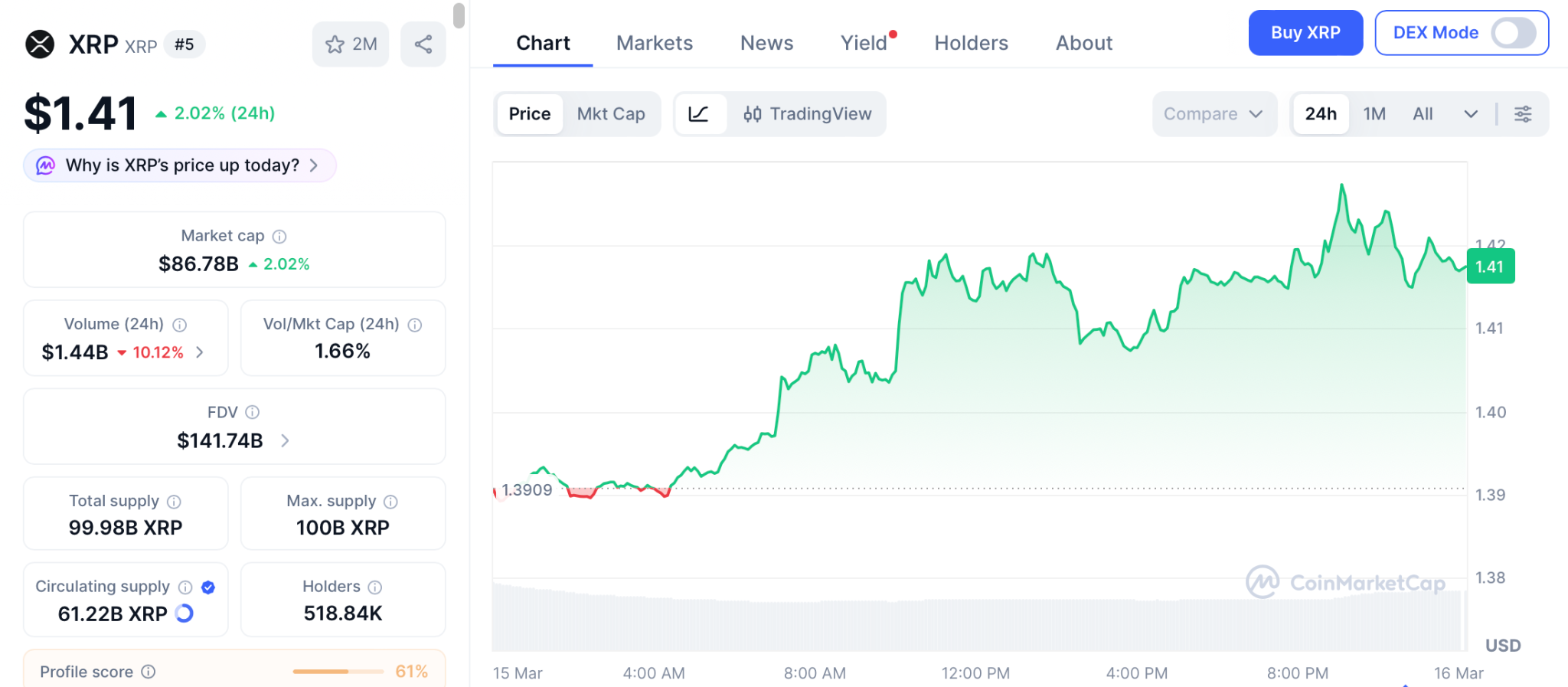
But even the most optimistic resolution delivers roughly 57% from $1.41 to $2.20. That kind of return takes months from an $85 billion asset. The wallets that chose presale positioning over triangle watching are already compounding at 198% APY.
Solana Consolidates but Requires Massive Capital
Solana trades at $87.70 as of March 15, consolidating inside tightening Bollinger Bands. Institutional ETF conviction is strong relative to market cap, but SOL at $50 billion still requires enormous inflows to produce the percentage returns that presale pricing delivers by design.
Even a breakout toward $108 represents roughly 23% upside. Pepeto wallets compound more than that in yield alone every six months.
Conclusion
Imagine three months from now. The listing happened. The wallets that entered at presale pricing post their returns across X and Telegram, the same way every successful presale has played out. You scroll past those screenshots knowing the presale was open while you read this article.
The founding team built Pepe to $7 billion with zero products. They returned with three exchange products, a SolidProof audit, and $7.99 million in committed capital. That builder conviction is proven at a scale no other presale founder can claim. The choice between pride and regret is still available now, but only one of them starts at the Pepeto official website today.
Click To Visit Pepeto Website To Enter The Presale

FAQs
What has the strongest return potential in March 2026?
Pepeto at presale pricing with $7.99 million raised, 198% APY, and three exchange products offers the multiplier potential that XRP and SOL structurally cannot deliver from their current market caps.
Is XRP or SOL better than Pepeto right now?
XRP at $1.41 needs months for a triangle breakout and SOL at $87.70 needs billions for meaningful upside, while Pepeto compounds 198% APY daily with exchange products approaching launch.
How does Pepeto staking compare to holding large caps?
Pepeto at 198% APY generates passive yield from the moment tokens enter the contract, while XRP offers no staking and SOL staking pays roughly 7% by comparison.


