






TLDR
- RBC Capital Markets raised its S&P 500 12-month target from 7,750 to 7,900
- The new target implies a 7.7% gain from Thursday’s close of 7,335.66
- RBC cites a “two-speed economy” with AI firms driving growth while others face headwinds
- Healthcare was downgraded to Market Weight due to poor earnings revisions and fund outflows
- RBC flagged stretched semiconductor valuations and the Middle East conflict as key risks
RBC Capital Markets lifted its S&P 500 price target to 7,900 on Friday, up from 7,750 previously. The new target was set by RBC’s head of U.S. strategy, Lori Calvasina.
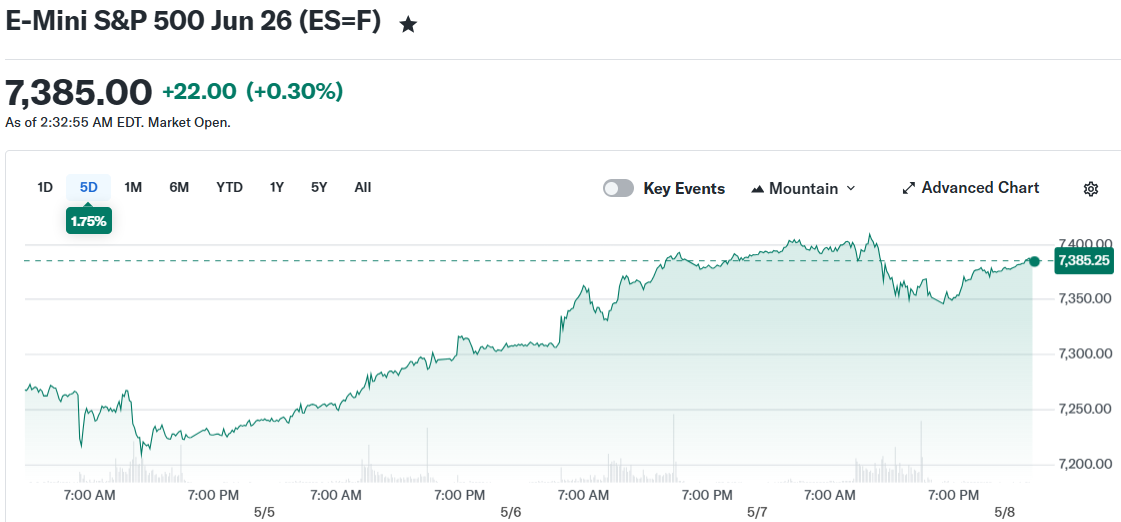
The upgrade comes after the S&P 500 climbed more than 16% from its March 30 low. The index closed Thursday at 7,335.66, meaning the new target implies about 7.7% upside from that level.
RBC based the new target on its valuation and earnings-per-share model rather than the average of its five forecasting models. The team said this model is best suited to capture what they call a “two-speed economy.”
That term refers to a split in the market. AI-related companies are posting strong earnings, while the rest of the index faces pressure from the ongoing Middle East conflict.
RBC applied a 5% cut to bottom-up earnings estimates for the first quarter of 2027. That works out to roughly $329 per share. AI-related earnings were kept in line with consensus, while forecasts for the rest of the index were cut by 7.5%.
Macro Assumptions Behind the Target
On the economic side, RBC factored in inflation of 3.3%, which is above consensus. The firm also assumed the Federal Reserve would hold rates flat and that 10-year Treasury yields would sit at 4.5%.
Those inputs produced an implied trailing price-to-earnings multiple of around 24 times earnings.

RBC noted that averaging all five of its models points to a more optimistic target of 8,100. But the firm chose 7,900 as its official call, saying it better reflects both the risks and the remaining upside.
The move follows similar upgrades from J.P. Morgan and Barclays last month. Both cited easing geopolitical risks and improving earnings momentum for their decisions.
RBC kept its preference for growth over value stocks within large caps. It also favored U.S. equities over international peers and held a cautiously positive view on small caps.
Healthcare Downgraded
RBC made one sector change alongside the target raise. It cut its rating on U.S. healthcare stocks to Market Weight from Overweight.
The downgrade was driven by deteriorating earnings revisions, large fund outflows, and weak results in RBC’s most recent analyst survey.
RBC listed several risks to its outlook. These include potential downward revisions to 2027 earnings estimates and stretched valuations in the semiconductor sector.
The firm said the Middle East conflict remains the biggest tail risk that could push the U.S. into recession. However, it added that most public companies have said they can manage through the disruption.
The S&P 500 posted its biggest monthly percentage gain since November 2020 last month.
Stop guessing and start investing with confidence. KnockoutStocks gives you the AI insights, market intelligence, and stock research you need to spot opportunities, cut through the noise, and make smarter investment decisions — all in one powerful platform.
Sign up today and get 50% OFF full access to our premium stock picks.
Simply use coupon code SPECIAL50 at checkout to claim your exclusive discount.
Get 3 Free Stock Ebooks
Discover top-performing stocks in AI, Crypto, and Technology with expert analysis.
- Top 10 AI Stocks - Leading AI companies
- Top 10 Crypto Stocks - Blockchain leaders
- Top 10 Tech Stocks - Tech giants



