





TLDR
- Hapag-Lloyd posted a Q1 net loss of $256 million, down from a $469 million profit a year ago.
- Revenue in the liner shipping business fell 18% to $4.92 billion from $5.32 billion.
- The Strait of Hormuz blockage forced longer reroutes, pushing fuel and transport costs higher.
- Transport volumes slipped 0.7% and average freight rates dropped 9.5% in the quarter.
- Full-year EBITDA guidance of $1.1 billion to $3.1 billion was maintained, but flagged as uncertain.
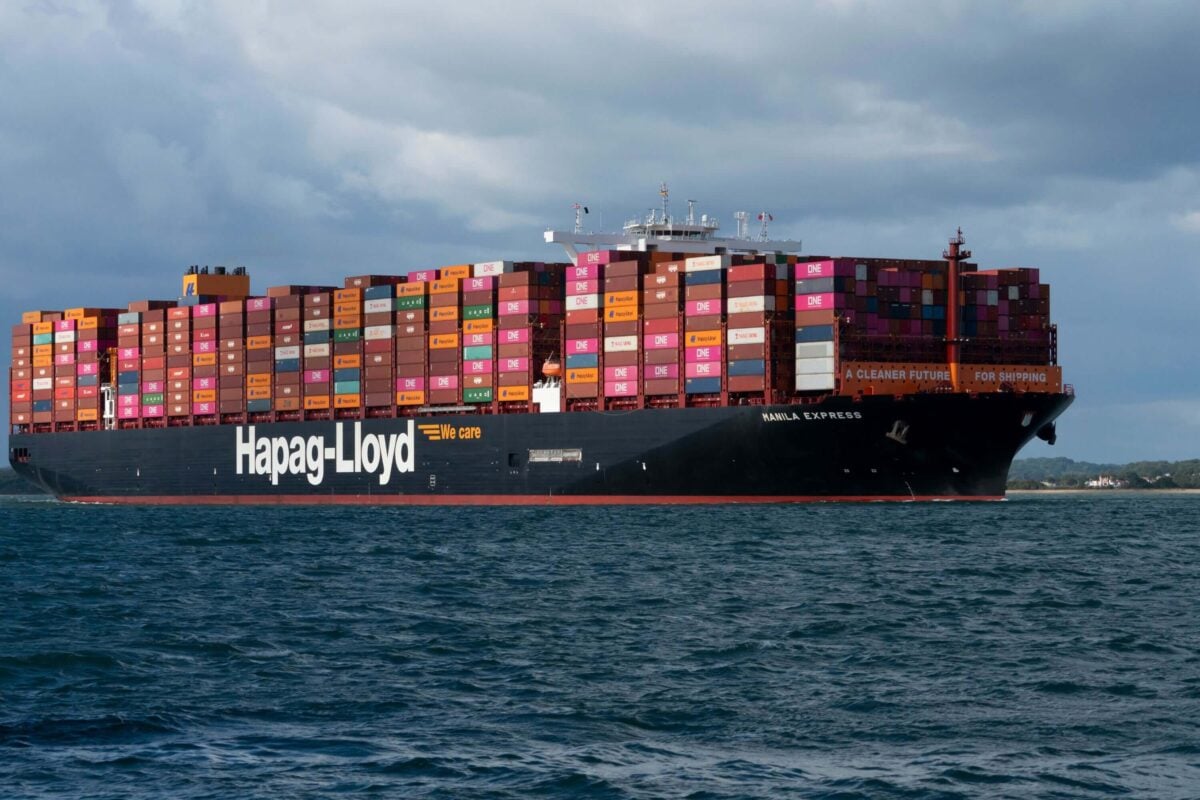
Hapag-Lloyd reported a rough start to 2026, swinging to a net loss of $256 million in Q1 after a $469 million profit in the same period last year. The stock was up around 2.65% in early trading following the results.
🚨 $HLAG (Hapag-Lloyd) Q1 2026 Earnings
Soft start with EBIT loss…
but confirmed full-year outlook is the real signal 👀
________________________________________📊 KEY METRICS (Q1 2026)
🔹 Revenue: €4.20B
🔹 EBIT: -€134M (loss) 🔻
🔹 Full-Year EBITDA Guidance:… pic.twitter.com/xPEqcR2fwK— Emmanuel – Big Tech & AI Investor (@EmmanuelInvest) May 13, 2026
Revenue came in at $4.92 billion, down from $5.32 billion a year ago. That beat analyst forecasts, which had penciled in revenue of around $3.9 billion.
EBITDA landed at 422 million euros for the quarter, down sharply from 1.05 billion euros a year ago. Analysts had expected around 407 million euros, so results came in slightly ahead there too.
CEO Rolf Habben Jansen called Q1 “unsatisfactory,” pointing to weather-related supply chain disruptions alongside pressure on freight rates.
The problems didn’t stop at the weather. When conflict in the Middle East escalated at the end of February, Hapag-Lloyd was forced to suspend routes through the Strait of Hormuz and the Gulf of Oman. Ships were rerouted on longer paths, adding both time and cost.

Transport volumes fell 0.7% in the quarter. Average freight rates dropped 9.5%, hurt by weaker demand.
Transport costs overall fell 6%, helped by a weaker U.S. dollar against the euro. But strip out the currency effect and those costs would have risen 4.6%, or around 147 million euros — driven largely by the Middle East reroutes and longer transit times.
Bad weather in Europe and North America also played a role, causing delays and added costs at ports and across supply chains.
Middle East Disruptions Bite Into Margins
The Strait of Hormuz situation intensified in March, disrupting trade flows in the final month of the quarter. That added another layer of cost pressure that the company hadn’t fully absorbed.
Hapag-Lloyd said higher average freight rates are expected to partly offset rising costs going forward. But it flagged “considerable uncertainty” over how freight rates and the conflict will develop through the rest of the year.
Full-Year Guidance Held, But With Caveats
Despite the rough Q1, the company kept its full-year EBITDA forecast in the range of $1.1 billion to $3.1 billion, with EBIT ranging from a loss of 1.3 billion euros to a profit of 400 million euros.
That’s a wide band — and deliberately so. The company acknowledged that freight rate volatility and the ongoing Middle East conflict make any precise forecast difficult.
Hapag-Lloyd is the world’s fifth-largest container line by capacity, and its results reflect the wider pressure across the shipping sector.
The company continues to monitor the situation in the Middle East closely, with route decisions being made on an ongoing basis depending on conditions.
Stop guessing and start investing with confidence. KnockoutStocks gives you the AI insights, market intelligence, and stock research you need to spot opportunities, cut through the noise, and make smarter investment decisions — all in one powerful platform.
Sign up today and get 50% OFF full access to our premium stock picks.
Simply use coupon code SPECIAL50 at checkout to claim your exclusive discount.
Get 3 Free Stock Ebooks
Discover top-performing stocks in AI, Crypto, and Technology with expert analysis.
- Top 10 AI Stocks - Leading AI companies
- Top 10 Crypto Stocks - Blockchain leaders
- Top 10 Tech Stocks - Tech giants



