





TLDR
- Coinbase CEO Brian Armstrong endorsed the latest version of the Digital Asset Market Clarity Act ahead of Thursday’s Senate markup
- White House crypto advisor David Sacks called the markup “a monumental step” for US crypto policy
- The bill covers rules for stablecoins, DeFi, exchanges, and tokenized assets
- A compromise on stablecoin yield, brokered by Senators Tillis and Alsobrooks, helped unblock the bill after it stalled in January 2025
- A HarrisX poll found 52% of registered US voters support passing the CLARITY Act
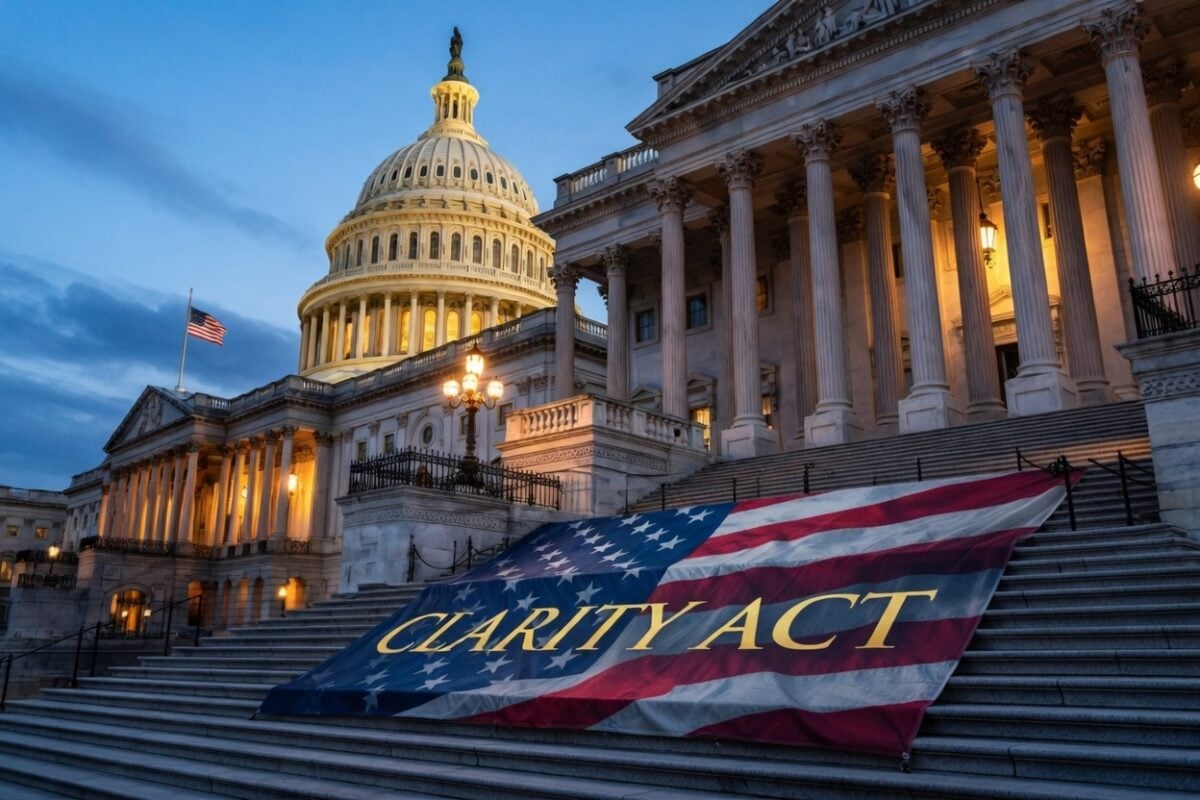
The US Senate Banking Committee is set to consider the Digital Asset Market Clarity Act on May 14, 2026. The bill, known as the CLARITY Act, would create a federal framework for crypto markets in the United States.
🇺🇸SENATE CLARITY TALKS END WITHOUT A DEAL
Sen. Cynthia Lummis reveals bipartisan senate talks over the two remaining CLARITY Act issues ended for the night WITHOUT an agreement.
“Ultimately, we have agreement on 99% of the bill. I hope my colleagues across the aisle will work… pic.twitter.com/VJP1rIMwU9
— Coin Bureau (@coinbureau) May 14, 2026
Coinbase CEO Brian Armstrong came out in support of the latest version of the bill ahead of the markup. He said the bill is in its “strongest and most bipartisan position” after months of negotiations between the banking industry and the crypto sector.
Armstrong said the two sides reached a “healthy compromise” on stablecoin yield. The compromise was brokered by Senators Tillis and Alsobrooks and resolved one of the key issues that caused the bill to stall in January 2025.
The latest version of the bill also includes updated provisions on decentralized finance, tokenized stocks, and the authority of the Commodity Futures Trading Commission to oversee crypto markets.
White House Backs the Bill
David Sacks, the White House crypto policy director, posted his support ahead of the Thursday session. He called the markup a major step toward making the US the “Crypto Capital of the World.”
Sacks noted that around 50 million Americans own or use crypto. He said the bill would help the crypto ecosystem “innovate and flourish for years to come.”

He thanked Senate Banking Committee Chairman Tim Scott, White House crypto director Patrick Witt, and the broader crypto industry for their role in moving the bill forward.
Senator Scott said families, small businesses, investors, and innovators all need clear rules for digital assets.
What the Bill Would Do
The CLARITY Act, if passed, would set rules for digital asset exchanges, brokers, and dealers. These entities would fall under Bank Secrecy Act duties, including anti-money laundering and customer due diligence requirements.
The bill would ban interest payments on idle stablecoin balances. However, rewards tied to transaction-based activity would still be allowed under the Tillis-Alsobrooks compromise.
The bill also defines when DeFi platforms are considered truly decentralized. Platforms that do not meet that standard would need to follow standard financial institution rules.
Tokenized traditional assets would not escape securities laws simply by moving on-chain, according to the bill’s language.
The Senate version runs 309 pages and includes disclosure rules, cybersecurity provisions, insider trading rules, consumer protections, and post-quantum cryptography language.
Banking trade groups remain concerned that the stablecoin compromise could still affect bank deposits, even with the ban on idle balance rewards.
The House passed its own version of the bill in July 2025. The Senate version still needs broader support before it can advance further.
A HarrisX poll found 52% of registered US voters support the CLARITY Act, while only 11% oppose it. A separate survey found around 20% of Americans own cryptocurrency.
Thursday’s markup will show whether months of compromise are enough to push the bill to the next stage of the Senate process.


