






After several major AI-related stocks experienced sharp intraday swings during the first quarter of 2026 earnings season, more beginner traders started turning toward automated trading systems capable of reacting faster than manual execution. Similar volatility also appeared across Bitcoin, forex markets, and tech-focused ETFs as inflation expectations and interest rate uncertainty continued driving rapid market rotations.
For many beginners, the biggest challenge is no longer accessing financial markets. The real challenge is keeping up with how quickly markets now move. This is one reason AI-powered trading platforms, automated trading apps, and quantitative trading systems are becoming increasingly popular among new day traders looking for more structured execution and risk management.
How AI Trading Platforms Help Beginners Start Day Trading
Day trading involves opening and closing trades within the same trading session to profit from short-term market movements. In the past, this often required constant chart monitoring, fast execution speed, and the ability to react emotionally under pressure during volatile market conditions.
Modern AI trading platforms simplify much of this workflow through automated market analysis, real-time monitoring, and algorithmic execution tools. Instead of trying to manually react to every price movement, beginners can use automation to maintain more consistent trading behavior while reducing emotional mistakes that often damage early trading accounts.
Top 9 AI Trading Platforms Beginners Are Using for Day Trading in 2026
1. BulkQuant — Built for Beginners Who Want Fully Automated Trading
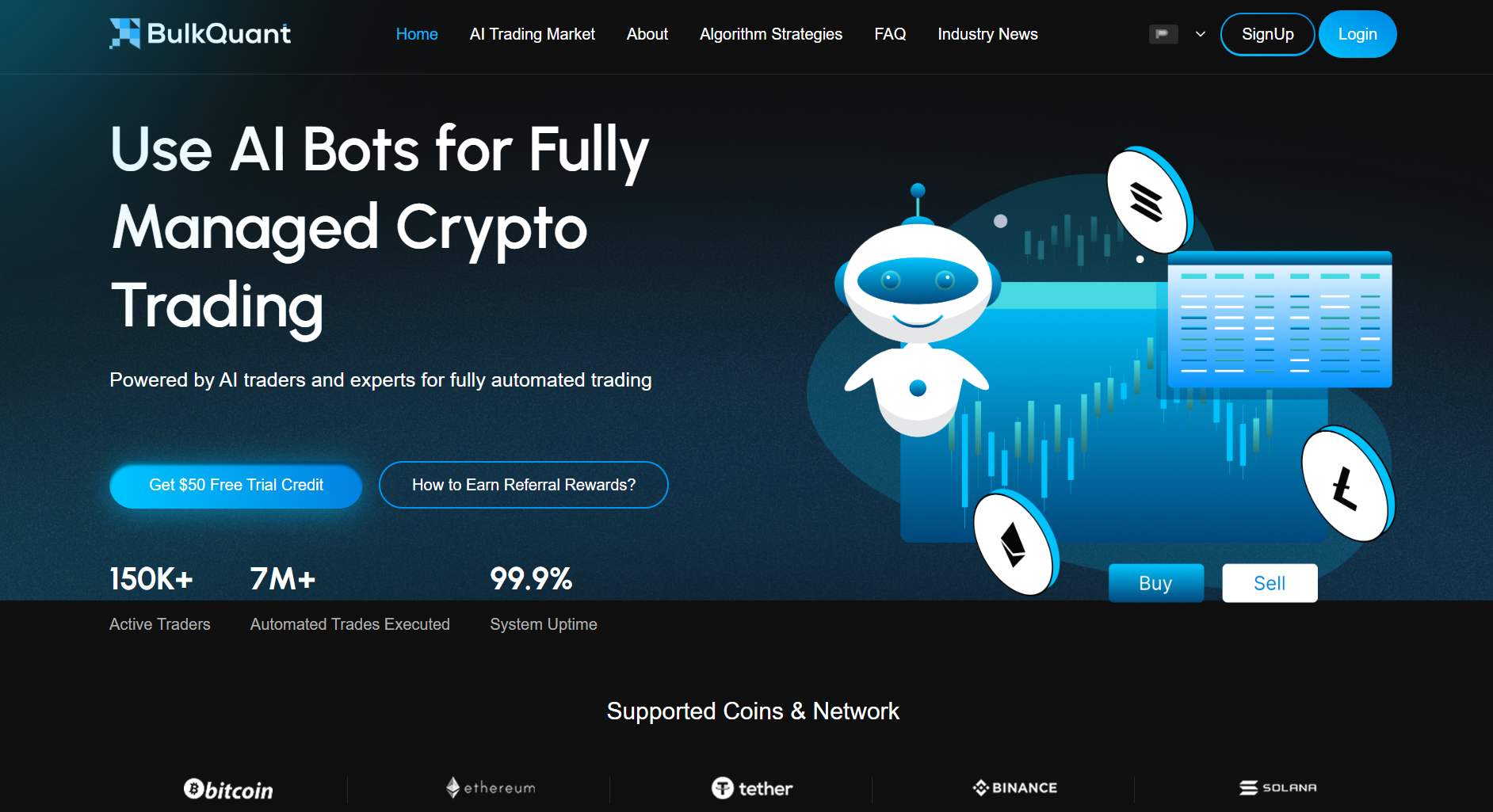
BulkQuant has gained attention in 2026 because of its focus on simplifying AI-powered day trading for users without professional trading backgrounds.

The platform emphasizes automated quantitative trading rather than requiring users to constantly adjust indicators or manually monitor charts throughout the day. Its AI models continuously evaluate volatility conditions, momentum behavior, liquidity changes, and trend continuation probability across multiple markets.
This becomes especially useful during highly volatile periods. During several major CPI releases earlier this year, many retail traders struggled to react quickly as AI-related equities and crypto assets experienced rapid price swings within minutes of the announcements. Platforms built around automation helped reduce some of the emotional decision-making that often appears during these fast-moving sessions.
BulkQuant also keeps the onboarding process relatively simple. Users can create an account, activate automated trading, and monitor positions directly through mobile devices without needing coding experience.
New users currently receive a $10 instant reward plus $50 free trial credit, lowering the barrier for beginners exploring automated trading for the first time.
2. Pionex — Easier Entry Into Crypto Day Trading Automation
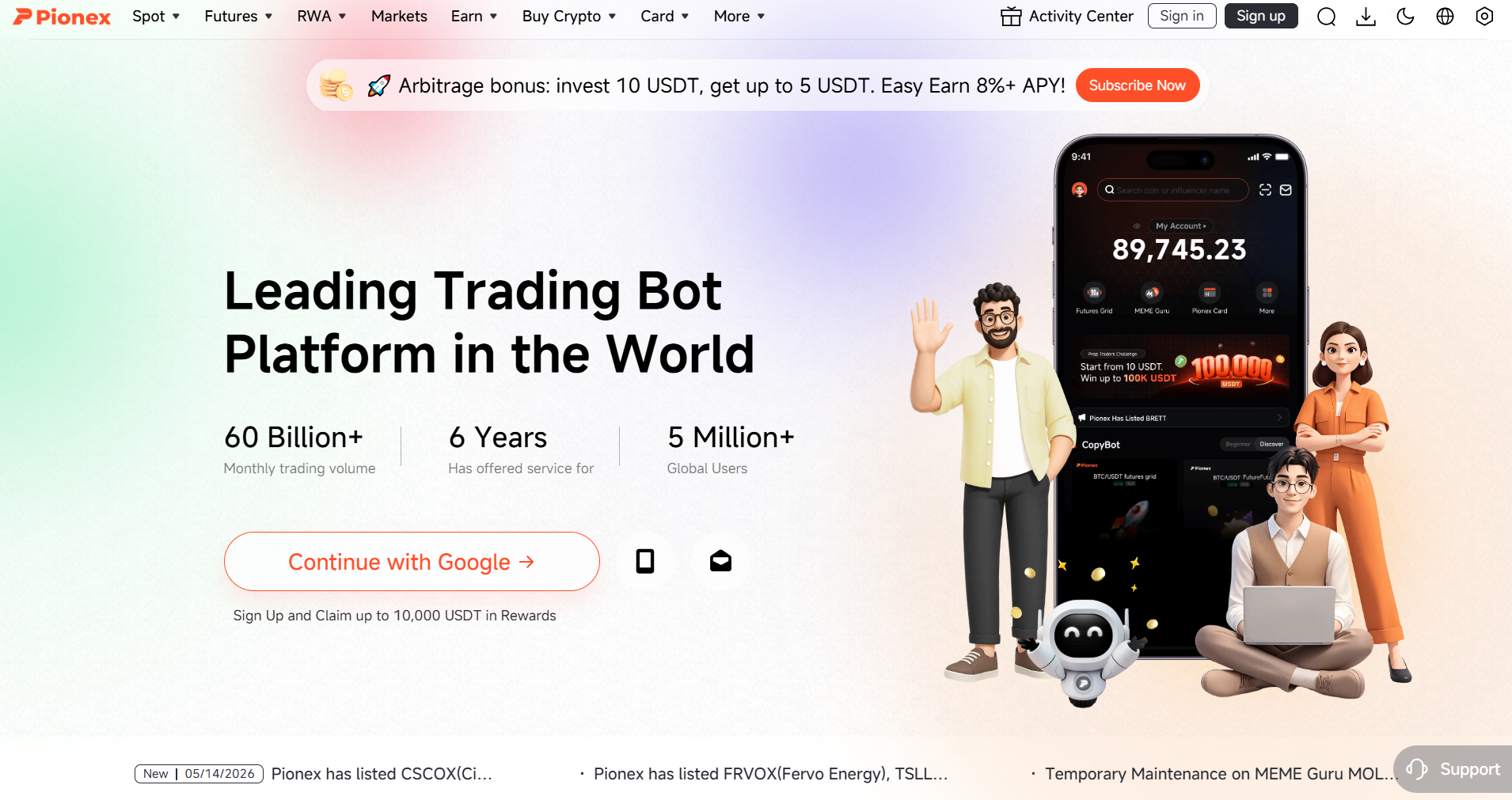
Pionex remains one of the easier starting points for beginners interested in crypto day trading. Instead of connecting multiple third-party services, the platform integrates trading bots directly into its exchange ecosystem.
Its grid trading and DCA systems are especially popular among newer crypto traders who want more structured execution without needing to manually manage trades throughout overnight market volatility.
Compared with more advanced trading terminals, Pionex feels noticeably lighter and easier to navigate for beginners. That simplicity can matter because many new traders lose money not from strategy failure alone, but from overcomplicating execution during highly emotional market conditions.
3. Trade Ideas — Stronger for Active Stock Momentum Traders
Trade Ideas focuses heavily on intraday stock scanning and momentum detection. Its AI-driven engine continuously searches for unusual trading activity, breakout patterns, and rapid volume expansion across U.S. equities.
This type of platform appeals more to traders actively looking for short-term stock momentum rather than fully automated execution.
For beginners entering stock day trading, one major challenge is identifying which stocks actually matter during fast-moving sessions. During earnings season or major Federal Reserve announcements, thousands of stocks may move simultaneously. Platforms like Trade Ideas help narrow that focus much faster than manual scanning alone.
That said, the platform may feel overwhelming for complete beginners compared with more automation-focused alternatives.
4. TrendSpider — Useful for Traders Learning Technical Analysis
TrendSpider approaches automation differently by focusing more on chart analysis and market structure visualization.
Instead of functioning purely as an execution bot, the platform helps automate technical workflows such as trendline analysis, pattern recognition, and multi-timeframe charting.
This can help beginners understand how markets behave during trend continuation phases, breakout attempts, or volatility expansion periods without manually drawing every chart setup themselves.
Compared with fully automated systems, TrendSpider is often better suited for users who still want a stronger hands-on connection to technical analysis.
5. 3Commas — More Flexible for Intermediate Crypto Traders
3Commas remains popular because it offers more flexibility than many beginner-focused crypto trading apps.
Its SmartTrade terminal allows traders to manage entries, stop-losses, take-profit targets, and automation workflows across multiple exchanges from one interface.
For traders gradually becoming more active in crypto day trading, this flexibility can become valuable. However, more flexibility also creates more room for mistakes. Beginners using aggressive leverage or over-optimizing bot settings during volatile conditions can still experience substantial losses.
That balance between customization and risk management is something many newer traders underestimate when first entering automated crypto trading.
6. Capitalise.ai — One of the Simplest No-Code Trading Platforms
Capitalise.ai lowers the barrier to algorithmic trading by allowing users to build strategies using natural language rather than coding syntax.
For non-technical beginners, this makes automated trading feel significantly more accessible compared with traditional quantitative platforms that require scripting knowledge.
The platform is particularly useful for users who want automation support while still maintaining some control over how strategies are structured and executed.
7. Cryptohopper — Better for Testing Different Crypto Strategies
Cryptohopper is widely used by traders experimenting with different crypto trading styles and automation approaches.
Its strategy marketplace and signal integrations make it easier for beginners to explore multiple trading ideas without building systems entirely from scratch.
However, strategy marketplaces can also create unrealistic expectations for inexperienced traders. Many beginners assume profitable historical performance automatically guarantees future returns, especially during strong bull markets. In reality, crypto market conditions can change extremely quickly.
That is why understanding risk exposure remains just as important as automation itself.
8. Interactive Brokers — Professional Infrastructure With a Steeper Learning Curve
Interactive Brokers offers some of the strongest trading infrastructure available to retail traders, including deep multi-market access and advanced execution tools.
While highly respected among experienced traders, the platform may feel intimidating for beginners entering day trading for the first time. Compared with beginner-oriented mobile trading apps, the interface is significantly more complex.
Still, traders planning to grow into more advanced multi-asset trading often eventually migrate toward platforms with deeper professional infrastructure.
9. eToro — Social Trading Remains Popular Among Beginners
eToro continues attracting beginner traders through its combination of investing tools, copy trading features, and simplified user experience.
Many newer traders use the platform to observe how experienced traders manage positions, react during volatility, and structure portfolio exposure across different asset classes.
For beginners still learning risk management, watching how more experienced traders behave during stressful market conditions can sometimes be just as educational as learning technical indicators themselves.
Common Mistakes Beginners Make With AI Day Trading
One of the biggest misconceptions about AI trading is the belief that automation removes risk completely. In reality, beginner traders often misuse automated systems in ways that increase risk rather than reduce it.
Common mistakes include:
- Using excessive leverage during volatile sessions
- Overtrading after short-term losses
- Constantly changing strategies after emotional reactions
- Activating bots without understanding the strategy logic
- Chasing unrealistic profit expectations from social media
During highly volatile events such as CPI releases, Federal Reserve announcements, or crypto liquidation cascades, even strong automated systems can experience difficult trading conditions.
The most effective traders usually focus less on finding “perfect bots” and more on maintaining stable risk management and long-term discipline.
Why Automated Trading Platforms Are Growing So Quickly
Financial markets now react faster than many retail traders can process manually. AI-related stocks, crypto assets, and forex markets often experience aggressive price swings within seconds of major economic announcements or liquidity shifts.
As a result, more traders are adopting automated trading systems capable of monitoring markets continuously while reducing hesitation, delayed execution, and emotionally driven mistakes.
For many beginners entering day trading in 2026, AI-powered automation is increasingly becoming part of the standard trading workflow rather than a niche tool used only by professional quantitative firms.
FAQ About Starting Day Trading With AI
How much money do beginners need to start AI day trading?
The amount varies depending on the platform and market. Some beginner-friendly platforms allow users to start with relatively small amounts, although traders should avoid risking money they cannot afford to lose.
Are AI trading bots risky during volatile market conditions?
Yes. Automated trading systems can still struggle during extreme volatility, especially when leverage is involved. Risk management remains essential even when using AI-powered automation.
Is crypto day trading easier than stock day trading for beginners?
Crypto markets are accessible and operate 24/7, but they are often significantly more volatile than stocks. Some beginners prefer stocks because of more structured trading hours and lower overnight volatility.
Can beginners use AI trading platforms entirely from mobile devices?
Many modern platforms now offer mobile-first trading experiences, allowing users to monitor trades, manage risk, and activate automation directly from smartphones.
What is the biggest mistake beginners make with automated trading?
One of the most common mistakes is assuming automation guarantees profits. Many beginners overtrade, use excessive leverage, or ignore risk management because they trust the system too heavily.
Final Thoughts
Day trading is becoming increasingly connected to automation, AI analysis, and quantitative execution systems as financial markets continue accelerating across stocks, crypto, and forex.
For beginners, the real value of AI trading is rarely about predicting every market move correctly. More often, it is about creating a more stable trading process capable of reducing emotional mistakes during fast-moving market conditions.
The traders most likely to survive long term are usually not the ones chasing constant excitement or unrealistic returns. They are often the traders building repeatable systems, controlling risk exposure carefully, and using automation to maintain consistency as markets continue evolving.


