





TLDR
- Brent crude is on track for a 19% monthly decline, the steepest since 2020, as US-Iran ceasefire talks advance.
- The US and Iran have tentatively agreed to a 60-day truce extension, pending approval from President Trump.
- Shipping through the Strait of Hormuz remains restricted but could normalize if a deal is confirmed.
- US distillate stockpiles have dropped to their lowest level in over two decades amid the ongoing supply crisis.
- Even if a deal is reached, analysts warn that oil flow recovery could take months due to infrastructure damage and tanker logistics.
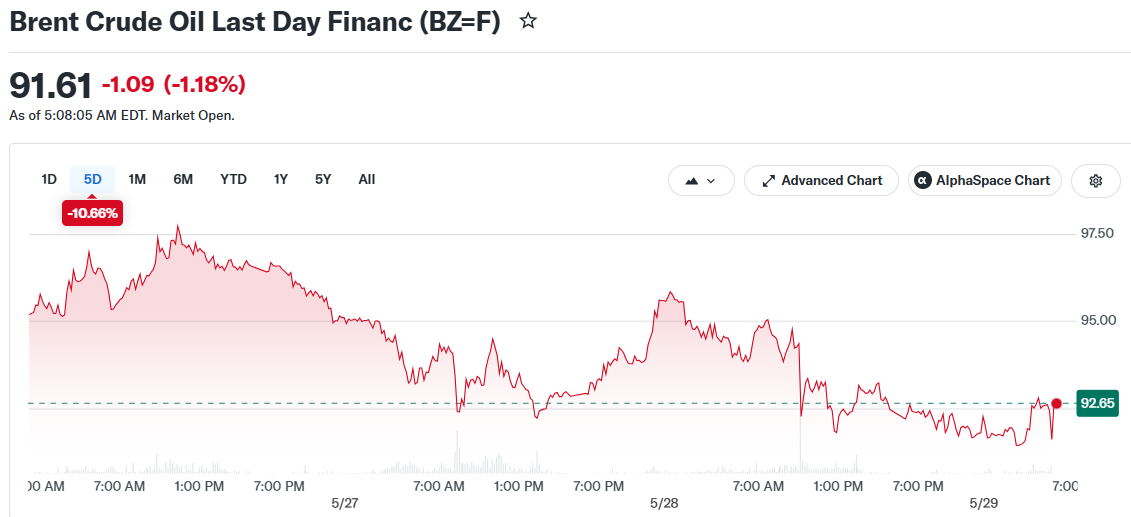
Oil prices are falling sharply this month as traders respond to reports of a potential ceasefire extension between the United States and Iran. Brent crude dropped toward $92 a barrel on Friday, down around 19% for May. West Texas Intermediate fell to near $87. Both are on track for their steepest weekly declines in months.
The move comes after reports that Washington and Tehran have drafted an agreement to extend their existing ceasefire by 60 days. The deal still needs approval from President Donald Trump. The White House has not yet confirmed the terms.
Vice President JD Vance told reporters it was too early to know “when or if” a deal would be reached. Treasury Secretary Scott Bessent said only that “the teams have been going back and forth.”
BREAKING: Iran says the Trump administration is now desperately "requesting an agreement multiple times a day through various channels," to unilaterally claim a deal has been agreed, with Iran rejecting each of these requests, saying it will not respond until Iran's terms and…
— The Hormuz Letter (@HormuzLetter) May 29, 2026
What the Strait of Hormuz Has to Do With It
At the heart of the oil crisis is the Strait of Hormuz, a key waterway that handles a large share of global oil shipments. Since the conflict began, effective blockades by both the US and Iran have cut off millions of barrels of daily supply, triggering a global energy shock.
Traffic through the strait remains well below pre-conflict levels. Even an Axios report that shipping would become “unrestricted” under the proposed deal has not moved markets to full confidence.
Crude prices fell briefly on Thursday after reports of new military exchanges between US and Iranian forces, before recovering as diplomatic signals returned.

Why a Deal Won’t Fix Supply Instantly
Analysts are cautioning that any truce extension would not immediately restore oil flows. Several practical obstacles remain.
Mines in the Hormuz waterway need to be cleared. Oil fields that were shut in may take months to restart. Infrastructure damaged by drone and missile strikes needs repair. And tankers would still take weeks to reach importing nations.
“I would expect flows to remain heavily constrained due to the time lag of tanker travel and time to get production back online,” said Ryan McKay, senior commodity strategist at TD Securities. “We can end up losing another 1 billion barrels of supply during a recovery period.”
ING analysts noted that markets have already priced in much of the resolution. “Any confirmation of a deal that reopens the strait means that further downside is likely limited,” they wrote, but added that inventories are more depleted now than before the conflict began.
US data released this week showed crude stocks at the Cushing, Oklahoma hub fell for a fifth consecutive week to 23 million barrels, approaching the roughly 20-million-barrel minimum operating level. Distillate stockpiles hit their lowest point in more than two decades.
Key sticking points in negotiations remain unresolved. These include Iran’s nuclear program, control over the strait, and the question of sanctions relief. Trump had previously said that reopening the waterway and Iran handing over highly enriched uranium were his conditions for any deal.
Broader economic concerns are also weighing on demand. US personal consumption expenditure inflation came in higher than expected, reinforcing the view that the Federal Reserve may hold interest rates higher for longer. Revised first-quarter GDP data also pointed to slower economic growth.
Stop guessing and start investing with confidence. KnockoutStocks gives you the AI insights, market intelligence, and stock research you need to spot opportunities, cut through the noise, and make smarter investment decisions — all in one powerful platform.
Sign up today and get 50% OFF full access to our premium stock picks.
Simply use coupon code SPECIAL50 at checkout to claim your exclusive discount.
Get 3 Free Stock Ebooks
Discover top-performing stocks in AI, Crypto, and Technology with expert analysis.
- Top 10 AI Stocks - Leading AI companies
- Top 10 Crypto Stocks - Blockchain leaders
- Top 10 Tech Stocks - Tech giants



