





TLDR
- Scott Bessent urged the Senate to vote now on the CLARITY Act.
- The House passed the CLARITY Act more than a year ago.
- Senate Banking and Agriculture committees advanced parts of the crypto bill.
- Bessent said Titles II and III add compliance duties for digital asset firms.
- Tom Emmer backed Bessent’s call to pass the CLARITY Act now.
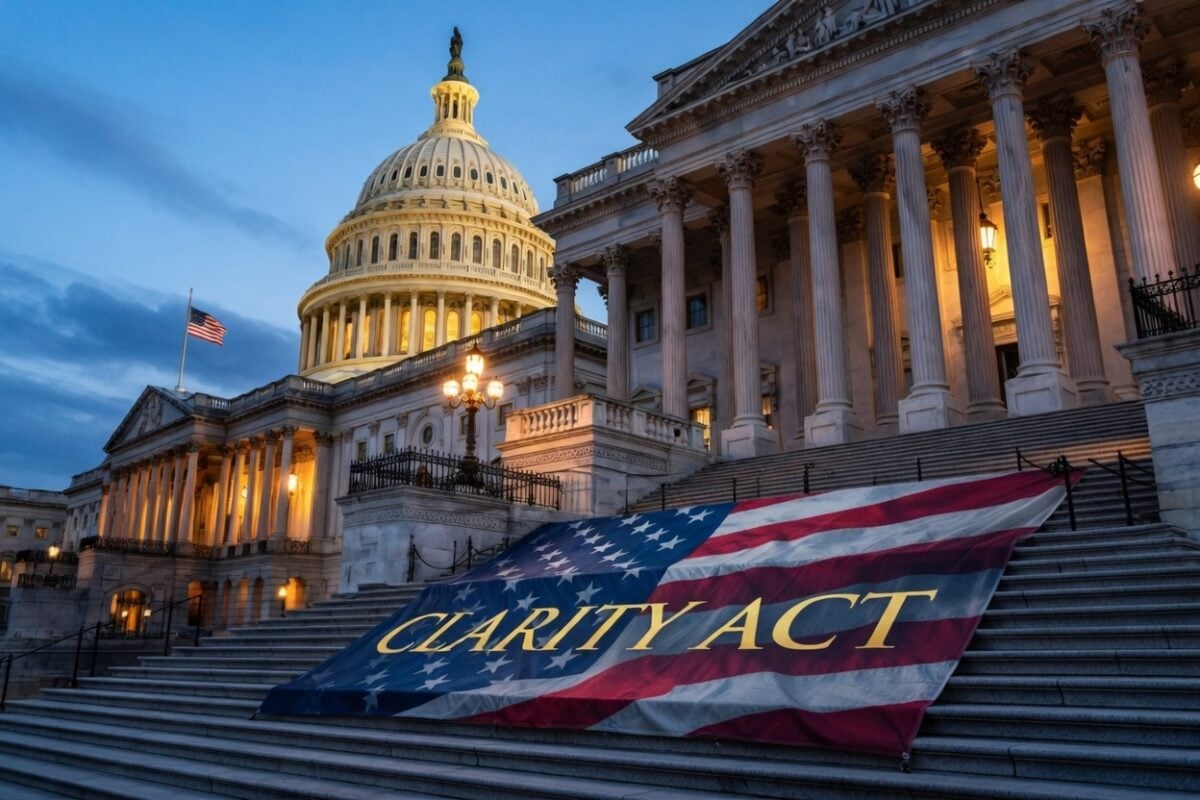
U.S. Treasury Secretary Scott Bessent urged the Senate to vote on the CLARITY Act, saying the crypto market structure bill is ready after more than a year of negotiations.
Bessent Calls for Immediate Senate Action
Bessent said the House passed the CLARITY Act more than a year ago, while Senate committees later advanced related titles through Banking and Agriculture. He said Senate Republicans have now produced a floor-ready version that is awaiting a vote.
The Treasury secretary argued that the bill would help keep digital asset activity inside the United States through federal market rules. He said the Senate should act before delays weaken U.S. leadership in the global crypto industry.
Bessent criticized Senate Democrats for slowing the bill’s path. He said,
“It’s disappointing — but not surprising — that Senate Democrats are choosing politics on the cusp of a major victory for American leadership.”
He also rejected claims that the bill lacks consumer safeguards or illicit finance controls. Bessent said Titles II and III would raise compliance obligations for digital asset intermediaries and place them closer to traditional financial institutions.
Blockchain Regulatory Certainty Act Draws Support
Bessent also defended the Blockchain Regulatory Certainty Act, which forms part of the wider crypto policy debate. He said the measure would protect non-custodial developers and builders from registration obligations under the Bank Secrecy Act.
The Treasury secretary described that position as consistent with long-standing Treasury Department policy across different administrations. He said non-custodial software builders have not been treated as money service businesses when they do not control user funds.

Bessent also said some law enforcement groups that previously opposed the bill have now endorsed it. He named the Fraternal Order of Police as one group that has shifted toward support.
House Majority Whip Tom Emmer thanked Bessent for backing the Blockchain Regulatory Certainty Act. Emmer said,
“Republicans in the House, law enforcement stakeholders, and the Trump administration are all in agreement: pass the Clarity Act now!”
The bill remains part of a wider debate over how digital asset businesses should register, disclose information, and handle customer protection duties. Lawmakers are also reviewing how federal rules should apply to token issuers, exchanges, developers, and non-custodial tools.
Coinbase and Robinhood Watch Senate Timeline
The CLARITY Act has remained stalled in the Senate as lawmakers debate stablecoin yields, crypto ownership disclosures, and agency oversight. Senators Thom Tillis and Ruben Gallego are working on revisions in an effort to move the bill before the August 8 recess.
A delay past the recess could push a final vote into mid-September. That timing matters for crypto firms seeking clearer federal rules before launching or expanding digital asset products.
Coinbase and Robinhood both support clearer digital asset rules. A federal framework could reduce the risk of sudden regulatory changes and help both companies offer more crypto-related services to retail and institutional customers.
Coinbase has favored a structure that gives the Commodity Futures Trading Commission a larger role in overseeing crypto markets. That approach would classify many tokens as commodities instead of securities.
Robinhood has supported clearer coordination between the CFTC and the Securities and Exchange Commission. The brokerage has also expanded into crypto, tokenized assets, and prediction-market products.
Both companies also have an interest in rules covering staking and stablecoin yields. A strict ban on yield products could affect Coinbase more directly because stablecoins and related revenue form an important part of its business.
Bessent said the Senate now faces a direct choice on crypto market structure. He wrote,
“America will lead or America won’t. It’s not more complicated than that.”


