





TLDR
- The US dollar stayed near a two-month high driven by Middle East tensions and strong economic data
- Iranian attacks on Kuwait and US strikes near the Strait of Hormuz strained a fragile ceasefire
- The Japanese yen hovered near 160 per dollar, a level that could trigger government intervention
- Bitcoin fell 2.8% to $63,119 and Ether hit a four-month low at $1,786
- Markets now await Friday’s US nonfarm payrolls report for clues on Federal Reserve policy
The US dollar held near its strongest level in two months on Thursday as fresh violence in the Gulf pushed oil prices higher and reduced appetite for riskier assets. Bitcoin and Ether both dropped to four-month lows as investors moved toward safer ground.
Gulf Tensions Push Dollar Higher
Iranian missile strikes on Kuwait damaged its airport and injured dozens on Wednesday. The US military also carried out strikes near the Strait of Hormuz. These events strained a shaky ceasefire and added pressure across global markets.
🚨JUST IN: Kuwait says Iranian drones and missiles hit Kuwait International Airport, causing significant damage and injuries.
ALL flights are now suspended. pic.twitter.com/hwNCF0Bjbe
— Coin Bureau (@coinbureau) June 3, 2026
Washington said Israel and Lebanon had agreed to implement a ceasefire deal, but that agreement depends on Hezbollah halting its hostilities. Fresh attacks elsewhere kept traders cautious.
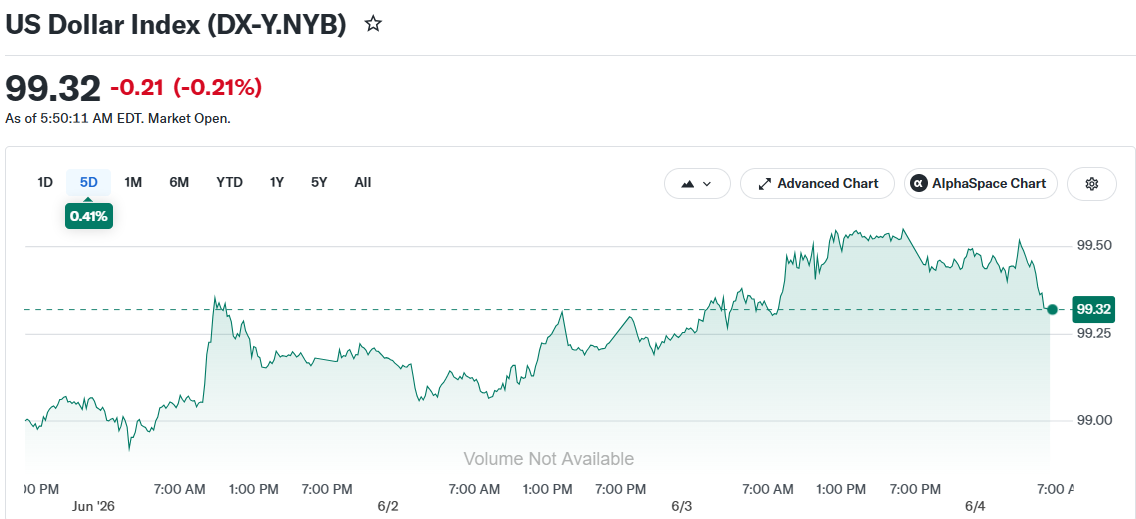
The US Dollar Index edged up to 99.47, its highest point since April 7. The euro held at $1.1604 and the British pound traded at $1.3424, both largely flat.
“The USD’s safe haven status appears to be strengthening again,” said Sim Moh Siong, FX strategist at OCBC. He added there is “no strong case for a bearish USD” and expects the dollar to stay firm but range-bound.
Strong US data added fuel. Private payrolls processor ADP reported employers added 122,000 jobs in May. The ISM services index rose to 54.5 from 53.6 in April. The prices-paid component of that survey jumped to its highest level in nearly four years.
That inflation data reinforced views that the Federal Reserve will hold interest rates unchanged well into next year. Markets scaled back expectations for any near-term rate cuts.

All eyes now turn to Friday’s nonfarm payrolls report for more guidance on where the Fed is headed.
Yen Near Intervention Zone
The Japanese yen hovered at 159.91 per dollar, just below the 160 level that markets widely see as a trigger for official government intervention. The yen briefly crossed 160 on Wednesday, prompting verbal warnings from Japanese authorities.
Bank of Japan Governor Kazuo Ueda said policymakers would need to consider raising interest rates if inflation risks outweigh downside economic risks. Analysts at Barclays said the tone was hawkish enough to support a rate hike at the June meeting.
ING analysts noted that June is typically a weak month for the yen and that markets will likely keep testing the upside in the dollar-yen pair.
Crypto Sells Off
Bitcoin fell 2.8% to $63,119, hitting a four-month low. Ether dropped to $1,786, also its lowest level in four months. Risk-off sentiment driven by geopolitical tension weighed on digital assets alongside other higher-risk investments.
The Australian dollar held steady at $0.7132 while the New Zealand dollar rose 0.2% to $0.5872, rebounding from a one-week low.
Stop guessing and start investing with confidence. KnockoutStocks gives you the AI insights, market intelligence, and stock research you need to spot opportunities, cut through the noise, and make smarter investment decisions — all in one powerful platform.
Sign up today and get 50% OFF full access to our premium stock picks.
Simply use coupon code SPECIAL50 at checkout to claim your exclusive discount.
Get 3 Free Stock Ebooks
Discover top-performing stocks in AI, Crypto, and Technology with expert analysis.
- Top 10 AI Stocks - Leading AI companies
- Top 10 Crypto Stocks - Blockchain leaders
- Top 10 Tech Stocks - Tech giants



