






TLDR
- Standard Chartered Bank initiated coverage of Uniswap, setting a $100 price target for UNI by end-2030, a 40x rise from ~$2.50.
- The bank projects tokenized assets on-chain will grow from $340 billion to $4 trillion by 2028.
- Assets locked in DeFi could reach $2.7 trillion by 2030, a 37x increase from current levels.
- UNI is forecast at $6.50 by end-2026, rising to $20 in 2027, $40 in 2028, $65 in 2029, and $100 in 2030.
- Uniswap has burned 5 million UNI tokens since its December 2025 fee upgrade, with total supply now at 895 million.
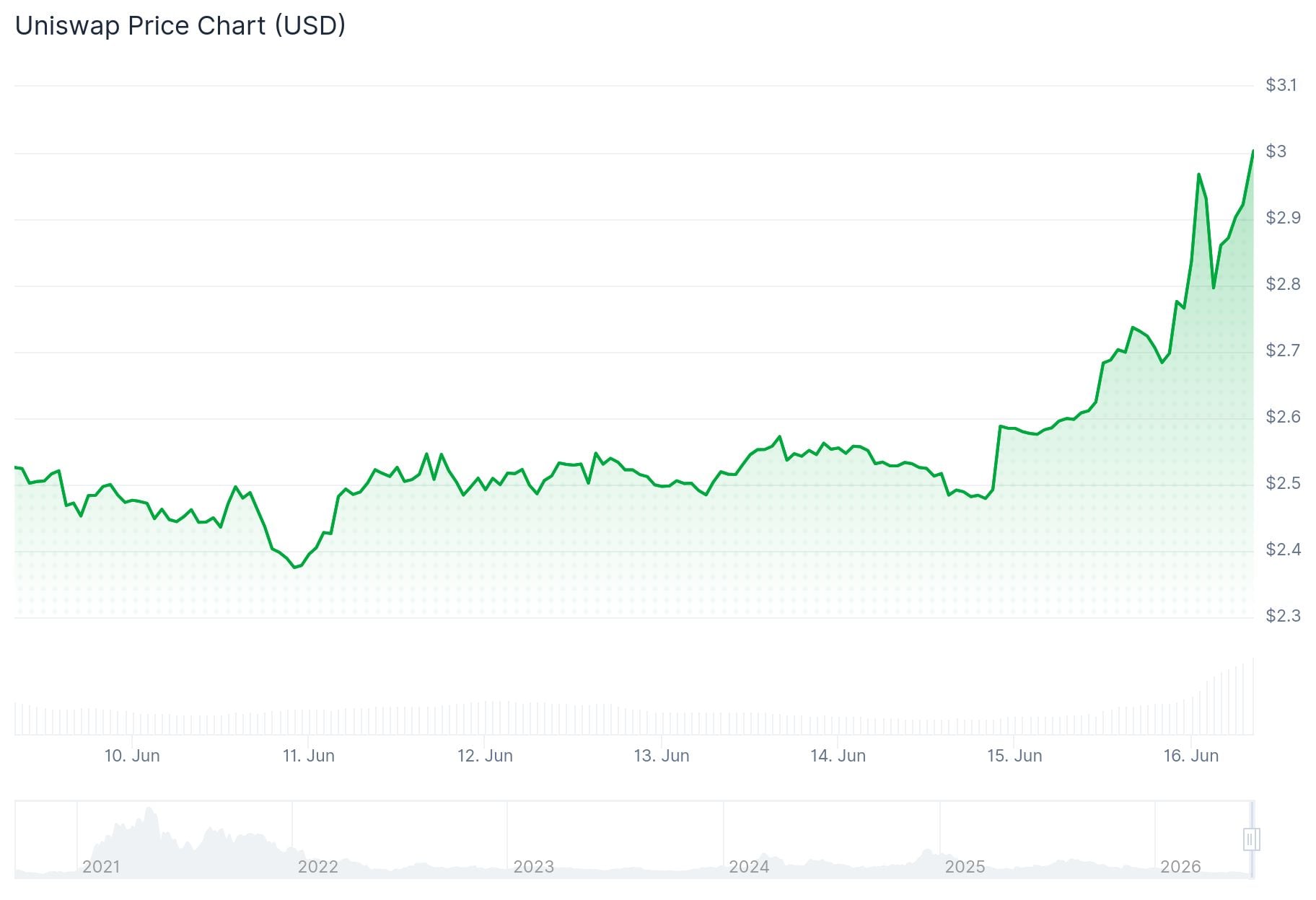
Standard Chartered Bank released a report on June 15, 2026, initiating coverage of Uniswap with a $100 price target for UNI by the end of 2030. The token was trading around $2.50 at the time of the report.
Geoffrey Kendrick, Global Head of Digital Assets Research at Standard Chartered, authored the report. He said the forecast implies a 40x increase from current prices.
LATEST: 📈 Standard Chartered initiated Uniswap coverage with a $100 UNI forecast for 2030, citing a projected 37x rise in tokenized assets entering DeFi. pic.twitter.com/YDVR8XdwPo
— CoinMarketCap (@CoinMarketCap) June 16, 2026
The bank laid out a year-by-year roadmap: $6.50 by end-2026, $20 by end-2027, $40 by end-2028, $65 by end-2029, and $100 by end-2030. Kendrick also expects UNI to outperform both bitcoin and ether over that period.
Kendrick stated: “I think the next opportunity for generational wealth in digital assets is going to come via the DeFi protocols.”
The bank also released forecasts for other assets. It projects ethereum reaching $40,000 and bitcoin hitting $500,000 by end-2030.
DeFi Growth Is the Core of the Case
The investment thesis rests on growth in tokenized assets. Standard Chartered projects on-chain tokenized assets will rise from $340 billion today to $4 trillion by end-2028.
The share of those assets active in DeFi is expected to climb from 3.5% to 30% by end-2030. That would push total assets locked in DeFi to around $2.7 trillion, a 37x increase from current levels.

Kendrick wrote: “We expect the value of tokenised assets active in DeFi to grow 37x between now and end-2030.”
Uniswap’s liquidity pools would benefit directly, since more assets flowing into DeFi means more available for trading on the protocol.
Uniswap vs. Coinbase
Kendrick compared Uniswap to YouTube and Coinbase to Netflix. Uniswap provides open infrastructure where anyone can create liquidity pools; Coinbase manages its own centralized trading.
This model gives Uniswap lower capital requirements, since liquidity comes from users rather than the platform itself. Kendrick said stronger commercialization and deeper ties with traditional finance could push Uniswap’s market cap-to-fee multiple closer to Coinbase’s over time.
Despite handling similar transaction volumes to Coinbase, Uniswap currently trades at a much lower valuation multiple.
In December 2025, Uniswap activated protocol fees through an upgrade called UNIfication. Since then, the protocol has generated $21 million in fees and burned 5 million UNI tokens, equal to an annual burn rate of about 1%.
Combined with a one-time burn of 100 million UNI, the total supply has dropped from 1 billion to 895 million. Circulating supply now stands at 622 million.
UNI was trading at approximately $2.70 at the time of the Standard Chartered report on June 15, 2026.
Stop guessing and start investing with confidence. KnockoutStocks gives you the AI insights, market intelligence, and stock research you need to spot opportunities, cut through the noise, and make smarter investment decisions — all in one powerful platform.
Sign up today and get 50% OFF full access to our premium stock picks.
Simply use coupon code SPECIAL50 at checkout to claim your exclusive discount.
Get 3 Free Stock Ebooks
Discover top-performing stocks in AI, Crypto, and Technology with expert analysis.
- Top 10 AI Stocks - Leading AI companies
- Top 10 Crypto Stocks - Blockchain leaders
- Top 10 Tech Stocks - Tech giants



