






TLDR
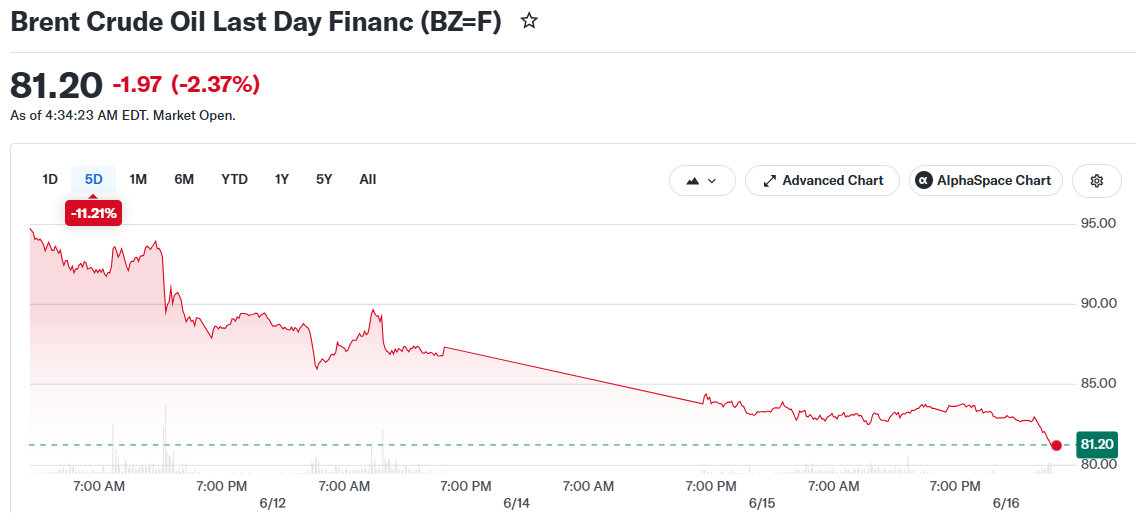
- Brent crude fell below $83 a barrel on Tuesday, heading for its worst weekly run of 2026
- A US-Iran deal to reopen the Strait of Hormuz is set to be signed in Switzerland on Friday
- Goldman Sachs cut its Brent forecast to $80 for Q4, down $10 from its previous call
- Morgan Stanley also lowered its outlook, now expecting Dated Brent to average $90 in Q3
- US emergency oil reserves hit their lowest level since 1983, data showed Monday
Oil prices fell for a fourth straight day on Tuesday as a US-Iran agreement to reopen the Strait of Hormuz raised expectations for a sharp rise in supply. Both Brent crude and West Texas Intermediate are on track for their worst weekly performance of 2026.
Brent dropped below $83 a barrel in early European trading, while WTI traded near $81. Both benchmarks are down roughly 9% for the week.
The US and Iran are set to sign an interim agreement in Switzerland on Friday. The deal is expected to allow Persian Gulf oil exports to resume through the strait, which carries roughly a fifth of global oil supply.
President Donald Trump said the strait would be open on Friday. “We have a lot of lanes right now already,” he told reporters at the G7 summit in France. “It’s going to be open and it’s toll-free.”
Wall Street Banks Cut Price Forecasts
Goldman Sachs now expects Persian Gulf exports to return to pre-war levels by the end of July. The bank cut its Q4 Brent forecast to $80 a barrel, down from $90.
Morgan Stanley also revised its outlook. It now sees Dated Brent averaging $90 a barrel between July and September, down from a prior call of $100. Its Q4 forecast was cut by $15 to $80.
RBC Capital Markets took a more cautious view. Analysts at the bank said it could take months to get close to pre-war flow levels. “Peak Hormuz flows may actually be in the rearview mirror,” the bank said.

Market Caution Remains
The full text of the US-Iran memorandum has not been released. Shipping executives and traders said they need more detail before committing vessels to the route.
Persian Gulf energy officials said they had received large numbers of inquiries from buyers asking whether crude could again move through the strait. But the lack of clarity on operating rules and shipping safety has kept the market cautious.
Brent’s prompt spread, a measure of near-term supply tightness, narrowed to 83 cents a barrel. A month ago it was above $4, showing how quickly sentiment has shifted.
The effective closure of Hormuz had already pushed US emergency oil reserves to their lowest level since 1983, according to data released Monday.
The International Energy Agency is due to release its monthly market outlook on Wednesday, which could provide further guidance on the supply picture.
Stop guessing and start investing with confidence. KnockoutStocks gives you the AI insights, market intelligence, and stock research you need to spot opportunities, cut through the noise, and make smarter investment decisions — all in one powerful platform.
Sign up today and get 50% OFF full access to our premium stock picks.
Simply use coupon code SPECIAL50 at checkout to claim your exclusive discount.
Get 3 Free Stock Ebooks
Discover top-performing stocks in AI, Crypto, and Technology with expert analysis.
- Top 10 AI Stocks - Leading AI companies
- Top 10 Crypto Stocks - Blockchain leaders
- Top 10 Tech Stocks - Tech giants



