





TLDR
- Oil prices fell for a third straight day, with WTI near $68 and Brent below $72 a barrel
- US-Iran talks in Doha ended without a deal, but both sides agreed to keep negotiating
- Crude flows through the Strait of Hormuz climbed above 10 million barrels per day
- US domestic oil production hit a record 13.93 million barrels per day in April
- OPEC+ may raise output again in August, adding more pressure on prices
Oil prices continued to fall on Thursday as traders responded to rising supply and cautious optimism around US-Iran diplomatic talks in Doha.
West Texas Intermediate crude dropped around 1.4% to trade near $67.64 a barrel. Brent crude fell 1.3% to $70.67 a barrel. Both benchmarks have now slid for three consecutive sessions.
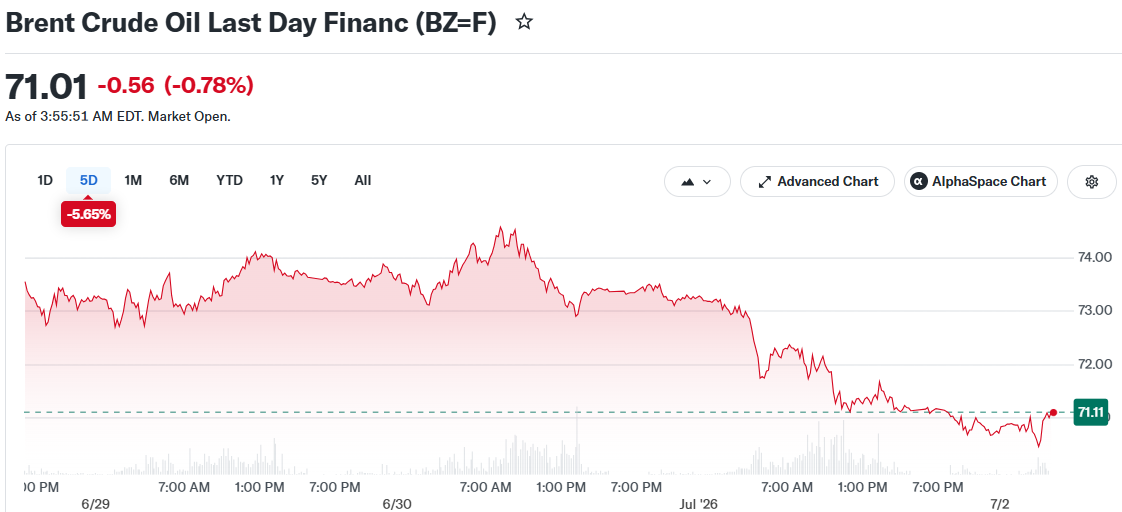
The losses come after oil’s worst quarter since 2020.
US-Iran Talks End Without a Deal
Indirect talks between the US and Iran wrapped up in Doha after two days of technical discussions. No breakthrough was reached on a lasting peace agreement.
BREAKING: Oil crashes below $67.5 for the first time in 125 days.
It is now trading below where it was when the U.S. first launched attacks on Iran. pic.twitter.com/XeiLetpXXA
— Bull Theory (@BullTheoryio) July 2, 2026
However, Qatar reported that the talks made positive progress. Both sides agreed to continue negotiations, and the next meeting is expected to be scheduled after funeral ceremonies for Iran’s former Supreme Leader Ali Khamenei, who was killed in an air strike at the start of the conflict.
Ceremonies are expected to begin July 4 and run for several days, according to Iranian state media.

The talks focused on shipping through the Strait of Hormuz and other confidence-building steps. President Donald Trump said there was progress in negotiations.
Despite the lack of a formal deal, the tone of the talks has eased some market fears about disruptions to crude supply in the region.
Supply Flowing Despite Tensions
Crude flows through the Strait of Hormuz have climbed above 10 million barrels per day. The waterway connects Persian Gulf producers to global buyers and is one of the world’s most critical oil routes.
A US official said Iran’s ability to halt shipping through the strait is now limited. The United Arab Emirates has also restored its exports to pre-war levels, using tankers and pipeline routes to move oil through the region.
Record US Production Adds Pressure
Fresh data from the US Energy Information Administration showed domestic crude production reached a record 13.93 million barrels per day in April. That figure reinforces expectations of ample global supply.
ANZ bank noted that easing tensions have reduced supply concerns. The bank’s China Commodity Index rose 0.5%, with its energy component also up 0.5%, pointing to steady demand from China despite the recent price pullback.
What’s Next for Oil Prices
Markets are watching several factors that could shift prices in the coming weeks.
OPEC+ is expected to decide on another possible production increase for August. Upcoming US inventory data will also be closely monitored.
Further progress or setbacks in US-Iran talks remain the key geopolitical wildcard. Any disruption to Strait of Hormuz flows would still pose a major risk to global energy supply.
For now, the combination of record US output, recovering Gulf exports, and diplomatic momentum is keeping downward pressure on crude prices.
Stop guessing and start investing with confidence. KnockoutStocks gives you the AI insights, market intelligence, and stock research you need to spot opportunities, cut through the noise, and make smarter investment decisions — all in one powerful platform.
Sign up today and get 50% OFF full access to our premium stock picks.
Simply use coupon code SPECIAL50 at checkout to claim your exclusive discount.
Get 3 Free Stock Ebooks
Discover top-performing stocks in AI, Crypto, and Technology with expert analysis.
- Top 10 AI Stocks - Leading AI companies
- Top 10 Crypto Stocks - Blockchain leaders
- Top 10 Tech Stocks - Tech giants



