






TLDR
- Oil prices dipped on Wednesday as U.S. and Iranian officials held separate talks with mediators in Qatar
- Iran refused direct talks with U.S. envoys, clouding prospects for a lasting peace deal
- Brent crude fell roughly 38% in Q2, its steepest quarterly drop since early 2020
- U.S. crude production hit a record 13.93 million barrels per day in April
- Tanker traffic through the Strait of Hormuz is recovering but remains patchy and unpredictable
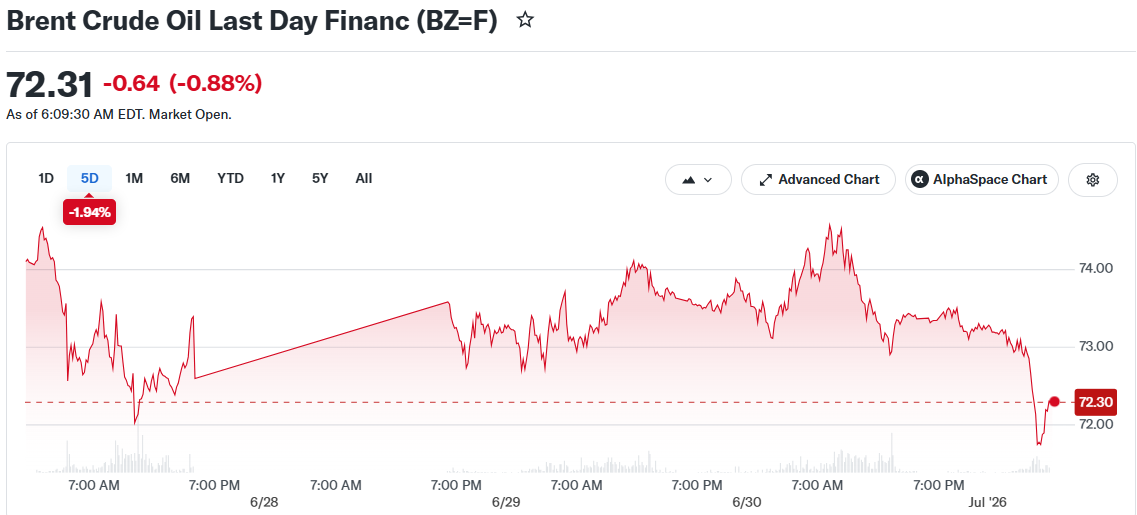
Oil prices slipped on Wednesday after Iran refused to meet directly with U.S. officials in Doha, raising fresh doubts about a lasting end to the Middle East conflict that has rattled energy markets for months.
U.S. crude fell 1.2% to around $68.68 a barrel. Brent crude dropped a similar amount to $72.12. By later in the day, both benchmarks had clawed back some losses, with Brent edging up to $73.09 and WTI recovering to $69.61.
Jared Kushner and U.S. envoy Steve Witkoff traveled to Qatar for what the White House called “high level” talks. But Iran and host nation Qatar said Iran would only engage with mediators, not the American delegates directly.
That decision removed hopes of a quick breakthrough under the existing 60-day negotiating framework between Washington and Tehran.
Strait of Hormuz Remains a Key Risk
The Strait of Hormuz sits at the center of the dispute. The waterway is one of the world’s most important oil shipping routes, and its future control remains unresolved.
Iran has said it intends to oversee maritime traffic through the strait. U.S. Vice President JD Vance pushed back, saying Iran would not be allowed to collect tolls on ships passing through.
Shipping through the strait has started to recover. Data from Kpler showed around 24 commodity vessels, including crude and LNG tankers, passed through on Monday, with traffic holding steady into Tuesday.

Oil analyst Vandana Hari of Vanda Insights cautioned that the situation remains unpredictable. “Hormuz continues to reopen but it’s patchy, unpredictable, and not fully transparent,” she said.
Oil Prices Already Hit Hard in Q2
The second quarter was brutal for crude prices. Brent fell around $45 a barrel, its largest quarterly loss since the 2008 financial crisis. U.S. crude futures dropped about $31 in the same period, their biggest quarterly fall since the pandemic in 2020.
Brent also fell 21% in June alone, following a 19% drop in May. Both were the largest monthly declines since March 2020.
Those losses came after a sharp rally earlier in the year. Brent surged roughly 94% in the first quarter after hostilities broke out, before reversing hard as ceasefire progress eased supply fears.
Analysts have now cut their 2026 oil price forecasts for the first time since the Iran conflict began, according to a Reuters poll published Wednesday.
On the supply side, U.S. crude production reached a record 13.93 million barrels per day in April. U.S. crude inventories also fell by 6.1 million barrels in the week ending June 26, according to American Petroleum Institute data.
Markets are now watching for further developments in the Doha talks and upcoming official U.S. inventory data to guide the next move in prices.
Stop guessing and start investing with confidence. KnockoutStocks gives you the AI insights, market intelligence, and stock research you need to spot opportunities, cut through the noise, and make smarter investment decisions — all in one powerful platform.
Sign up today and get 50% OFF full access to our premium stock picks.
Simply use coupon code SPECIAL50 at checkout to claim your exclusive discount.
Get 3 Free Stock Ebooks
Discover top-performing stocks in AI, Crypto, and Technology with expert analysis.
- Top 10 AI Stocks - Leading AI companies
- Top 10 Crypto Stocks - Blockchain leaders
- Top 10 Tech Stocks - Tech giants



