





TLDR
- Gold fell from a two-month high as investors booked profits after a sharp rally
- Traders now see only a 32% chance the Fed hikes rates in September
- Bitcoin dropped 0.4% to $63,140 as Middle East tensions weighed on risk appetite
- Oil rose sharply, with Brent crude up 1.6%, as Strait of Hormuz talks stalled
- U.S. 30-year Treasury yields hit their highest level since 2001 at a fresh auction
Gold prices slipped Friday after hitting a two-month high earlier in the week. Investors moved to lock in gains following a strong run that pushed prices above $4,400 an ounce.
Spot gold was roughly flat at $4,349.71 an ounce in early trading Friday. Gold futures fell 0.4% to $4,404.65. New York gold futures were down 0.8% to $4,385.90, putting gold on track for a modest weekly loss despite gaining ground over the previous two weeks.
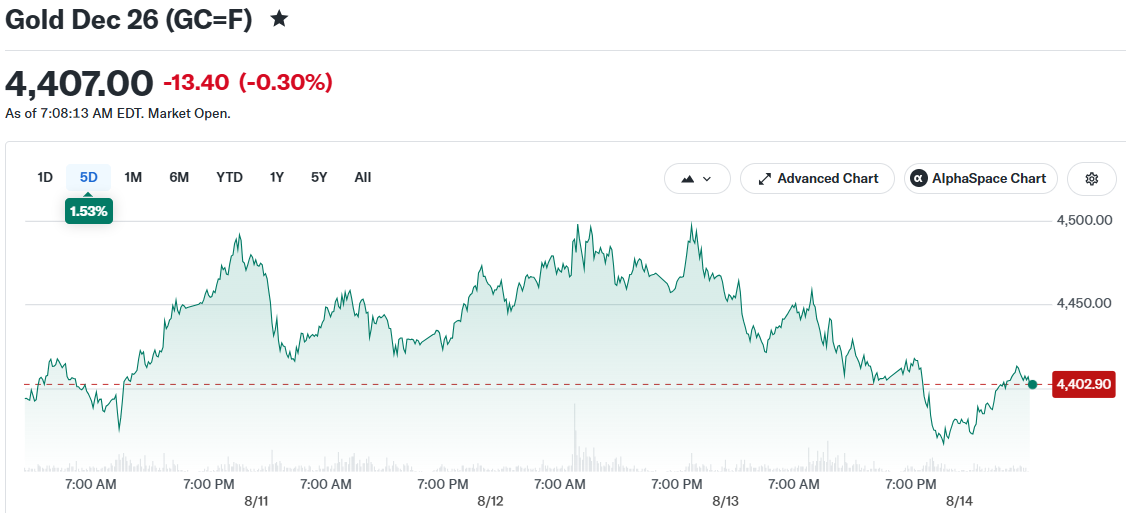
Gold crossed its 100-day moving average for the first time since April earlier this week. However, it has since slipped back below that level, a sign that profit-taking has picked up.
Analysts at Sucden Financial noted that both gold and other markets failed to hold recent highs, pointing to profit-taking after the sharp rally. ANZ analysts said stretched positioning makes gold’s gains vulnerable to further consolidation.
Softer U.S. inflation data this week reduced expectations that the Federal Reserve would raise interest rates in September. According to the CME FedWatch tool, traders now price in just a 32% chance of a September rate hike, down from higher levels earlier.
Lower rate expectations generally support gold. When rates are lower, the cost of holding a non-yielding asset like gold is reduced.
Weak labor market data last week, combined with subdued consumer and wholesale inflation this week, have together trimmed rate-hike bets. Markets will watch Fed Chair Kevin Warsh’s remarks at the Jackson Hole symposium later this month for further clues.

Middle East Tensions Push Oil Higher and Weigh on Bitcoin
Oil prices rose sharply Friday as U.S.-Iran tensions showed no signs of easing. Brent crude climbed 1.6% to $88.45 a barrel, while WTI futures gained 1.9% to $82.78. Both benchmarks were heading for a weekly gain of close to 6%.
The U.S. Defense Secretary said the naval blockade of Iranian ports could be maintained indefinitely, as ships can be rotated in and out. Treasury Secretary Scott Bessent also raised expectations of measures aimed at the economic isolation of Iran next week.
Jefferies economist Mohit Kumar said there is no easy way out of the current standoff. Iran controls the Strait of Hormuz and the U.S. will not accept Iran charging tolls through it, he said.
Analysts at MUFG said continued threats across both the Strait of Hormuz and the Red Sea should keep a large geopolitical risk premium priced into oil.
Bitcoin fell 0.4% to $63,140 as the ongoing Iran conflict lifted oil prices and reduced demand for riskier assets.
U.S. stock futures were lower in early European trading. The S&P 500 futures dipped 0.02% and the Dow was down 0.1%, even after the S&P hit a record close in the previous session.
U.S. 30-year Treasury yields rose to 5.228%, the highest level at auction since 2001. Analysts at Danske Bank said the result reflects concerns over the growing federal debt burden and inflation that remains above the Fed’s target.
The dollar index fell 0.1% to 99.854 as rate-hike expectations continue to ease.
Gold’s longer-term recovery has also been supported by stronger central bank buying, particularly from China, and renewed investor demand since prices climbed back above $4,000 an ounce.
Stop guessing and start investing with confidence. KnockoutStocks gives you the AI insights, market intelligence, and stock research you need to spot opportunities, cut through the noise, and make smarter investment decisions — all in one powerful platform.
Sign up today and get 50% OFF full access to our premium stock picks.
Simply use coupon code SPECIAL50 at checkout to claim your exclusive discount.
Get 3 Free Stock Ebooks
Discover top-performing stocks in AI, Crypto, and Technology with expert analysis.
- Top 10 AI Stocks - Leading AI companies
- Top 10 Crypto Stocks - Blockchain leaders
- Top 10 Tech Stocks - Tech giants



