






TLDR
- ETH dropped below $2,500, down nearly 4%, its third straight day of losses
- Rising US Treasury yields and oil prices drove the sell-off, with the 10-year yield hitting a 24-year high
- Spot ETH ETFs posted seven straight days of outflows, totaling close to $565 million
- ETH broke a two-week trading range and now faces a key test at the $2,565 support level
- Researchers warned AI could weaken the ECDSA standard that secures Ethereum wallets
Ethereum fell below $2,500 on Thursday, down nearly 4%. It marked a third straight day of losses.
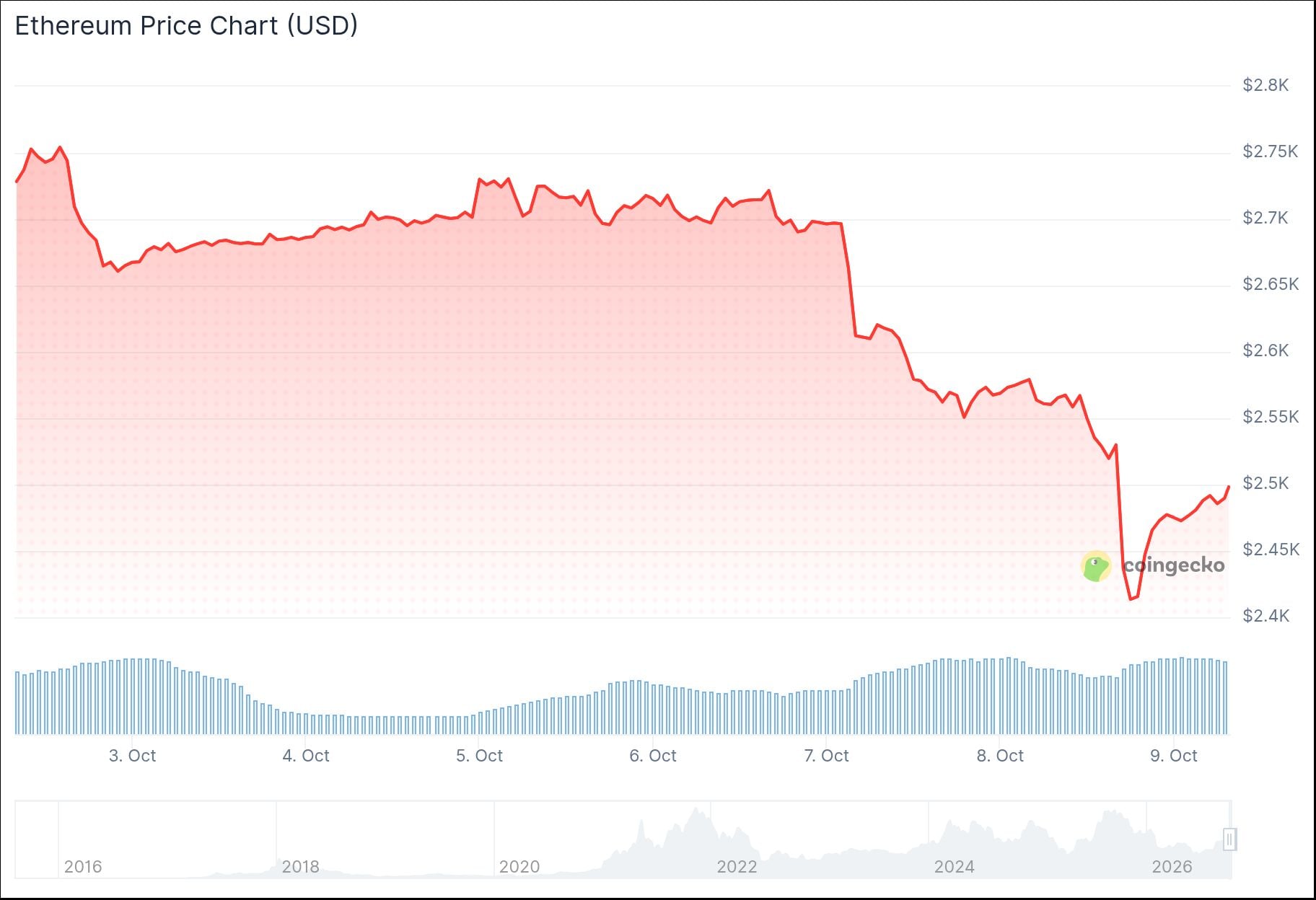
The drop followed rising oil prices and US Treasury yields. The 10-year yield hit a 24-year high of 5.35%.
Yields eased later after President Trump said the US would not strike Iran before the November 3 midterms.
The Fed’s September minutes added pressure too. Officials expect another rate hike before year-end, though no date was set.
Selling intensified across investors. US spot ETH ETFs saw $160.7 million in outflows Wednesday, the seventh straight day of losses totaling near $565 million.
Exchange reserves rose by 132,000 ETH since Monday and by 233,000 ETH over two weeks. More coins moving to exchanges often points to more selling ahead.
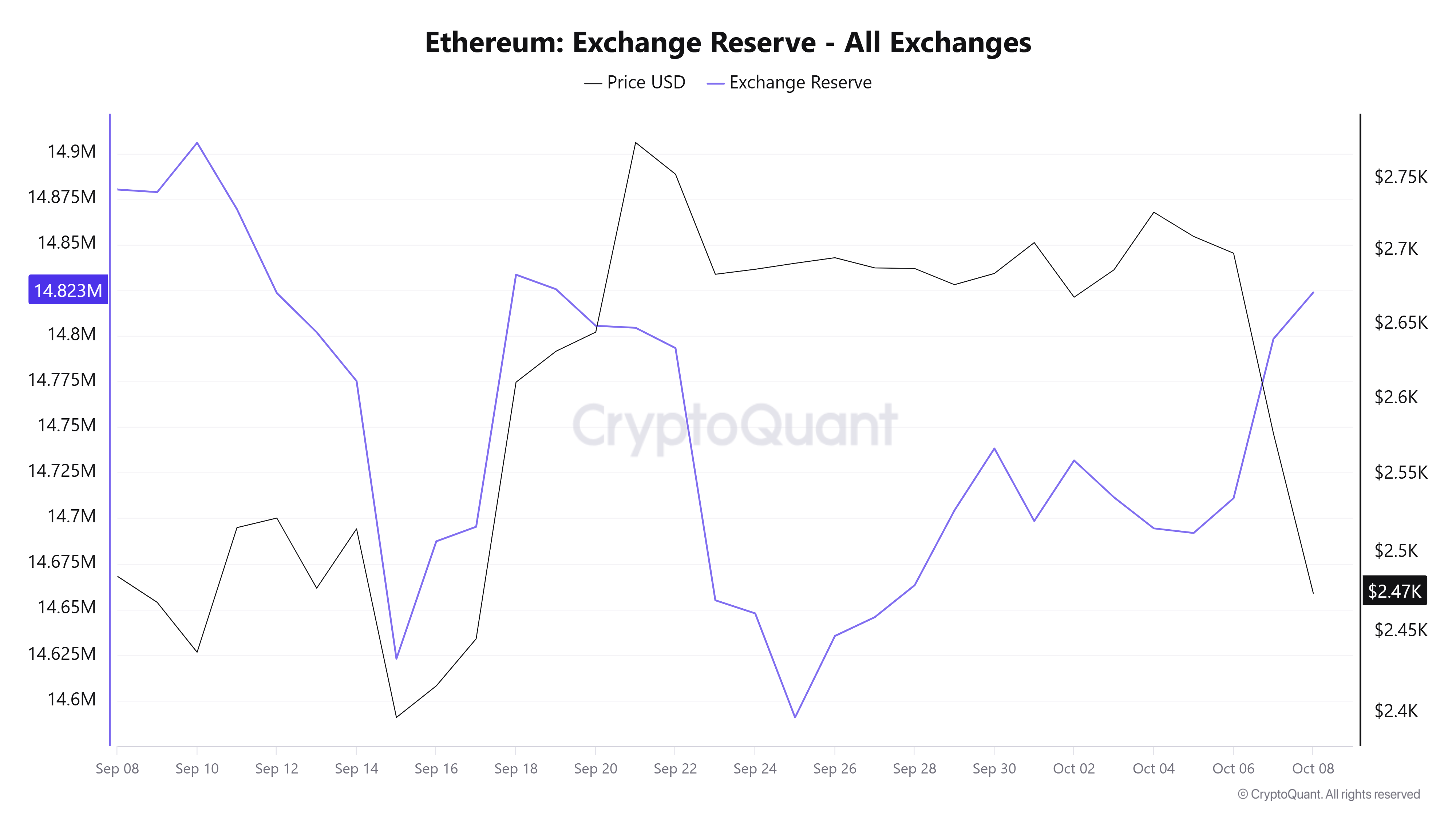
Wallets holding 10,000 to 100,000 ETH sold about 151,000 ETH in two weeks. Smaller retail wallets sold another 276,000 ETH combined.

Ethereum led the market in liquidations, with $351.6 million wiped out in 24 hours. Long positions made up $294.6 million of that total.
On the daily chart, ETH trades below its 20-day and 50-day averages at $2,631 and $2,502. It still holds above the 100-day average near $2,338.
The 14-day RSI sits at 37, showing weak momentum. A Stochastic reading near 18 suggests the asset is oversold.
Support sits at $2,355, then $2,204 and $1,972. Resistance stands at $2,548, followed by $2,636 and $2,781.
Analyst Daan Crypto Trades said ETH failed to hold its prior range high near $2,550 and lost the four-hour 200 moving average. The analyst said they are waiting for a clear sign of strength before buying dips, pointing to past patterns where sharp pullbacks follow the first strong move out of a bear market.
$ETH Failed to hold the previous range high at $2550 and also lost the 4H 200MA/EMA and broke the market structure on the low timeframe.
I have no rush bidding any dips until we see a proper sign of strength. Especially on alts.
Things have run up A LOT the past few months. And… pic.twitter.com/TctR7PR8iv
— Daan Crypto Trades (@DaanCrypto) October 8, 2026
ETF Outflows Deepen
BlackRock’s ETHA fund recorded $201.89 million in outflows on October 6. Its Bitcoin fund, IBIT, took in $122 million the same day.
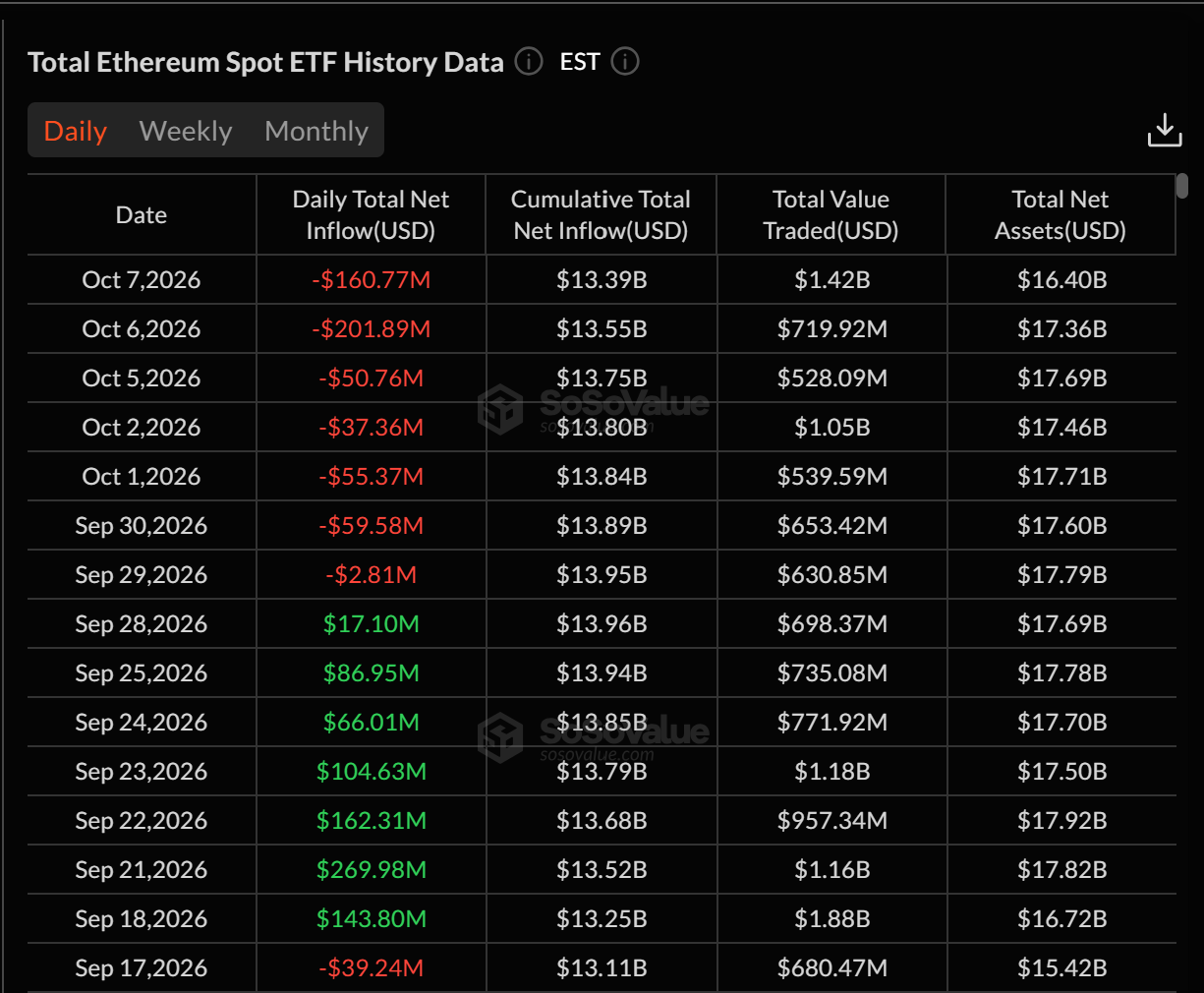
Broader Bitcoin ETFs gained $119 million that day, while Ethereum ETFs lost $201.89 million overall.
Ethereum also broke out of a two-week trading range between $2,380 and $2,810. High volume selling broke both support levels on October 7.
Traders now watch $2,565, a level that marked the start of a September 20 advance. Holding it could open a path back to $2,625-$2,650.
Losing that level would expose $2,500, then the $2,380 to $2,400 zone. Breakdown volume was the highest recorded in that range.
BitMine chairman Tom Lee said the firm will stop buying ETH once it reaches 5% of circulating supply. He said BitMine needs about 100,000 more ETH to hit that target.
AI Raises New Security Questions
Ethereum Foundation researcher Justin Drake said AI could weaken the ECDSA standard sooner than expected. ECDSA underpins how Ethereum wallets are secured.
Co-founder Vitalik Buterin acknowledged the risk but cautioned users against rushing into wallet migrations out of panic.
Ethereum’s security teams are already using AI to test the network’s code. One vulnerability found this way was logged as CVE-2026-34219.
Researchers also said attackers are using AI to scan unverified smart contracts faster, looking for weaknesses to exploit.


