





TLDR
- The American Bankers Association urged bank executives to lobby senators against stablecoin yield provisions in the CLARITY Act.
- The ABA released a study estimating that yield-bearing stablecoins could expand the market from $300 billion to $2 trillion.
- The group argued that such growth could reduce traditional bank deposits and limit lending capacity.
- The White House Council of Economic Advisers stated that stablecoins would not threaten the broader banking system.
- Senator Bernie Moreno criticized the ABA campaign and described banks as reacting to competitive pressure.
- The Senate Banking Committee plans to release revised CLARITY Act text before a scheduled vote on May 14.
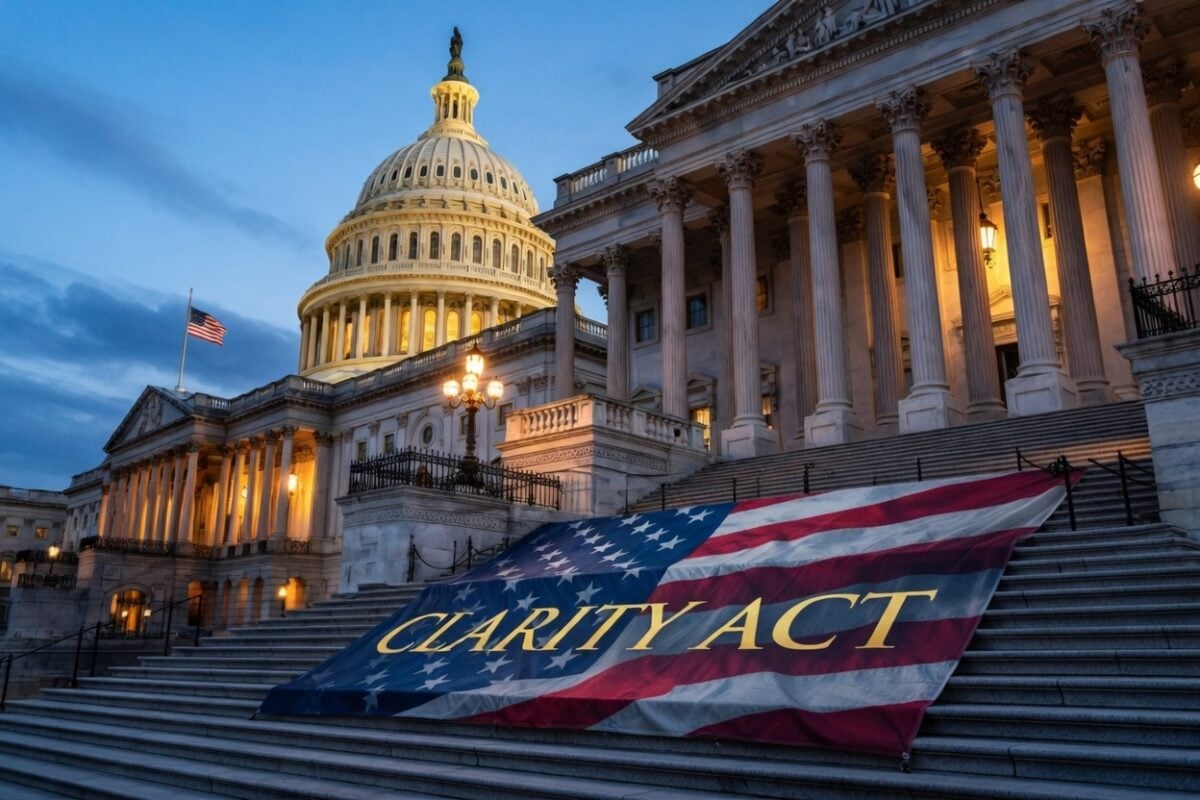
The American Bankers Association (ABA) intensified efforts to change stablecoin language in the CLARITY Act before a May 14 vote. The group urged bank executives to contact senators and oppose yield-bearing provisions. Lawmakers now weigh competing studies as the Senate Banking Committee prepares revised bill text.
ABA targets CLARITY Act yield language
The American Bankers Association organized a call led by President Rob Nichols to mobilize bank leaders. Nichols urged executives to lobby senators against provisions allowing stablecoin issuers to offer interest-like rewards. He argued that such features could shift deposits away from traditional banks.
On April 13, the ABA released a study projecting rapid stablecoin growth if issuers offer yield. The report estimated the market could expand from $300 billion to $2 trillion. The ABA stated that growth would likely come at the expense of insured bank deposits.
The group maintained that reduced deposits would limit banks’ capacity to fund loans and mortgages. It warned that stablecoins offering yield could resemble deposit accounts without federal safeguards. The ABA framed its campaign as a defense of consumer protection and financial stability.
The Senate Banking Committee plans to release revised CLARITY Act text on May 11. Lawmakers could circulate amendments as early as May 12. The committee scheduled a vote for May 14.
Political divisions widen over stablecoin policy
The White House Council of Economic Advisers published its own analysis on April 8. The council concluded that stablecoins would not threaten the broader banking system. It emphasized innovation and competition within financial services.
Senator Bernie Moreno publicly criticized the ABA’s lobbying effort. He said the “banking cartel” was reacting to competitive pressure from stablecoins. Moreno described the industry response as evidence of institutions in “panic mode.”

Moreno’s remarks drew attention to tensions between banks and crypto firms. He positioned stablecoins as tools that could expand payment options. He also argued that competition could lower costs for consumers.
The ABA rejected claims that it opposed innovation. It said yield-bearing stablecoins could create confusion without Federal Deposit Insurance Corporation coverage. The group stated that consumers might assume similar protections to bank accounts.
The debate intensified as senators prepared to review the updated bill language. Staff members discussed possible revisions before the public release. Lawmakers continued negotiations ahead of the scheduled committee vote on May 14.


