





TLDR
- The Senate Banking Committee released a new 309-page CLARITY Act draft.
- The committee markup is scheduled for May 14 at 10:30 a.m. ET.
- The bill restricts stablecoin yield that resembles interest on bank deposits.
- DeFi developer protections remain in the latest version of the bill.
- Ethics language on government crypto conflicts is not included in the current draft.
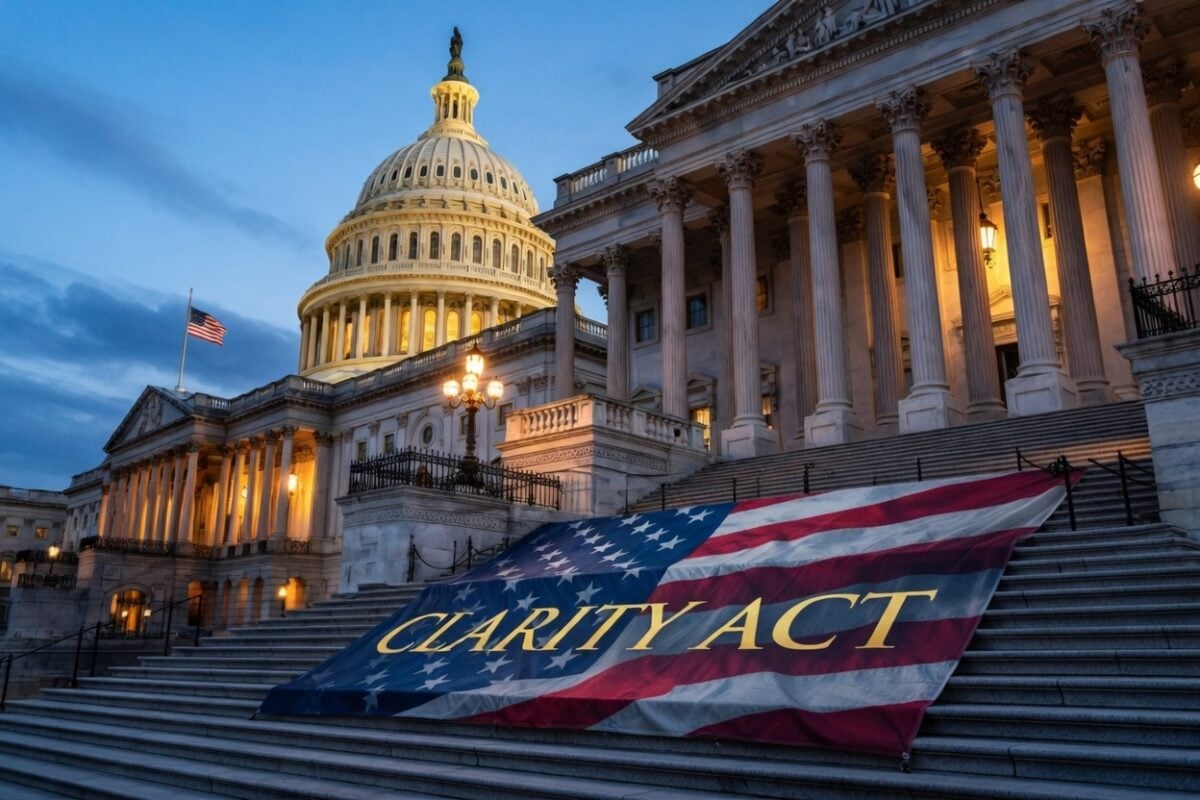
The U.S. Senate Banking Committee has released the latest version of the Digital Asset Market CLARITY Act, giving lawmakers, crypto firms, banks and investors a fresh look at the market structure bill ahead of a scheduled committee markup this week.
The 309-page bill text was released just after midnight on Tuesday and is expected to be considered by the Senate Banking Committee on Thursday, May 14, at 10:30 a.m. ET. The legislation aims to create a federal framework for digital asset markets and define when crypto tokens should fall under securities, commodities or another regulatory category.
🚨JUST IN: The Senate Banking Committee has released the new 309-page draft of the Clarity Act it’s been working on since January.
Committee members now have until close of business tomorrow to file amendments ahead of Thursday’s markup. pic.twitter.com/kL3IXSOdSK
— Eleanor Terrett (@EleanorTerrett) May 12, 2026
Senate Banking Committee Chair Tim Scott said the bill reflects months of work across the panel and is intended to provide consumer safeguards, address illicit finance and keep digital asset activity within the United States.
The latest version was not expected to contain major surprises for the crypto industry, as several firms and trade groups had already reviewed draft language during private negotiations. Still, the release gives the market its clearest view yet of the bill’s current direction.
Stablecoin Yield Language Remains Central
One of the most closely watched areas in the new text is stablecoin yield. The bill restricts payments of interest or yield made only because a user holds payment stablecoins or maintains a stablecoin balance in a way that resembles interest on a bank deposit.
That language reflects a compromise negotiated by Senator Thom Tillis and Senator Angela Alsobrooks after months of dispute between crypto companies and banking groups. Coinbase had previously raised concerns that earlier language could restrict consumer rewards programs too broadly.

Coinbase CEO Brian Armstrong said during a live event on X that not every side received everything it wanted, but the current version includes what he described as key requirements. He also said Coinbase is working with several large global banks and wants banks to integrate crypto successfully.
Banking groups remain unsatisfied. Over the weekend, the American Bankers Association and other trade organizations urged members and lawmakers to push for stronger limits on stablecoin rewards. They argue that the current text could still allow programs that function like bank deposit interest and may draw funds away from traditional banks.
Senate aides and crypto lobbyists have suggested the stablecoin issue may not stop the bill from advancing through committee, although banking groups could continue the fight if the legislation reaches the Senate floor.
DeFi Protections Stay in the Bill
The released text also keeps provisions supported by decentralized finance advocates. These include language tied to the Blockchain Regulatory Certainty Act, which protects software developers and infrastructure providers from being treated as money transmitters when they do not control customer funds.
The DeFi Education Fund said it was encouraged by the direction of negotiations and noted that core protections for developers and infrastructure providers remain in the bill. The group said it will monitor amendments and oppose changes that weaken protections for the sector.
Law enforcement concerns also remain part of the debate. Reports indicate that Senate lawmakers have been working on language that would preserve the ability of prosecutors to pursue crypto-related misconduct under money-laundering laws.
Senator Chuck Grassley, who chairs the Senate Judiciary Committee, is expected to review proposed changes related to safe harbors for software developers. Those revisions may affect how lawmakers balance developer protections with enforcement authority.
The bill also addresses an earlier concern around tokenized equities. Coinbase had criticized prior Section 505 language, saying it could create a de facto ban on tokenized stocks. The latest version is said to be in a stronger position, with major exchanges more comfortable with the updated text.
Ethics Fight Could Shape Senate Path on CLARITY Act
The biggest unresolved issue may be ethics. The current Senate Banking draft does not include a broad conflict-of-interest section limiting government officials from profiting from crypto ventures.
That issue has become a major sticking point for Democrats because of President Donald Trump’s crypto-related business interests. Senator Elizabeth Warren criticized the bill after the text was released, saying it contains no provisions to prevent conflicts tied to political figures and their families.
Senator Kirsten Gillibrand said last week at Consensus Miami 2026 that the bill would not advance without ethics language. White House crypto adviser Patrick Witt said the administration supports rules that apply broadly across government, but would reject provisions targeting one officeholder or family.
Because conflict-of-interest rules do not fall directly under the Senate Banking Committee’s jurisdiction, the ethics section may be added later in the process. That means the bill could move out of committee before the issue is resolved.
If approved by the Senate Banking Committee, the CLARITY Act will still need to be merged with a related version from the Senate Agriculture Committee. Lawmakers would then need to settle ethics language and any remaining disputes before a full Senate vote.
The bill would need 60 votes in the Senate, requiring support from several Democrats. Some analysts say a party-line committee vote could make final passage harder, while crypto lobbyists argue that bipartisan interest remains strong enough to keep negotiations moving.
The White House has targeted July 4 for completion, while Senator Gillibrand has suggested the bill may reach the finish line closer to early August. The Thursday markup is the next test for whether Congress can move the long-delayed crypto market structure bill toward a full Senate vote.


