





TLDR
- Solana is one of Ethereum’s top competitors, with backing from Visa, PayPal, and Worldpay
- Chainlink provides oracle infrastructure connecting blockchains to real-world financial data
- Ondo Finance’s tokenized-stock platform surpassed $500 million in value across 200+ assets
- All three tokens have genuine utility but carry high volatility risk
- A balanced approach would use Solana as the largest position, with Chainlink and Ondo as smaller plays
Investors looking ahead to the next crypto bull run are focusing on projects with real utility and actual adoption. Solana, Chainlink, and Ondo Finance are three altcoins that analysts say meet those criteria.
Solana: Speed, Scale, and Institutional Backing
Solana has grown into one of Ethereum’s strongest competitors. Its network is built to handle large volumes of transactions quickly and cheaply, making it useful for trading, payments, stablecoins, and gaming.
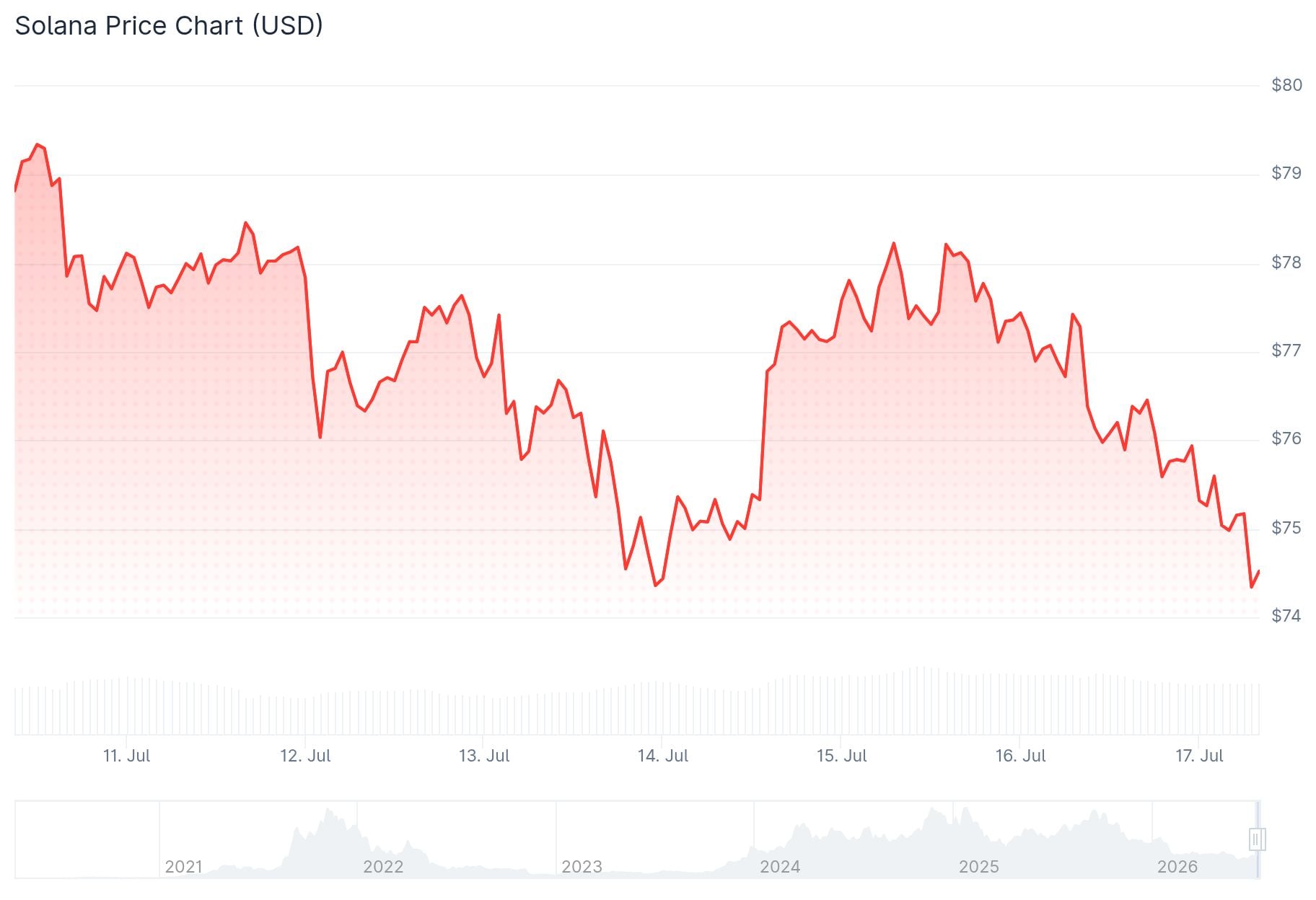
One of Solana’s main advantages is its simplicity. Most applications run within one ecosystem, unlike Ethereum, where users often move assets between the main chain and multiple layer-2 networks.
That ease of use has attracted major financial companies. Visa, PayPal, Circle, Western Union, and Worldpay are all listed as network partners on Solana’s website.
The SOL token is used to pay transaction fees, stake, and secure the network. Growing activity on the chain could push demand for SOL higher.
The risks are real, though. A large share of Solana’s past activity came from memecoins and speculative trading, which tends to dry up when market sentiment turns. The network has also had reliability issues in the past, though its track record has improved.
Chainlink: The Infrastructure Layer
Chainlink operates in the background of decentralized finance. Smart contracts need outside data — prices, interest rates, reserve checks — and Chainlink’s oracle network provides it.

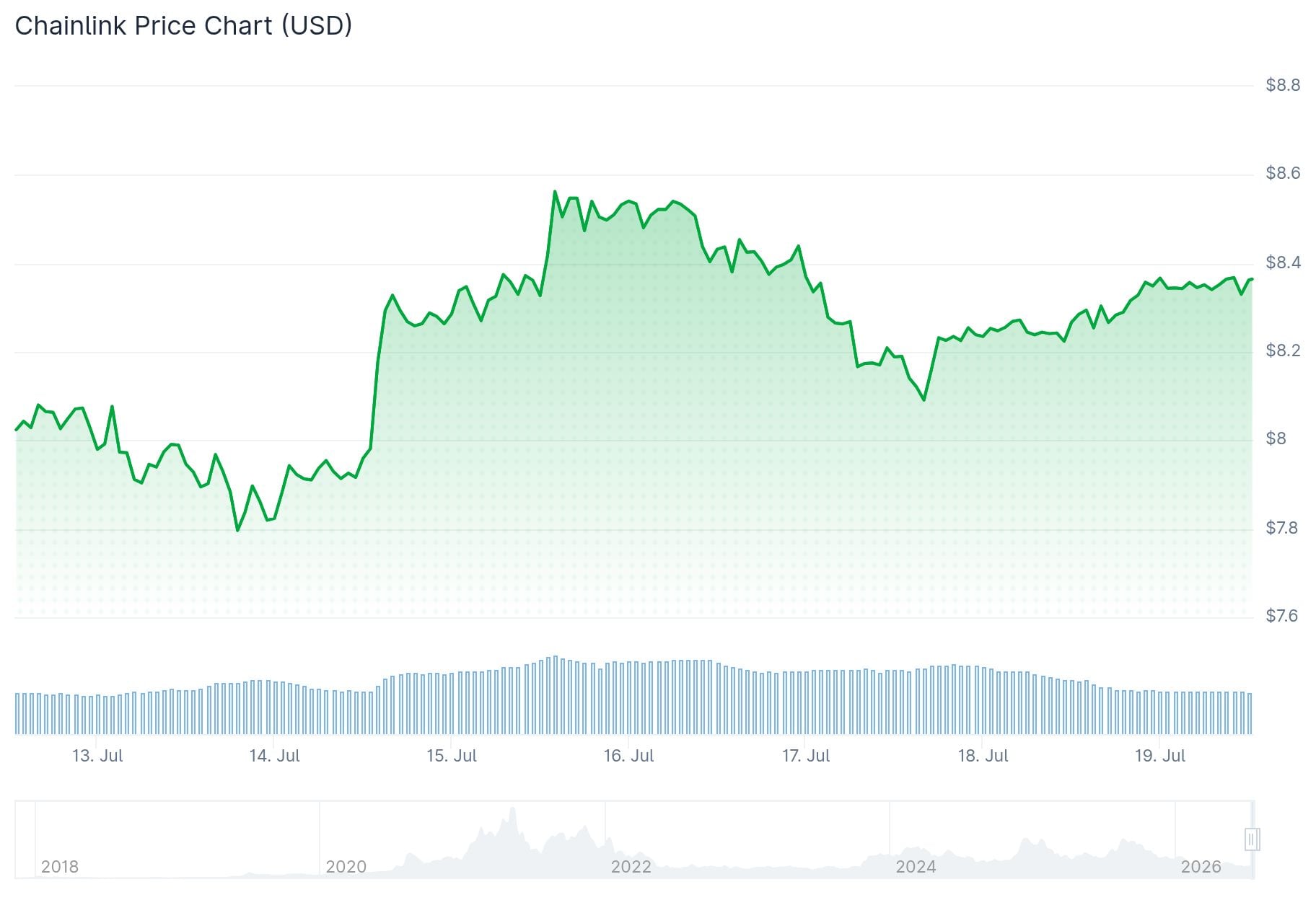
The company is now pushing into institutional markets. Its Cross-Chain Interoperability Protocol, known as CCIP, is designed to help financial firms transfer data and assets between different blockchains.
This positions Chainlink as infrastructure for the broader tokenization trend, not just decentralized finance. If financial assets end up spread across multiple blockchains and private ledgers, secure data bridges could become essential.
The main question is whether Chainlink’s growing role actually drives demand for the LINK token. That connection is not guaranteed.
Large institutions could also build their own systems, and rival oracle networks are competing for the same market.
Ondo Finance: Tokenized Assets and Real-World Finance
Ondo Finance focuses on bringing traditional assets — US Treasurys, stocks, and ETFs — onto blockchain networks.
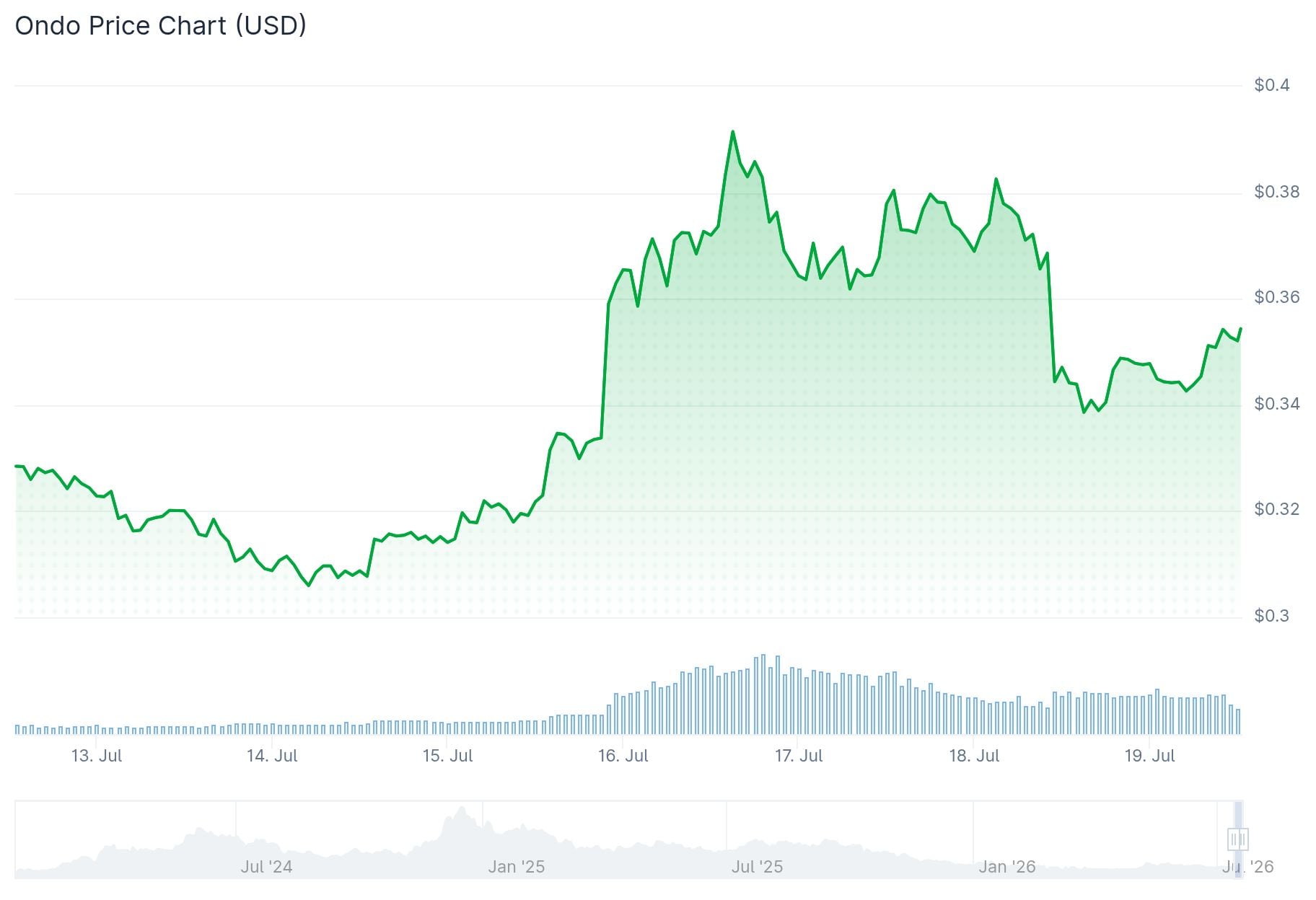
In January 2026, Ondo said its tokenized-stock platform had crossed $500 million in total value across more than 200 assets, with over $7 billion in cumulative trading volume since its September 2025 launch.
Ondo also partnered with Broadridge to launch a US solution for tokenized third-party securities. Eligible token holders can now receive shareholder voting rights, connecting blockchain infrastructure to regulated markets.
If tokenization becomes a mainstream financial trend, Ondo could be well positioned. But the ONDO token is not equity in the company. Investors don’t automatically share in the platform’s business success.
Token unlocks, regulation, and competition from banks or asset managers are all risks that could limit returns. Analysts say ONDO is better suited as a small speculative position rather than a core holding.
Which Is the Strongest Pick?
Solana offers the broadest combination of scale and adoption. Chainlink provides infrastructure exposure across multiple blockchains. Ondo is the highest-risk option but also has the most upside if tokenization takes off.
All three are highly volatile. Even strong fundamentals won’t protect investors during a broad crypto downturn.


