





TLDR
- AAVE currently trades between $85–$95 with a market cap of roughly $1.3B–$1.5B
- The base case price target is $350–$600 by 2031, assuming steady DeFi growth
- The bull case sees AAVE reaching $1,000–$1,800 if institutional DeFi adoption accelerates
- The bear case keeps AAVE between $80–$150 if adoption slows or competition increases
- A probability-weighted five-year price target sits at approximately $620 by 2031
Aave is one of the largest decentralized lending protocols in crypto. It lets users borrow and lend digital assets without a bank. Since launching in 2020, the protocol has built real economic activity through lending markets and borrowing fees.
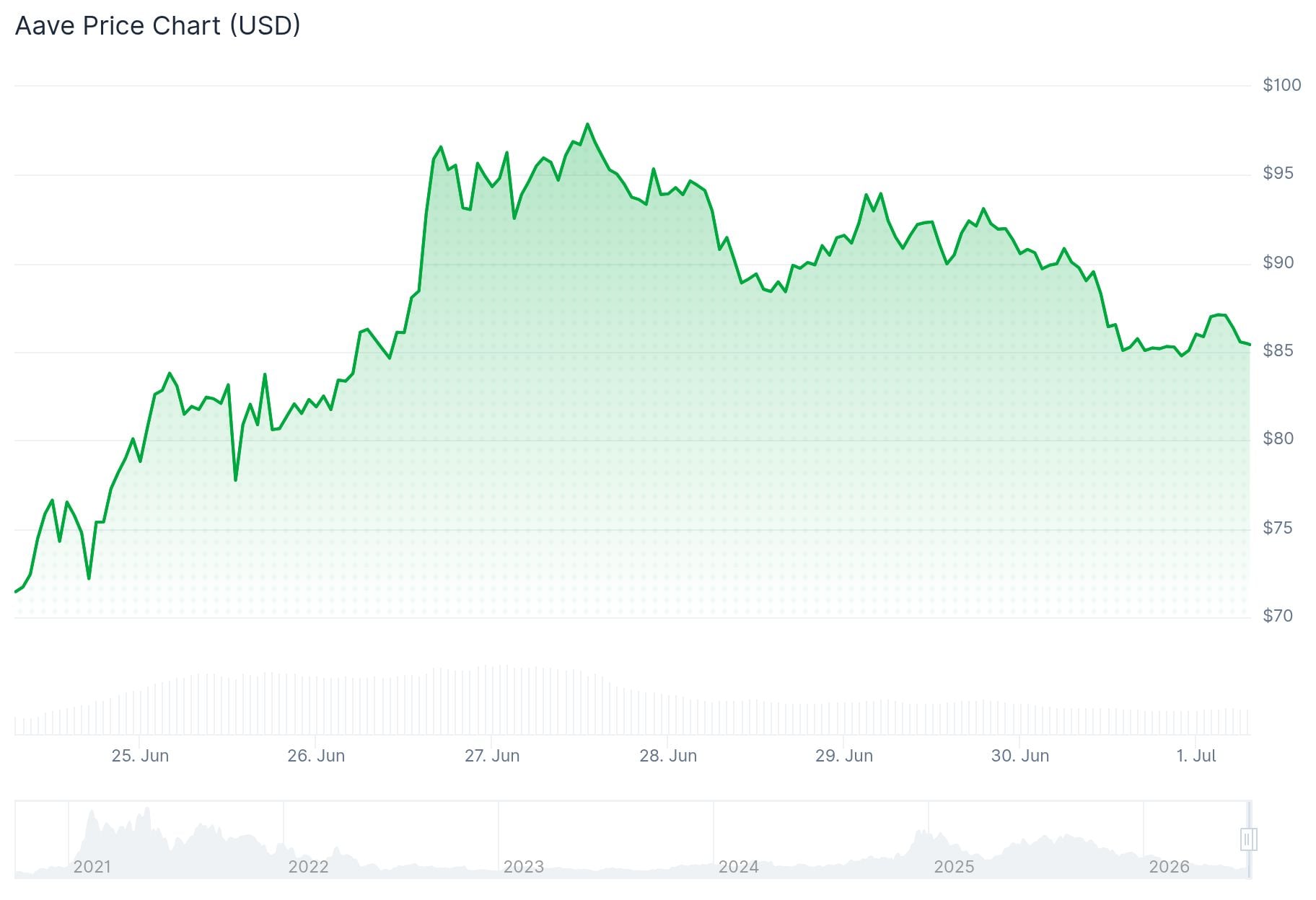
AAVE currently trades around $85 to $95. Its market cap sits between $1.3 billion and $1.5 billion. The token has a maximum supply of just 16 million, making it one of the scarcer major cryptocurrencies.
A probability-weighted five-year price target places AAVE at around $620 by 2031.
✍️ TL;DR: AAVE (On Ethereum) ends June with its highest network growth day since 2021
📊 Metrics used: Network Growth
🔗 Link to chart: https://t.co/PYPTArPYdg📈 Aave (on Ethereum) has just seen 1,806 new wallets created in 24 hours, marking its strongest network growth day… pic.twitter.com/FbwYRgFdg0
— Santiment Intelligence (@SantimentData) July 1, 2026
One factor that could support that target is GHO, Aave’s own decentralized stablecoin. GHO is overcollateralized and has been expanding alongside the rest of the protocol. Continued growth of GHO could drive more demand across the Aave ecosystem.
Base Case: $350 to $600
The most likely outcome assumes DeFi keeps growing as part of mainstream finance. In this scenario, crypto lending expands, tokenized real-world assets increase, and institutions gradually use more blockchain-based financial products.
Aave, as one of the most established lending protocols, would likely take a share of that growth. A price between $350 and $600 would imply a market cap of $5.5 billion to $9.5 billion.

That would be meaningful upside from current levels without needing aggressive assumptions.
Bear Case: $80 to $150
The downside scenario involves slower DeFi adoption. Newer lending protocols, security vulnerabilities, regulatory pressure, or low borrowing demand could all weigh on growth.
Higher interest rates also reduce speculative borrowing activity, which cuts into DeFi lending volume. If those conditions persist, AAVE could stay between $80 and $150 through 2031.
The bull case sees AAVE between $1,000 and $1,800. This would require traditional financial institutions to adopt permissioned DeFi infrastructure, tokenized securities to become common, and blockchain lending to scale into a much larger industry.
That would put Aave’s market cap between $16 billion and $29 billion — still well below Bitcoin or Ethereum at current valuations.
AAVE’s limited token supply means higher protocol usage could translate more directly into price appreciation compared to tokens with larger supplies.
The protocol currently operates across multiple blockchain networks and continues to expand its ecosystem.
The probability-weighted price target of $620 by 2031 reflects a scenario where DeFi adoption grows at a moderate pace, with Aave maintaining its position as one of the leading lending protocols in the space.


