





TLDR
- President Trump posted on Truth Social saying the CLARITY Act would “future-proof” digital asset regulation and stop future administrations from rolling it back.
- Treasury Secretary Scott Bessent is urging both the Senate and House to advance the bill, saying crypto needs to be brought onshore.
- Senator Cynthia Lummis warned that without the bill, consumers have no guaranteed rights to assets if a crypto exchange goes bankrupt.
- Polymarket currently gives the CLARITY Act a 57% chance of passing into law in 2026, up from a low of 49%.
- The bill faces a tight Senate floor vote deadline in June 2026 and needs Democratic votes to pass.
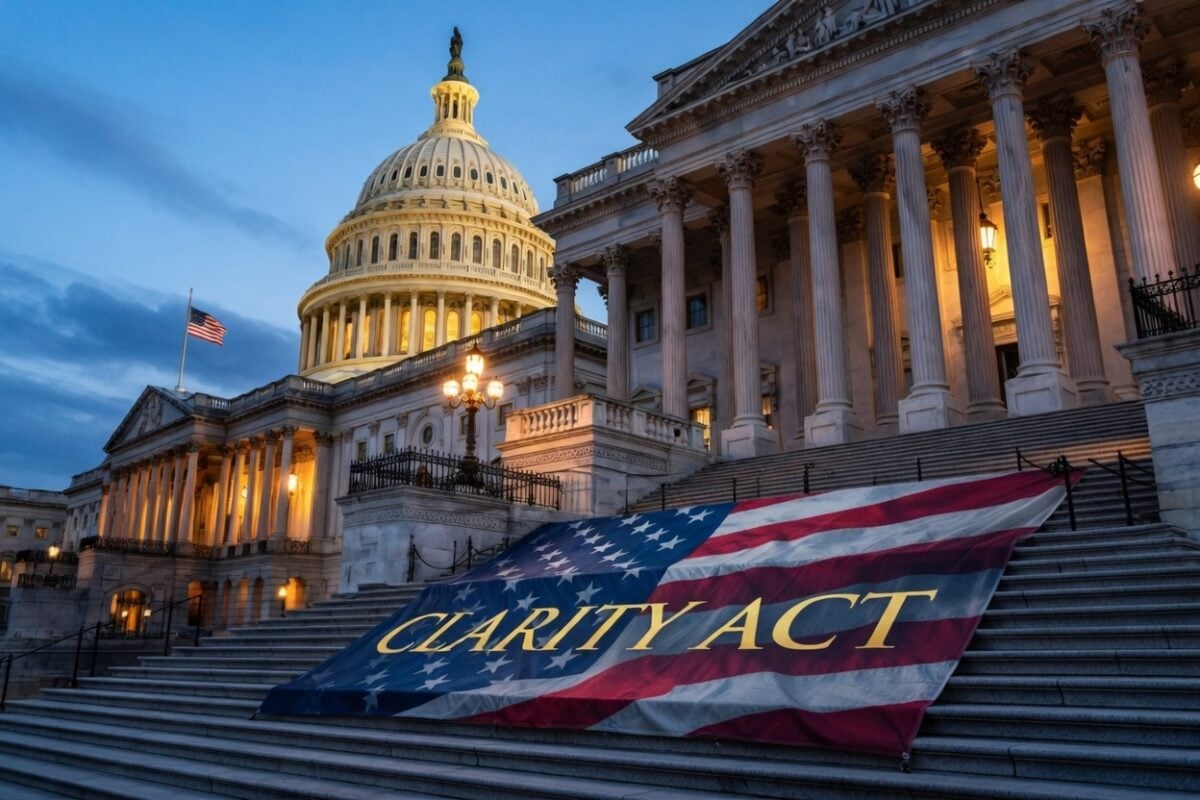
The White House and key members of the Trump administration are stepping up pressure on Congress to pass the Digital Asset Market Clarity Act. Here is what is happening and what it means.
Trump and His Team Push Hard for the Bill
President Donald Trump posted to his Truth Social platform this week saying he wanted to “future-proof” digital asset regulation through the CLARITY Act. He said the law would prevent “crypto haters” in future administrations from undoing rules for digital assets.
🔥Predication: After much more research and discussions with some key sources in DC.
Trump’s "Future-Proof" mandate is about democratizing capital, not saving Wall Street's legacy spread. He isn't pushing the CLARITY Act because, in its current form, it forces crypto to play by… pic.twitter.com/hEztSaQnqp
— PaulBarron (@paulbarron) May 28, 2026
Treasury Secretary Scott Bessent backed that message. He told lawmakers that the United States needs to define digital assets clearly and bring crypto activity under domestic regulation.
“When you look at digital assets, all the nonsense that happens, that’s because it’s the wild, wild west offshore,” Bessent said. He added that the U.S. needs to bring it onshore.
Bessent also confirmed there would be no central bank digital currency under this administration. He described a digital dollar as “the first step toward tracking.”
He said the CLARITY Act now has bipartisan support and urged both chambers of Congress to move quickly.
Where the Bill Stands Right Now
The CLARITY Act passed the House of Representatives in July 2025. It has since faced delays in the Senate due to government shutdowns, industry pushback, and concerns about conflicts of interest tied to the Trump family.

Trump, his sons, and associates are connected to memecoin projects, the platform World Liberty Financial, its USD1 stablecoin, and a Bitcoin mining company.
The Senate Agriculture Committee and the Senate Banking Committee have both advanced the bill after separate markups in January and May. But it still needs a full Senate floor vote, and Republicans hold a slim majority that requires some Democratic votes to pass.
Some Democratic senators have said they will withhold support without stronger ethics provisions in the bill.
Senator Cynthia Lummis of Wyoming also pushed hard for the bill this week. She framed it as a consumer protection measure.
“Without the Clarity Act, if a digital asset exchange goes bankrupt, customers have no guaranteed right to their own assets,” Lummis said. She also warned that software developers could face prosecution again for publishing code if the bill fails.
The bill now faces a June 2026 deadline for a Senate floor vote.
Market Reaction
Bitcoin dropped from above $74,000 to below $73,000 in the hours after Trump’s post. At the time of publication, it was trading at $73,467.
On Polymarket, traders put the odds of the CLARITY Act becoming law in 2026 at 57%. That is up from a low of 49% after a Senate recess earlier caused delays, but down from a high of 75%.
In a separate post, Trump also weighed in on legal battles over prediction markets like Kalshi and Polymarket, backing the Commodity Futures Trading Commission’s claim of exclusive jurisdiction over those platforms. His son Donald Trump Jr. is an adviser to both companies.


